Campus Spotlight
September 1, 2022
Photo by
Nate Tangeman
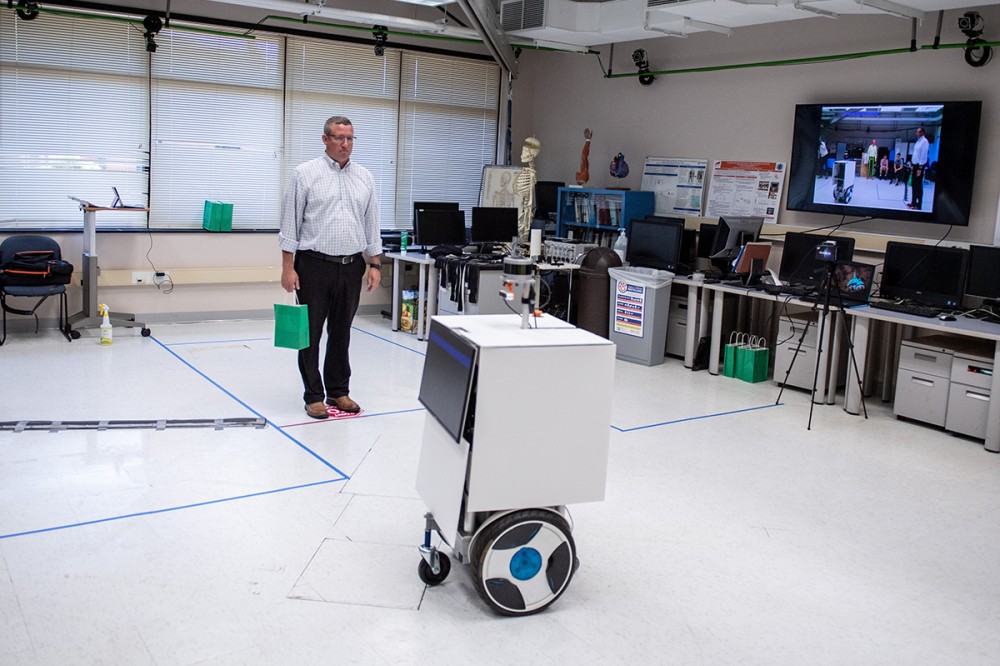
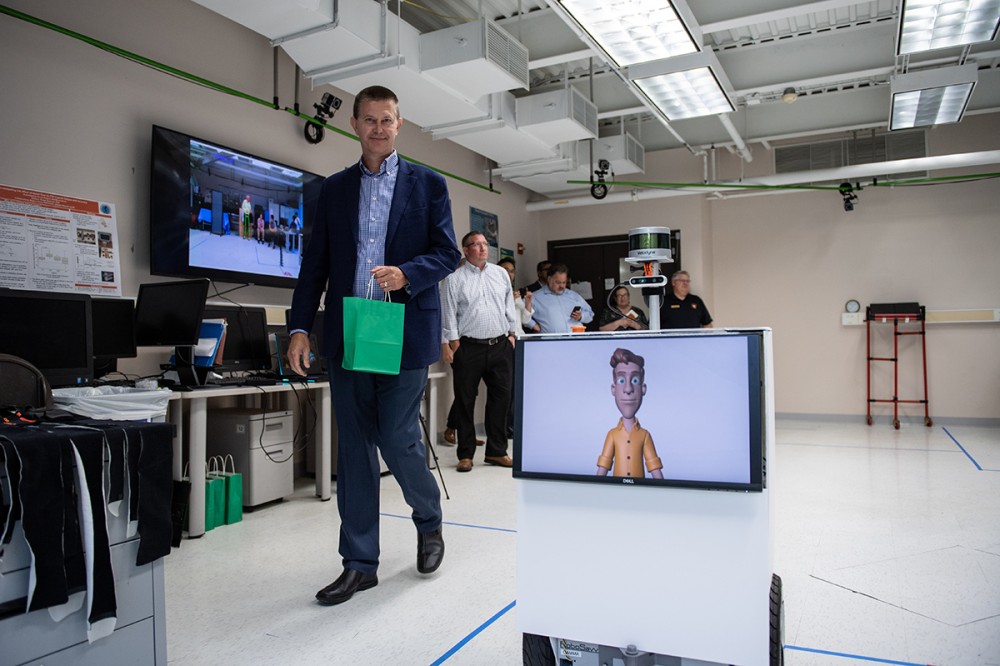
RIT is working with The Raymond Corporation, a Toyota Material Handling Group company, to develop a complex, “smart” warehouse system for the national company. Here, Joseph Yahner, director of new product development for Raymond Corp., participates in a demonstration of the robotic systems being developed.
Photo by Nate Tangeman
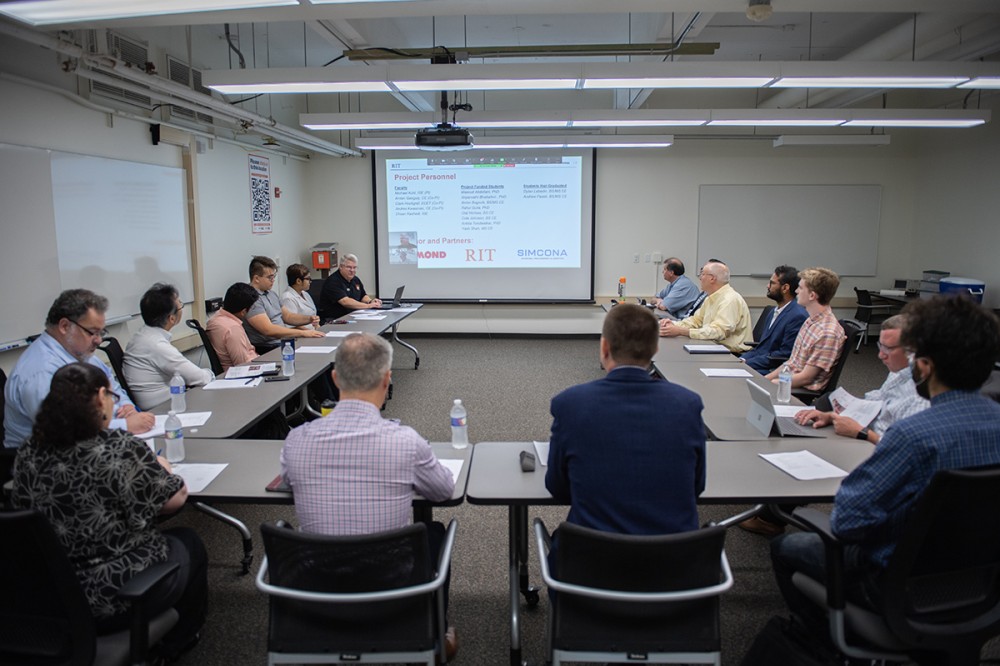
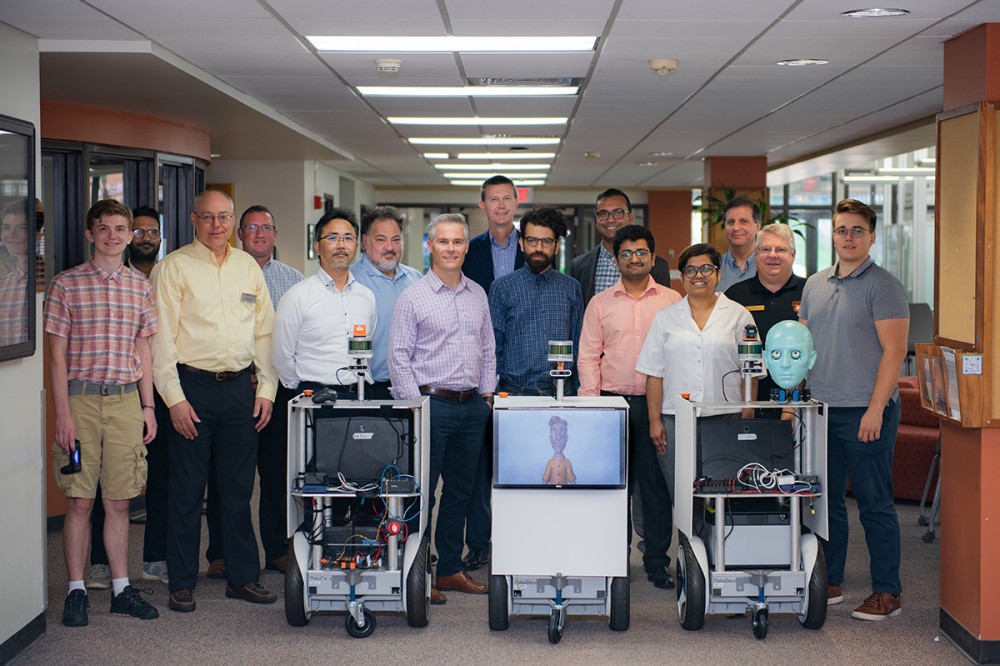
Led by Mike Kuhl, professor of Industrial and Systems Engineering, a multi-disciplinary team contributed to the project which is an example of applied research and successful collaborations between academia and corporations. Toyota Material Handling North America and Raymond Corp., a long-time partners of RIT, sought out the engineering faculty for its expertise in smart technologies. Company representatives provided insights about the changing demands in warehouse distribution systems.
Photo by Nate Tangeman
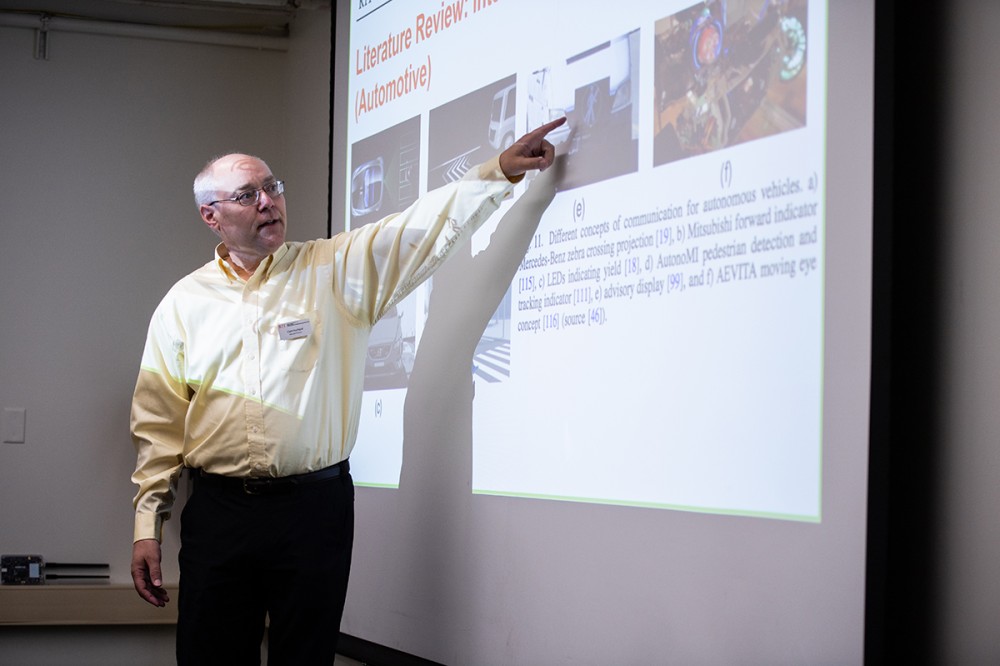
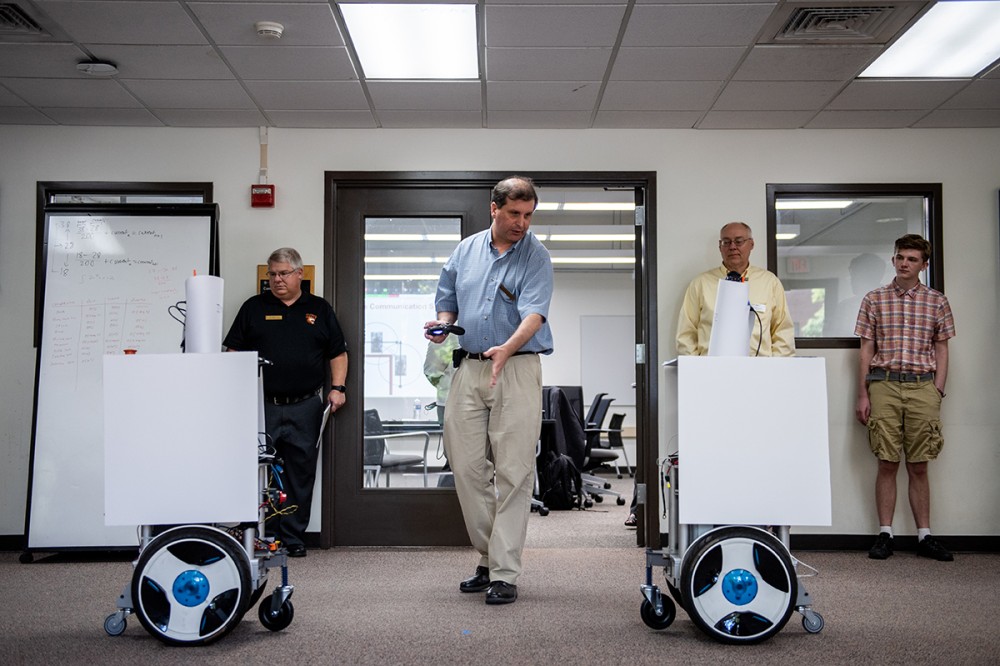
Clark Hochgraf, professor of electrical and computer engineering technology, related project goals to develop autonomous systems, or robots, that could understand non-verbal cues humans send and receive—an understanding of space, directions and right-of-way determinations made in seconds. Eye-tracking technology and predictive analysis are part of a test platform for the project, expanding the knowledge base about the use of autonomous technologies in warehouses.
Photo by Nate Tangeman
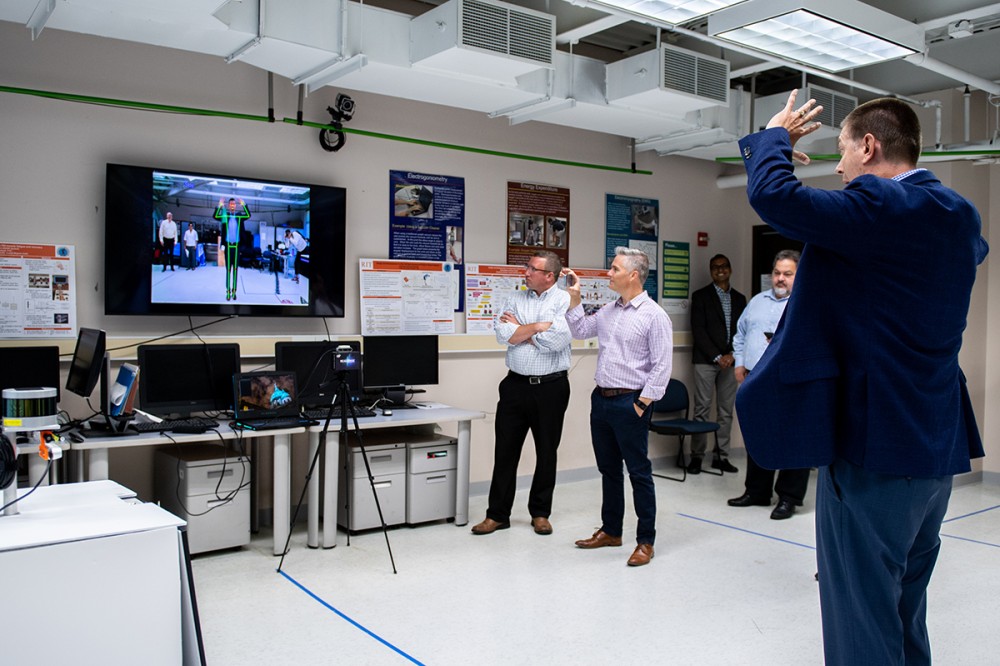
Erric Heitmann (foreground), vice president of engineering at Raymond Corp., participated in demonstrations with Joseph Yahner, director of new product development, and Fernando Goncalves, director of advanced research and development services from Raymond. The team experimented with several recognized gestures to indicate movements, interaction, stoppage and resumption of tasks/movement.
Photo by Nate Tangeman
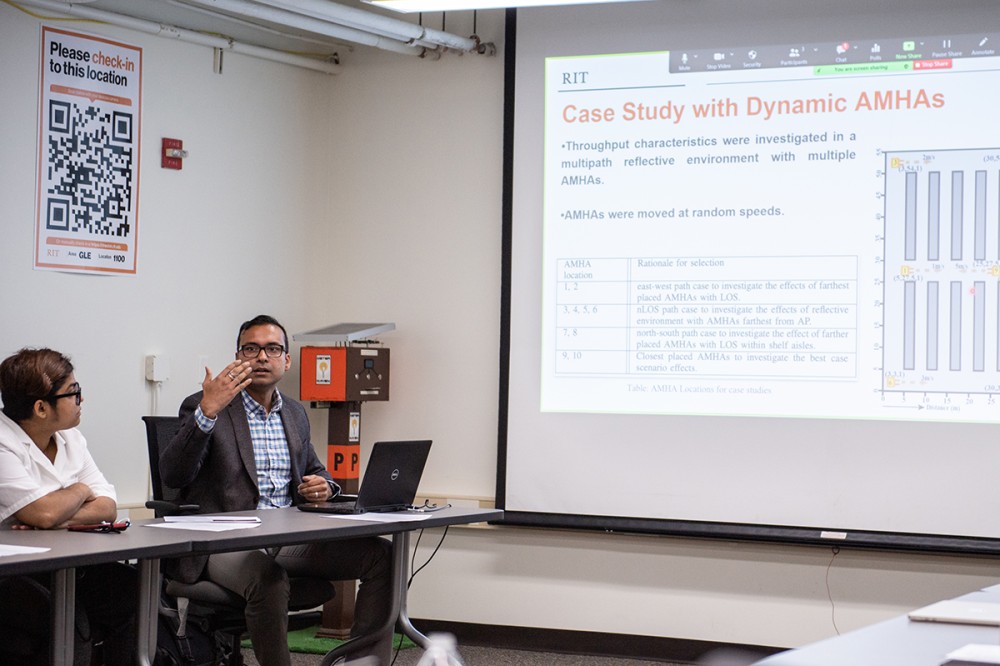
Amlan Ganguly, professor and department head of computer engineering, discussed the work done related to heatmaps, an imaging function, to assess communication coverage across areas of the warehouse.
Photo by Nate Tangeman
Much of the work entails understanding how humans and robots would work together in a warehouse environment. Several specific aspects of the project needed data points before a final solution could be set up, and the different areas included understanding current wireless technologies available, the growth of AI in building autonomous systems and the required tasks inherent in a warehouse setting.
Photo by Nate Tangeman
The project team introduced two avatars, a computer-generated image, right, and a robot. While there will be human-to-robot interactions, the team is evaluating multiple robots/avatars in the warehouse and communication between them should be as reliable as with human counterparts.
Photo by Nate Tangeman
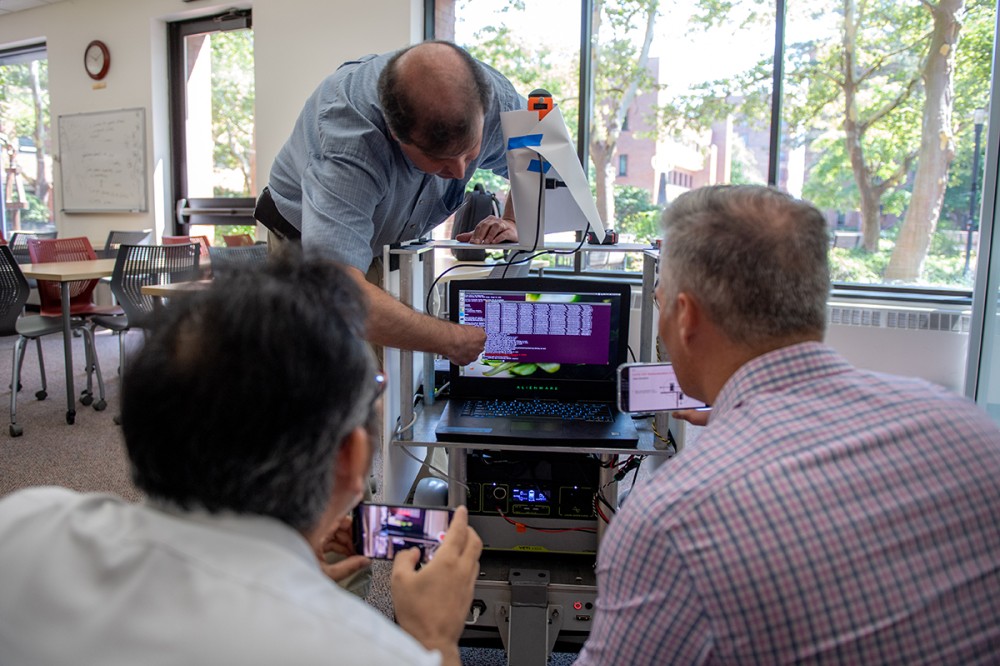
Andres Kwasinski, professor of computer engineering, discussed the network communications technology available to be integrated into the project and the testing done to confirm the best locations of sensors for wireless transmission. The newest 5G wireless systems are more robust and can accommodate the increased demands of the Internet of Things.
Photo by Nate Tangeman
Students, from undergraduates to doctoral candidates, have worked closely with company experts and faculty-researchers to understand how data and information about technology integration can be directly applied. It is an example of the transition between theory and application, and is a mainstay of learning in the faculty-led research initiatives at RIT.