NTID AlumniNews
AI tool developed by RIT/NTID assists deaf students with English grammar, with support from Google.org
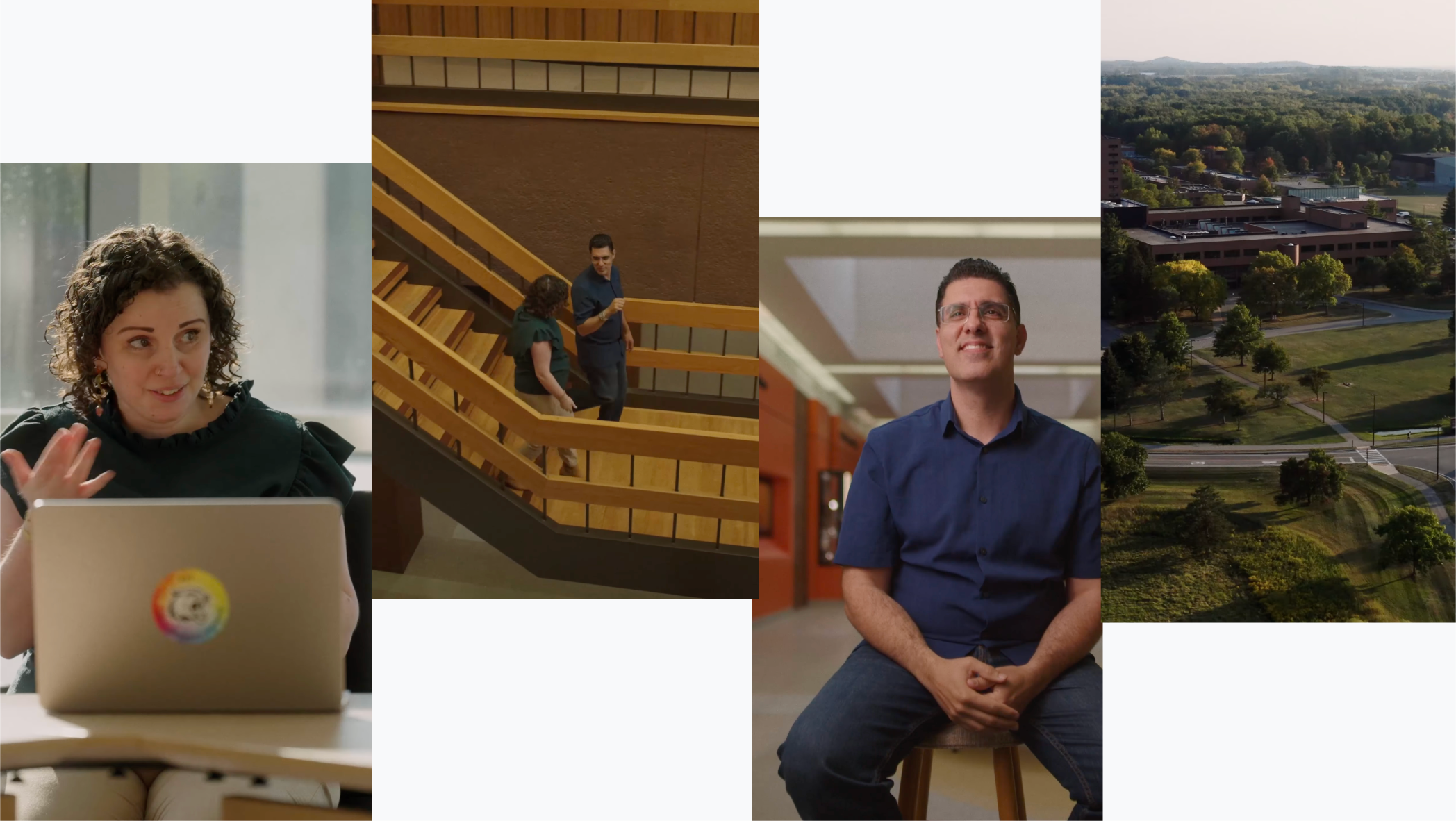
Rochester Institute of Technology’s National Technical Institute for the Deaf, with support from Google.org, has developed “Grammar Laboratory,” a learning tool that uses artificial intelligence to assist deaf students with English grammar.
“Grammar Laboratory uses a bilingual approach, comparing both ASL and English, and uses AI to create individualized multiple choice questions that center students' skills and language goals.,” said Erin Finton, developer of this curriculum and lecturer in the college’s Department of Liberal Studies.
Finton went on to explain that many deaf individuals use American Sign Language, or ASL, as their first language, which has its own grammar and structure that is very different from written and spoken English. Deaf students are also at risk of language deprivation, or lack of access to a complete language (either ASL or spoken language) during childhood, which may lead to challenges in language learning later in life.
“Grammar Laboratory is designed to provide personalization that can help strengthen language foundations in both ASL and English and move students toward a better understanding of both languages, preparing them for professional success after graduation.”
Sam Sepah, an AI Accessibility Research Program Manager at Google and a graduate of RIT/NTID, has worked closely with Finton and the developers of Grammar Laboratory from the beginning.
“Grammar Lab, provides a personalized learning experience for each student,” said Sepah. “As a tool that supports students alongside their professor, we can move away from a ‘one size fits all’ approach to learning and instead use AI to meet students where they are.”
A film produced for Google by BBC StoryWorks Commercial Productions highlighted the development of the Grammar Laboratory tool, featuring both Finton and Sepah along with students in Finton’s Literacies II and III classes.
The program will continue to be refined as more students use it.
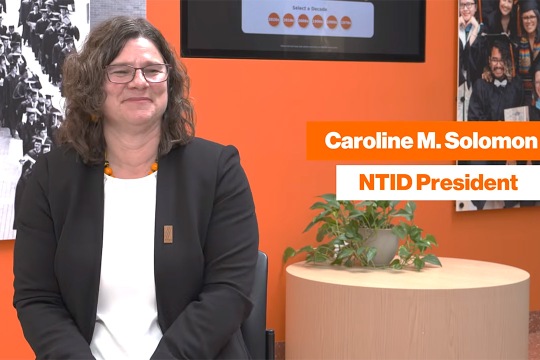
“Researching and developing teaching tools such as Grammar Laboratory is an integral part of RIT/NTID’s mission to prepare deaf and hard-of-hearing students to succeed in a global economy,” said Caroline Solomon, NTID president and RIT vice president. “Having a talented and committed alum like Sam working with Erin, who is a CODA— child of a deaf adult—as well as the daughter of two former NTID faculty, brings this project full circle.”
This story originally appeared in RIT News.