NCCC Success Story
Flavio Medina
Computing and Information Technologies
Software Developer
Where are you from?
I was raised in Arlington, VA and I currently live in Rochester, NY.
What is your degree program?
My degree program is in Computing and Information Technologies (CIT) with a minor in Cybersecurity Risk Management, within RIT’s Golisano College of Computing and Information Sciences (GCCIS).
What is your primary communication style – ASL, spoken English, both, or another language?
My primary communication style is ASL.
Tell us the date of your co-op/internship, your position title, and the company you worked for:
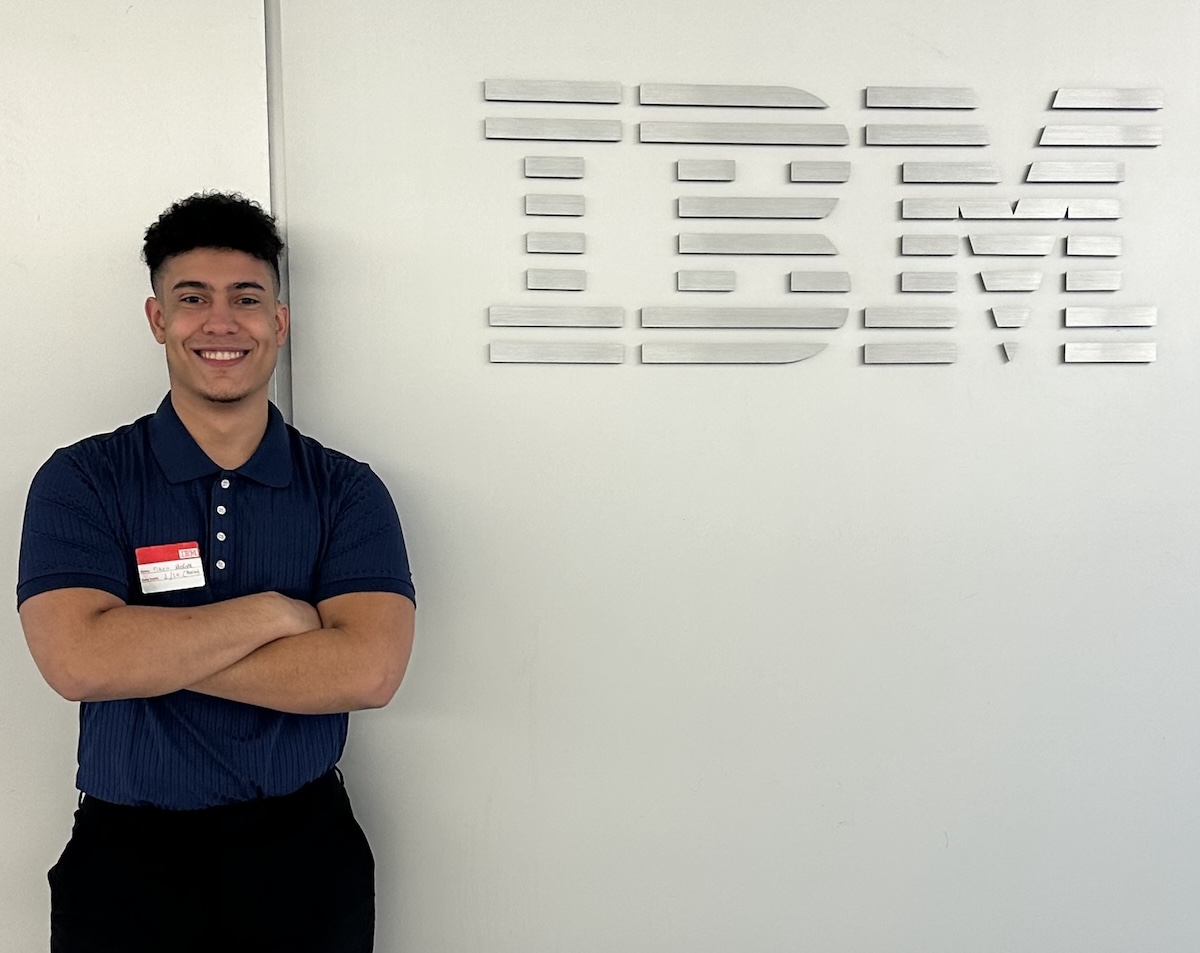
I am a Deaf/Hard-of-Hearing Co-op Software Developer at IBM, with a term running from January 20, 2026 through May 29, 2026.
What was your role and what kinds of projects or tasks did you work on during your co-op/internship?
I worked as a Software Engineer on the Cognos Analytics team, focusing on operator and broker development. My work included Go programming, Kubernetes event handling, cloud-native workflows, observability improvements, and backend engineering tasks. I contributed to reliability, automation, and accessibility awareness within the team.
How did your experience at RIT/NTID prepare you for this job?
RIT/NTID prepared me by giving me strong technical foundations, hands-on project experience, and the ability to collaborate in diverse teams. NTID also strengthened my communication skills, self-advocacy, and confidence in navigating professional environments as a Deaf engineer.
Did this experience change or confirm your career goals? If so, how?
This experience confirmed my career goal of becoming a backend/cloud software engineer while continuing to advocate for accessibility in tech. It showed me that I can contribute meaningfully to large scale systems and also help organizations improve accessibility awareness.
How did you communicate with your coworkers and supervisors (e.g., ASL, speech, writing, texting, etc.)
I communicated using ASL, writing, messaging, and visual tools such as Slack and MS Teams. I adapted depending on the situation and the communication preferences of the team.
What communication tools or accommodations helped you do your best work (e.g., interpreters, captioning, video relay, clear masks, etc.)?
Interpreters (both VRI and scheduled), captioning, chat-based communication, and clear written documentation were essential. They also offered captioning wearables, which was a cool option. These tools ensured smooth collaboration and full access during meetings, discussions, and technical reviews.
What accessibility tools or technology were most helpful to you at work (e.g., visual alerts, CART, captioned training videos, etc.)?
Captioned training videos, interpreters, and accessible documentation were the most helpful. These tools supported my ability to learn, participate, and contribute effectively.
Did your employer provide accommodations proactively, or did you request them? What was that process like?
My employer provided some accommodations proactively, and I also requested others as needed. The process was smooth once I communicated my needs, the team and HR were responsive and supportive in making sure I had full access.
In what ways did your employer or team create an inclusive environment for you?
My team created an inclusive environment by being open to learning about Deaf culture, using accessible communication methods, scheduling interpreters, and checking in regularly to ensure I had what I needed.
They treated accessibility as a shared responsibility, not just my burden.
What advice would you give to other deaf and hard-of-hearing students preparing for their first co-op or internship?
Advocate for your communication needs early, be clear about what helps you succeed, and don’t be afraid to ask questions. Build relationships, stay curious, and trust that your Deaf identity is a strength, not a limitation.
What would you want future employers to know about working with deaf and hard-of-hearing professionals?
Deaf and Hard of Hearing professionals bring strong problem-solving skills, adaptability, and unique perspectives to teams. Accessibility is not difficult, small accommodations make a big difference. When communication access is provided, we can contribute fully and excel in any technical environment.