Vertically Integrated Project
Peaceland: Choose Your Memory
Goals
Do you want to work on a video game that has an important social message?
A peacebuilding game that shows players the consequences of their decisions without judging their actions? If yes, we’d love to have you join us as we continue to create, design, develop Peaceland with a collaborative skilled team.
Our game: When one war ends, can we prevent another?
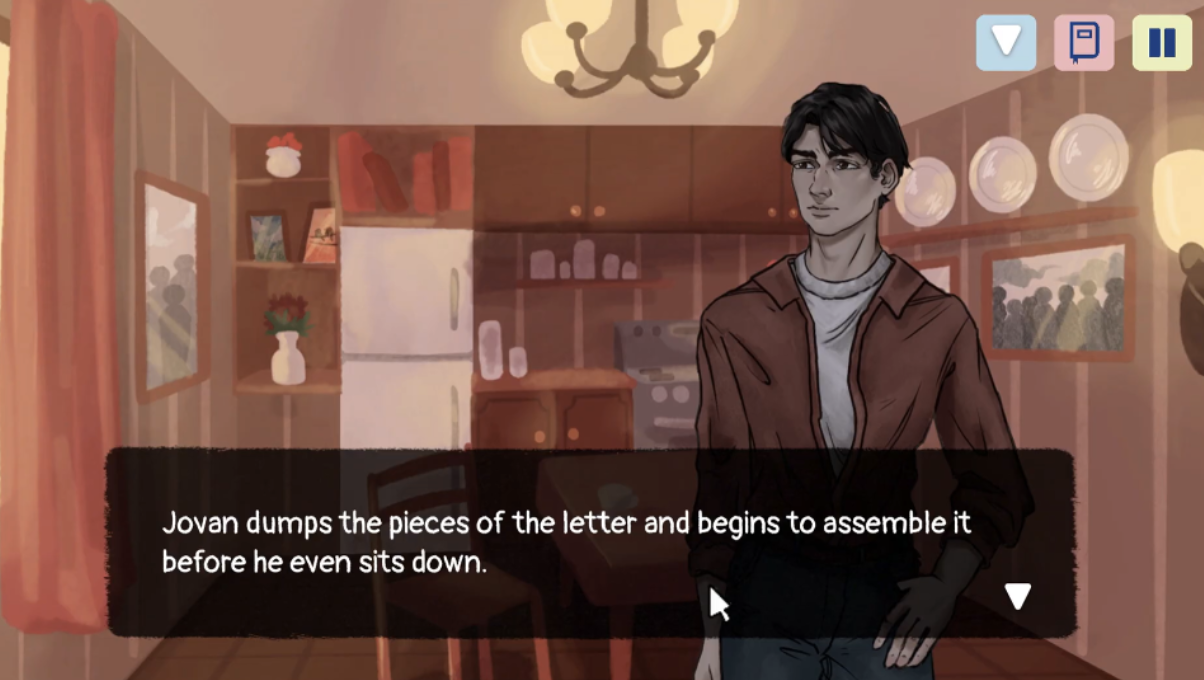
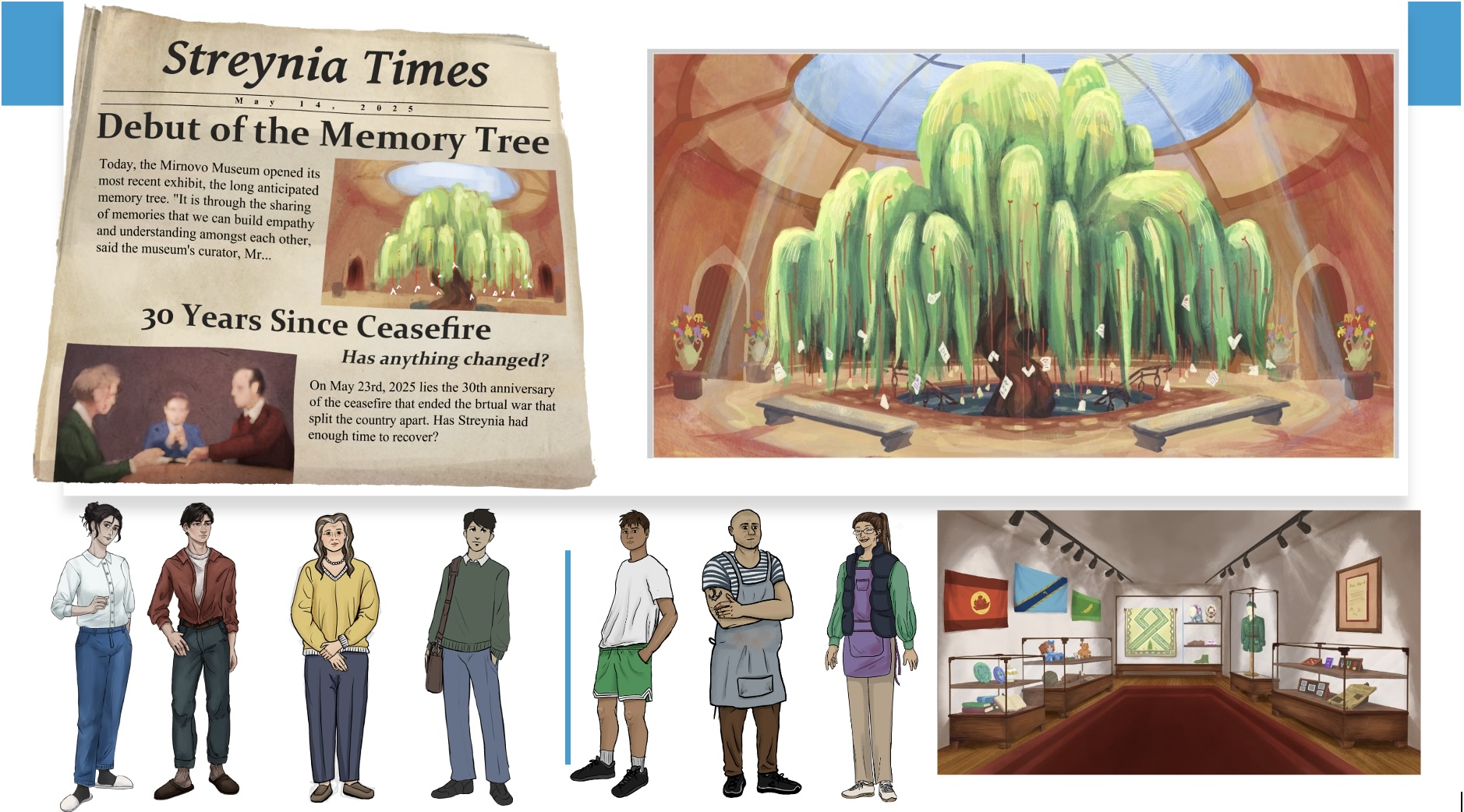
“Peaceland: Choose Your Memory” is a role playing video game set in a fictionalized country recovering from a conflict that took place 30 years earlier. The game begins when a player enters a museum and chooses a memory linked to a character in the present. The player must make seemingly small decisions as they face a series of challenges drawn from real memories and factual events as they advance to the next level in the present. The intended and unintended consequences of their choices are revealed at the game’s end. The goal is to reach “Peaceland” where they reap rewards from a harmonious and prosperous country. Failure sends them to a country where the perpetual destabilizing threat of conflict is the norm.
Player Goals:
1. Disrupt divisive narratives about the past and offer alternatives to using violence
2. Motivate players to build empathy towards individuals and groups they may perceive negatively
3. Reveal each player's secret power to shape positive high-impact outcomes through small actions.
Agile Development-Students Creating, Communicating, Collaborating- A semester based iterative Process - a Design & Development methodology that makes game software more people centered.
Our game design builds upon these key principles:
- Choices matter
- Don’t judge the player
- Keep it authentic
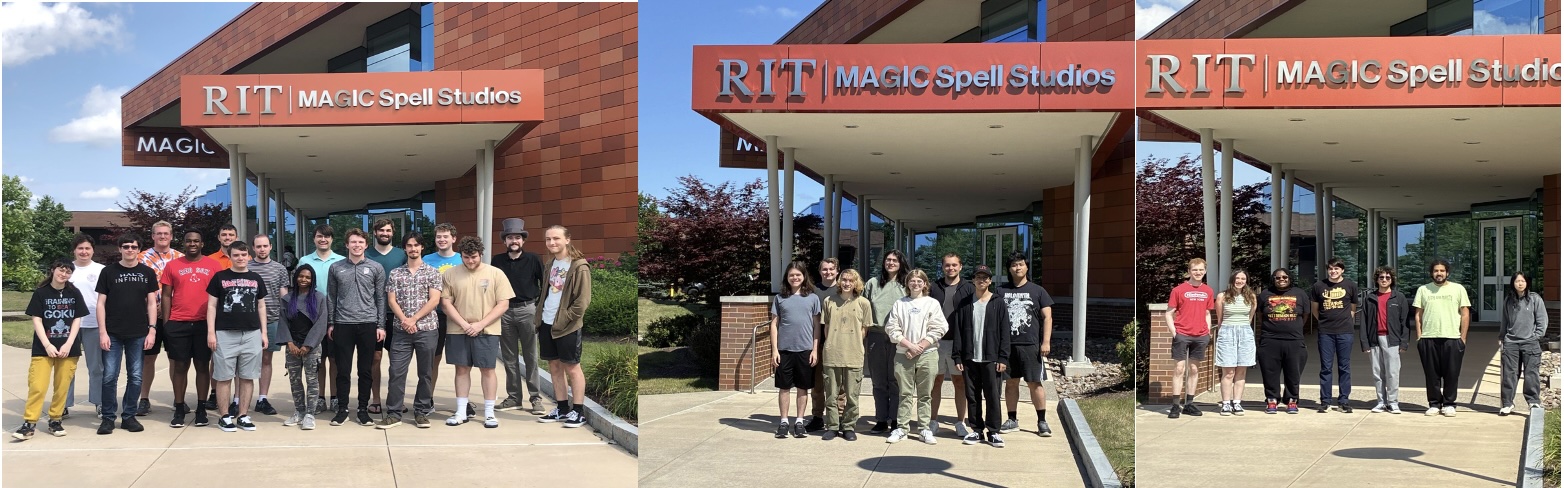
Peaceland Summer Co-ops 2024 & 2025 & 2026
“We remember in order to give meaning to the present and to gain power over the future”
Methods and Technologies
How it Works
Post conflict generations are caught in the middle wondering how they can acknowledge the past without sacrificing a hopeful future. How we transmit memories after the end of violent conflicts sets the conditions that help youth build inclusive peaceful futures or ones that divide and harden ethnic divisions. This open access, fun to play video game being developed for PC, mobile, and web-based platforms. offers a nonjudgemental space for players who may not otherwise engage in peacebuilding activities to self-reflect about:
- How other people’s memories impact their attitude towards others
- Intended /unintended consequences resulting from their small decisions
- The important role they play in building a peaceful future or returning to conflict.
Workflow Goals
Each team utilizes agile development, a design/development methodology that makes game software development more people centered by working in small interdisciplinary teams that prioritize communication, collaboration, playtesting, feedback, revision, implementation, iteration (repeated design, test, evaluate).
- Lessons Learned from each group sets up the next team’s goals.
- Key lesson: Keep within scope, prioritize, and playtest often.
Each team organizes sprints (days, weeks, months) with specific goals, and focus on:
- Communication and collaboration
- Constructive feedback- received and given
- Daily and/or regular stand ups
- All team weekly meetings
- Detailed documentation
- Input/Feedback led workflow.
Playtests, data collection, workshops, conferences will occur throughout each semester and summer. Lessons learned from postmortems completed by each team member are incorporated into the next iterative phase which helps us make significant progress in our current pre-production phase.
Workflow expectations are adjusted according to students predetermined level of participation and workloads.
Academic Majors / Major Area of Interest
Your Role
You will utilize your relevant expertise and experience to communicate and collaborate with and work in interdisciplinary, cross-functional teams to design, develop and build upon previous work in order to continue bringing our game to the next narrative, art, design, and development level.
Earn academic credits, co-op credits, other options
Flexible 1-3 credit hours offer students opportunities to participate on a part-time or full-time basis according to their needs and requirements for each project phase. Each credit hour will equal approximately 3-4 hours per week (12 hours for 3 credits).
Academic credit can apply to honors program and independent study. Available for Part Time and Full Time Co-op credit.
Students can continue in each phase of the project to accrue credits. Every effort will be made to accommodate students with the desired interest, experience, and skills.
Students should consult with their advisor and/or program coordinator about how this project can apply toward their graduation requirements. Open to international RIT students from Kosovo, Croatia, Dubai, China.
Expertise/ Skills/ Academic Interests
This project will utilize a wide range of methodologies, skills, and technologies including (but not limited to):
- Interest in creating social impact games, serious games, transformative video games that are fun to play and convey a serious message
- Ability to communication and collaborate with team members from a range of creative backgrounds, with international contributors, fact checkers, play testers
- Knowledge and experience in writing and designing narrative dialogue for an interactive fiction-based 2D video game
- Knowledge and experience in design, development, and asset production for 2D video games for the web, PC and mobile devices
- 2D Artists interested in working with narrative and design/development teams to create 2D assets, environments, characters
- Ability and willingness to research and design as needed and critique work from earlier project phases and relevant video games
- Creative skills in concept and technical art, narrative design and worldbuilding, music for games
- Technical skills in Unity 6, UI/UX, Yarn Spinner, programming, coding, sound design and engineering
- Application of serious research standards and do-no-harm principle when using publicly available but sensitive memories. Knowledge of and/or experience in post-war environments is desirable but not necessary.
- Experience in conducting play tests is desirable but not necessary
- Ability to work on web design and development, create video trailers
- Ability to carefully document all work to pass on to the next team.
Relevant majors and minors from which students may be interested include, but are not limited to:
- Game Design and Development- All relevant computing fields (new media interactive development, web and mobile computing, software engineering)
- Artists- illustration, graphic, others, interested in producing game art and design
- Interactive fiction writers, worldbuilding, English
- Game research and design
- Film and animation
- Digital media arts and technology
- Sound and music design, Composers
- Social science majors especially those who focus on national and international politics, history, peacebuilding, conflict
Regardless of major, all students should have a strong interest in designing/developing meaningful interactive experiences. They should also have a background in team collaboration and in the skills and technologies relevant to their intended role in this project.
This ongoing project is in the pre-production phase as we continue to prototype and playtest in Fall 2026.
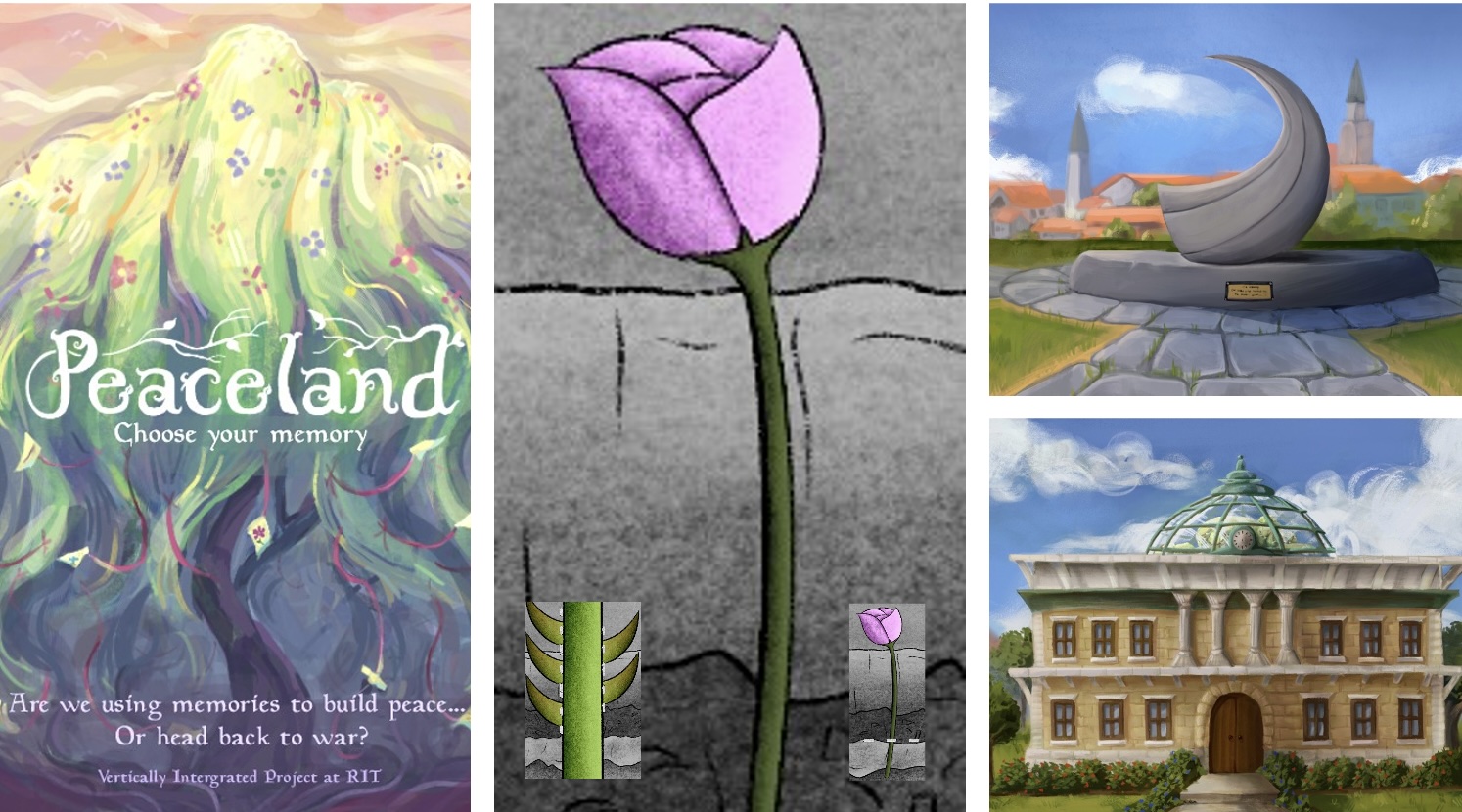
Presentations and Resources
Our Story

Spring 2026 produced another memory story and testable demo and Summer 2026 completed the narrative arc of the game and 50% of the game.
The concept for this video game project began during the faculty leader’s 2022-23 Fulbright Scholar grant in Kosovo where she taught and led RIT Kosovo students on a two phased PeaceTech survey project. Students asked locally led peacebuilding organizations about how they used digital technologies to communicate their messages focused on bridging ethnic divides, gender, and youth. It became clear that in addition to using social media and other digital platforms video games are increasingly viewed as ways to engage youth in peacebuilding activities in Kosovo and beyond.
The content for this project is drawn from the faculty leader’s earlier and current research and work in early and later post conflict environments, recent observations, international collaborators, local external collaborators
It builds upon two 2024 Brainstorming Workshops and three full time RIT in person IGM student co-ops 2024-26. The Brainstorming workshops, funded by PCCE (Partners for Campus Community Engagement, https://pcce.org) were collaborations between UR students, M.K. Gandhi Institute for Nonviolence, and RIT students to begin developing game characters and stories. RIT Kosovo students who were in Rochester participated in these workshops. We have worked synchronously with three University of Rochester funded students (two were in Bosnia-Herzegovina and Serbia/Kosovo) during each summer co-op 2024-2026.
Phases: The Discovery Phase, completed in Summer 2024 by a 19 member Summer Co-op team (designers, narrative led by a UR student narrative designer, UI/UX, concept artists, developers) drew upon workshop results to design and develop a game demo. We continued our contact with RIT Kosovo students. The 2024-2025 phases have focused on: Fall 2024: Reflect, Reevaluate, Reset project goals based on RIT Summer 2024 Co-op); Spring 2025: Revised game to 2D, built prototype, and first new playtest; Summer 2025: Designed, developed, a second game playtest based on the Spring game demo; Fall 2025: Continue designing and developing prototyping phase.
Presentations:
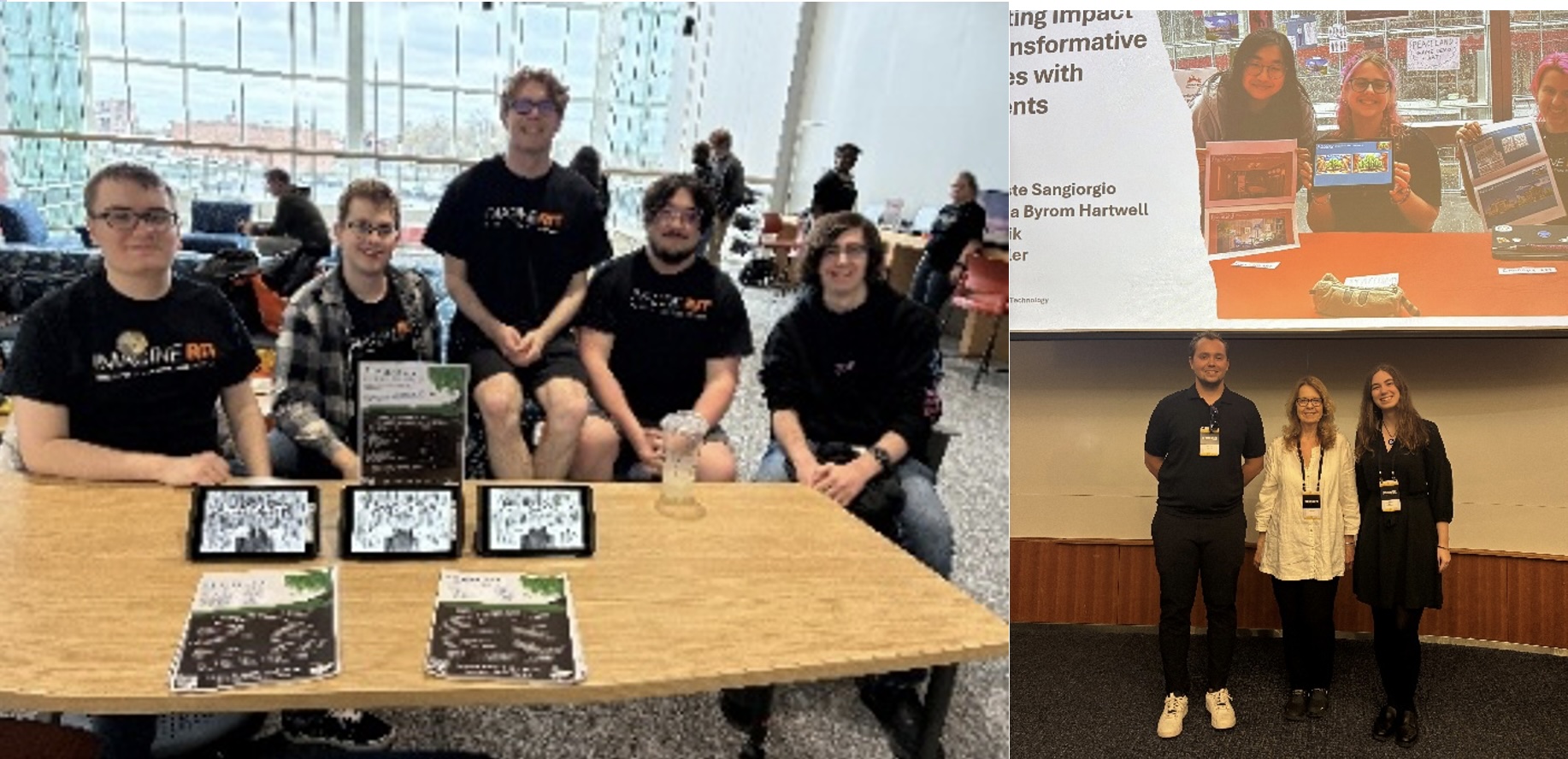
Serious Play Conference 2026, “Creating Impact in Transformative Games with Students”, Dr Celeste Sangiorgio, Dr. Marcia Byrom Hartwell, Bella Miller, Narrative Designer & Team Leader; Billy Guzik, Producer, Duke University, Durham, NC.
Serious Play Conference 2025 “Designing & Developing a Peacebuilding Game with Students”, Dr Marcia Byrom Hartwell, Josh Stead-Dorval (UR), Jye Crocker, Zach Jordan, Billy Guzik, St. John Fisher University, Rochester NY
Narrascope, 2024, Strong Museum, Rochester NY Title: “Choose Your Memory”: can a video game build peace? Building Empathy through Interactive Fiction, UR Student Josh Stead-Dorval, Narrative Team Lead; Kristana Textor UR Professor, Marcia Byrom Hartwell, RIT Professor of Practice
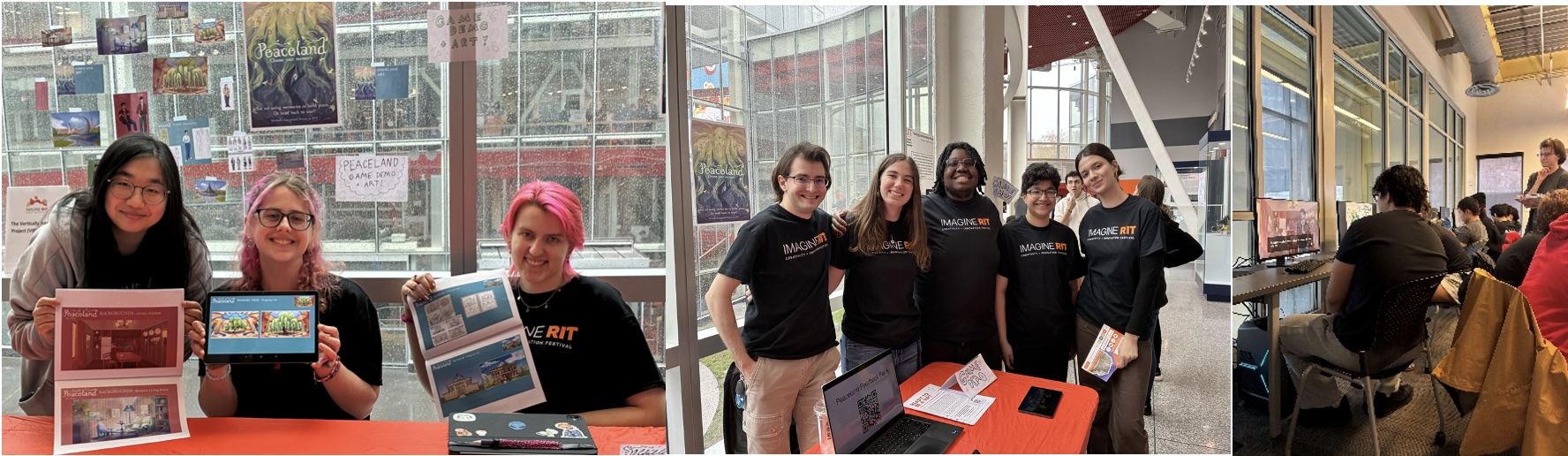
Imagine RIT, April 2025, April 2026- all team members present current work and playtest demos with visiting public
Resources
“Everyday Peace, How So-called Ordinary People Can Disrupt Violent Conflict", Roger Mac Ginty, 2021, Oxford University Press
Everyday Peace Indicators: https://everydaypeaceindicators.org/
A ‘youth-ed’ peace? A framework for understanding youth peacebuilding,Justina Pinkeviciute, Elly Harrowell, Egoitz Gago Antón, Martha Lucía Gutiérrez-Bonilla & Mateo Ortiz Hernández (28 May 2025) Peacebuilding, DOI: 10.1080/21647259.2025.2501872 https://doi.org/10.1080/21647259.2025.2501872
Digital Pathways for Peace: https://www.peacedirect.org/digital-pathways-for-peace/
Games for Change: https://www.gamesforchange.org/
Serious Games Conference: https://seriousplayconf.com/
University of Toronto Mississauga, ON, Canada
Games For Peace: “pioneering the use of Video Games for fostering dialog and trust between young people in conflict zones” https://www.gamesforpeace.org/
CRISP- https://crisp-berlin.org/
Gamified approaches to conflict transformation and civic education (Berlin, Germany).
Welcome to the Digital Peacebuilders Guide
https://cnxus.org/digital-peacebuilders-guide/
Build Up video (short): “We transform conflict in the digital age.”
https://youtu.be/xRZiglaia38?si=HDB0pHU300hYbnAI
Digital Peacebuilding Guide (Build Up)
https://howtobuildup.stonly.com/kb/guide/en/digital-peacebuilders-guide-X49wcx4IFi/Steps/1469015
Digital Peacebuilding Toolkit (Build Up)
Build Peace 2023 Documentary
https://youtu.be/TEJkOu8-XSg?si=9NTo1XkoypCy3QhB