Campaign Quarterly Update – Passing $600 million
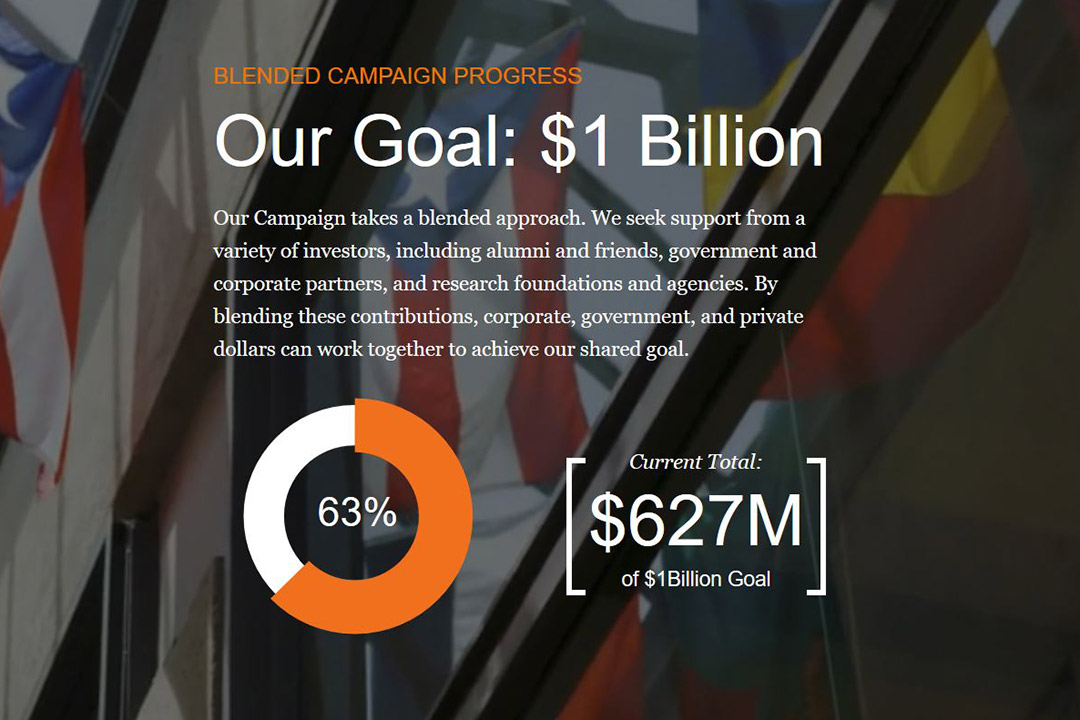
This is the third in a series of updates from RIT’s Senior Leadership on the $1 billion blended campaign, Transforming RIT: The Campaign for Greatness. We are pleased to provide a snapshot of a few of our success stories to-date.
As a blended campaign, all philanthropic, research, and government grants received by RIT count toward our $1 billion goal. We are grateful to the work of RIT’s faculty and staff for your work in increasing RIT’s stature as a university.
As we open the 2020 fiscal year, RIT’s blended campaign has reached $627 million in attained funding. That moves us past the 60 percent mark of our goal in this historic $1 billion effort to transform RIT.
To date, this campaign has secured philanthropic gifts, government grants, and research grants to fund RIT’s strategic plan and allow us to engage alumni, grow our status as a national research university, and build valuable partnerships. As Transforming RIT: The Campaign for Greatness continues to succeed, we will provide the highest level of education to our student body, extend our renown as a top U.S. university, and apply our collective creativity and innovative thinking to effect powerfully positive change in the world.
Here are a few examples of how Transforming RIT has already impacted the RIT family:
Scholarships
To-date, 164 scholarships have been established, totaling more than $48 million. Every RIT college has benefited from new scholarship funds since the start of the campaign.
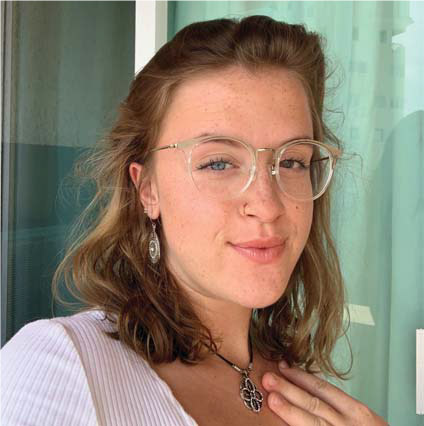 Alina Kenina
Meet Alina D. Kenina, a third-year exercise science student in the College of Health Sciences and Technology: “I am so grateful to Dr. Sharon Meyers for creating the Johanna Larson Endowed Scholarship Fund for Health Care Education. The fund provides RIT/NTID students with opportunities to expand their understanding of various fields within healthcare fields.
“My family was not able to support my financial needs to continue my bachelor’s degree. Dr. Meyers’ generosity gave me the opportunity to continue working and studying.”
Professorships
Eight professorships have been established with gifts totaling more than $16 million. These include an endowed faculty director and two endowed posts in cybersecurity, and a distinguished research professorship.
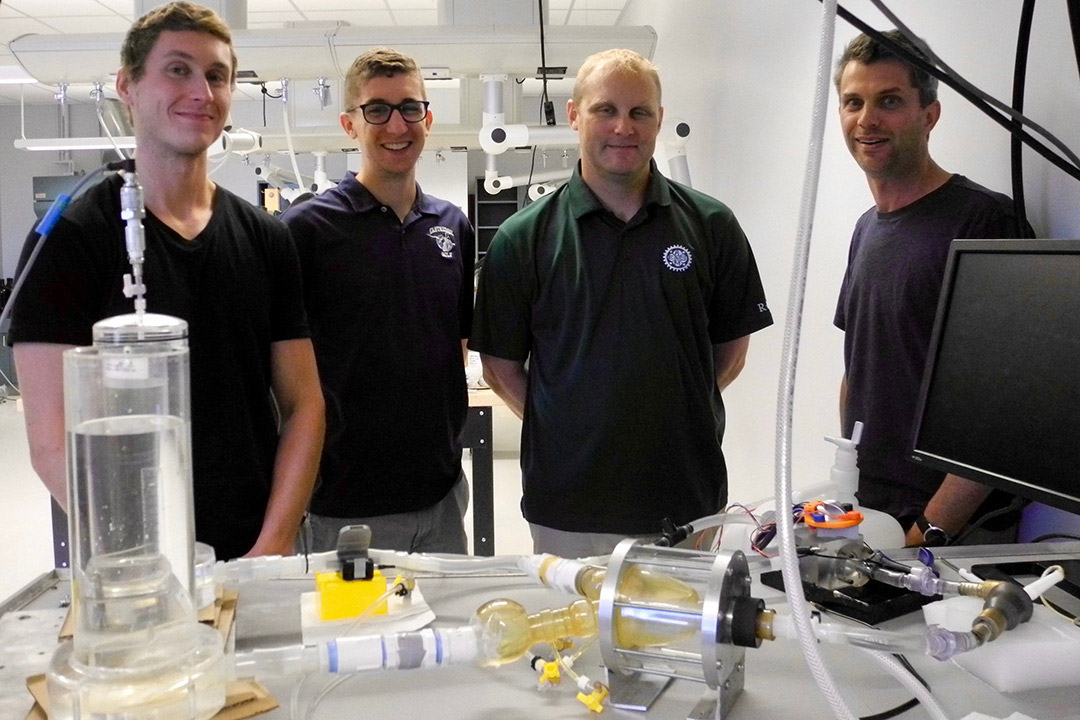 Michelle Cometa Steven Day, right, with others members of the digital stethoscope development team: Ian Prechtl, Steven Reuter, and Jason Kolodziej.
 Meet Steven Day, Harvey Palmer Professor and department head, biomedical engineering: The Harvey Palmer Professorship was established to recognize the leadership of the former dean of the Kate Gleason College of Engineering. The post is funded by a generous gift from the Gleason Family Foundation. An endowment supports the chemical and biomedical engineering programs and two degree programs Palmer established at RIT, and it provides resources to support faculty professional growth, research initiatives, student stipend support and student-engagement opportunities.
The post is currently held by Steven Day, head of the college’s biomedical engineering department. Day and his research team at RIT recently developed a new digital stethoscope that combines precision sensors, electrocardiogram technology and machine learning applications into one piece of equipment to better detect heart ailments and problems that might occur with an implanted heart pump.
Student experiences
Many funds have been established in colleges, student affairs, and centers across the university to support outstanding experiential opportunities for RIT students.
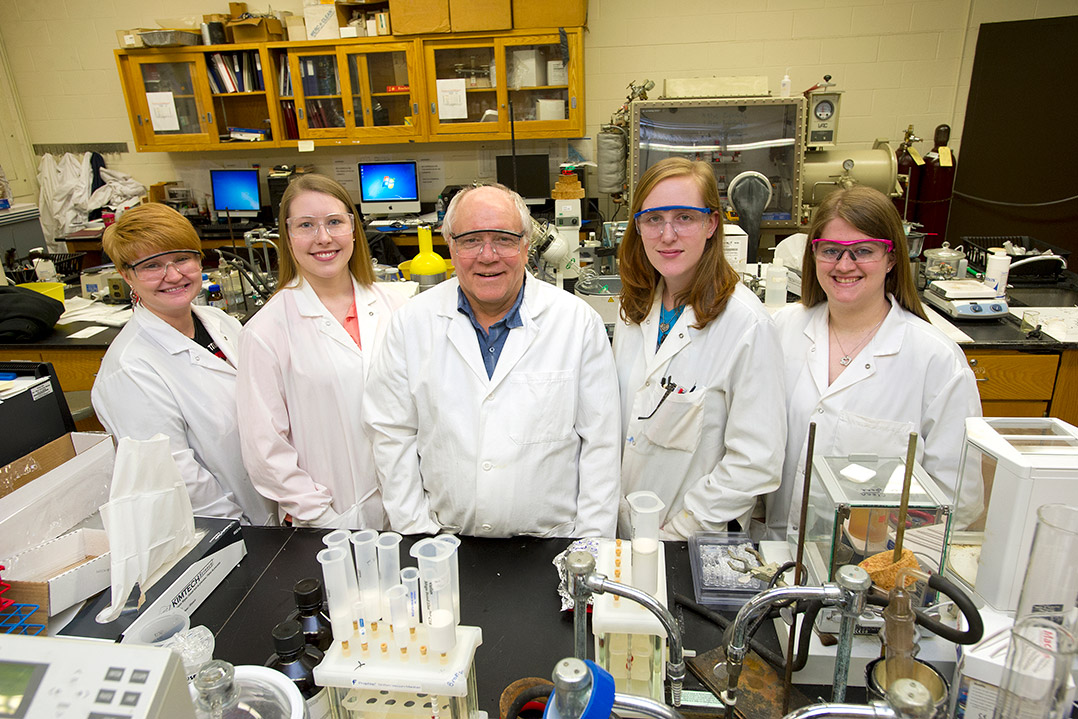 A. Sue Weisler The Fred L. Emerson Foundation established the Emerson Endowed Fellowship Program for Undergraduate Research in the College of Science, allowing RIT to double the number of undergraduate students conducting full-time scientific research during the summer. Here, graduates Taylor Barrett, Chelsea Weidman, Stephanie Beach, and Lauren Heese gained experience in RIT professor Hans Schmitthenner's lab.
 Meet the Emerson Fellows in the College of Science: The Fred L. Emerson Foundation established the Emerson Endowed Fellowship Program for Undergraduate Research in the College of Science, allowing RIT to double the number of undergraduate students conducting full-time scientific research during the summer. These Summer Undergraduate Research Fellowships (SURF) award selected students a stipend to work on a targeted research project during the summer at RIT. These students present their research and innovative ideas at the annual Undergraduate Research Symposium, a free, public event showcasing the research undertaken by undergraduate students across the RIT campus every August. All RIT undergraduate students are eligible and encouraged to participate.
Research
Research funding now stands at $399 million since the start of the campaign. This includes nearly $73 million from the National Science Foundation and $20.5 million from the National Institutes of Health. In the most recent fiscal year, new sponsored research funding topped $74 million, the second highest level ever.
Recent research highlights include:
- NSF renews CyberCorps cybersecurity scholarships: RIT will use a $5.5 million federal grant to grow a program that trains the next generation of cybersecurity professionals who will help secure the nation. The National Science Foundation awarded RIT the five-year grant that will renew funding for the CyberCorps: Scholars for Service program. RIT will add 24 new scholars to the program, which provides full tuition and a stipend in exchange for future government service. The award builds on RIT’s previous successful participation in the CyberCorps program to prepare additional highly qualified cybersecurity professionals to fill the talent gap in the government workforce. The university was first awarded a five-year, nearly $4 million grant to fund the program in 2014.
- Researchers receive NSF award to develop new diagnostic tool for cardiac disease: Researchers at RIT are providing a better map to the human heart. They are developing a critical tool that will help clinicians identify damaged areas in the heart to more accurately diagnose cardiac disease. The group received more than $850,000 from the National Science Foundation for the collaborative research on the development and validation of “A computational framework for reconstructing and visualizing myocardial active stress.” The three-year project will address a currently unexplored niche in the cardiac modeling field, specifically the reconstruction and visualization of the cardiac biomechanical activity in the form of myocardial active stresses, to enable direct appraisal of cardiac function. The team will develop a computational framework and software for cardiac biomechanical simulations using data from high-resolution cardiac MRI images. New computational algorithms developed from this data will reconstruct active stress distribution from cardiac deformations.
- Ph.D. student receives Microsoft Research grant for diversity in computing: Larwan Berke, a computing and information sciences Ph.D. student, was one of only 11 outstanding doctoral students selected to receive the 2019 Microsoft Research Dissertation Grant. Each dissertation grant provides up to $25,000 in funding to doctoral students who are underrepresented in the field of computing. The funding will help students at North American universities complete research as part of their doctoral thesis work and aims to increase the pipeline of diverse talent receiving advanced degrees in computing-related fields. Microsoft Research reviewed more than 200 proposals for students and awarded 11 grants.
To learn more about Transforming RIT: The Campaign for Greatness, how you can get involved, or to make your campaign gift, please visit rit.edu/transformingRIT. And watch for future updates on how philanthropic and government grant dollars are transforming RIT.