Dear colleagues,
We write today to share important news about a leader whose work has helped RIT’s emergence as a nationally recognized research university.
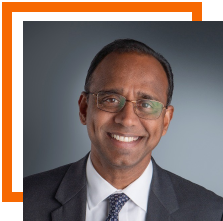
Ryne Raffaelle, Vice President for Research and Associate Provost, has informed us of his intention to step down from his administrative role during the first half of 2027. Ryne shared this decision early so that we can plan thoughtfully for a smooth transition and begin the process of identifying RIT’s next vice president for research.
Ryne’s impact on RIT has been extraordinary. He returned to RIT in 2011 to lead the university’s research enterprise after serving as director of the National Center for Photovoltaics at the U.S. Department of Energy’s National Renewable Energy Laboratory in Colorado, where he provided technical vision and strategic leadership in solar energy technology development. Earlier in his career at RIT, he served as a professor of physics and microsystems engineering, directed the NanoPower Research Laboratory, and was the first academic director of the Golisano Institute for Sustainability.
Since his appointment as vice president, Ryne has guided a period of remarkable growth and maturation for RIT’s research enterprise. Under his leadership, RIT advanced to Carnegie’s R2 classification as a high research activity institution, a milestone that reflected the university’s growing research capabilities and the increasing integration of research into the educational experience of our students. RIT has since retained its Research 2 designation under Carnegie’s updated framework, which describes RIT as a university with high research spending and doctorate production.
Most recently, RIT reached a new high-water mark in fiscal year 2025, receiving $105 million in sponsored research funding. That milestone included a record level of National Science Foundation awards, more than $21 million, as well as a record 30 NSF CAREER Award submissions. These achievements are a testament to the breadth and ambition of our faculty researchers, the growing strength of our graduate programs, and the research infrastructure that Ryne and many others across the university have helped build.
Ryne’s leadership has extended well beyond funding totals. He has helped strengthen the systems, partnerships, and support structures that enable faculty, staff, and students to pursue meaningful discovery and creative work. His portfolio has included sponsored research, research relations, human subjects’ protections, strategic research investments, interdisciplinary partnerships, and entrepreneurship-related programs. Over time, the role itself has grown as RIT’s research engine has grown.
Just as importantly, Ryne has been a steady advocate for the idea that research at RIT should be distinctive, applied, collaborative, and deeply connected to the education of our students. The institutional work now underway to expand RIT’s research enterprise — including continued growth in doctoral education, core research facilities, research infrastructure, translational activity, and strategic areas of scholarship — builds on a foundation that Ryne helped establish.
We are grateful to Ryne for his service, counsel, and commitment to RIT. He has helped position the university for its next chapter of research growth at a time when discovery, innovation, and creative scholarship are increasingly central to our mission and our future.
In the coming weeks, we will appoint a search committee to begin the process of identifying RIT’s next Vice President for Research. We will share more information about the committee and the search process once those details are finalized.
There will be an appropriate time later in the academic year to more fully recognize Ryne and thank him for his many contributions to RIT. For now, please join us in expressing appreciation for his leadership and for the lasting impact he has had on our university.
Best wishes for a successful start to the academic year.
Sincerely,