Designing for Net Zero: Student moves 100+ Products to Sustainable Solutions while on co-op
Undecided until he found Packaging Science, Ronnie quickly translated classroom skills into multiple co-op roles, driving sustainability and design innovation at top companies, Cummins and Emerson.
How did you find your program? What intrigued you about it? What was your journey like from end of high school to joining RIT/CET?
I heard about RIT's packaging program through my sister, who graduated from RIT in 2019 with a bachelor's degree in chemistry. During her time here, I paid a number of visits to the school and had the pleasure of attending many of the great events held on this campus, including Brick City Homecoming and Family Weekend, Imagine RIT, and countless hockey games. Therefore, before becoming a student, I was very familiar with RIT, its campus, and its culture. Throughout high school, I struggled immensely to decide which career I wanted to pursue after graduation. However, once my sister informed me of Packaging Science, something clicked. Many of her friends were involved in the program and emphasized both the engaging curriculum as well as the extensive career opportunities that a packaging degree offers. Much of my senior year in high school was spent researching these opportunities, and helping myself understand what purpose packaging students and packaging experts serve to our society. The bulk of my interest lay in RIT's drive and advocacy for sustainable packaging solutions, and the potential for students of the program to support such goals. I was taken on my first official campus tour in the spring of 2022. Once I met with Stefanie Soroka, the program's advisor, I was given a tour of the Packaging Materials Lab and the Packaging Science Dynamics Lab. At that point, I was sold. I was struck by the utilization of such unique, advanced tools to evaluate the physical properties and structural integrity of packaging. The promise of fulfilling experience in the classroom, combined with the opportunities available through RIT's prestigious co-op program, made my decision to attend an easy one.
How did you find your co-op? Any interesting backstory?
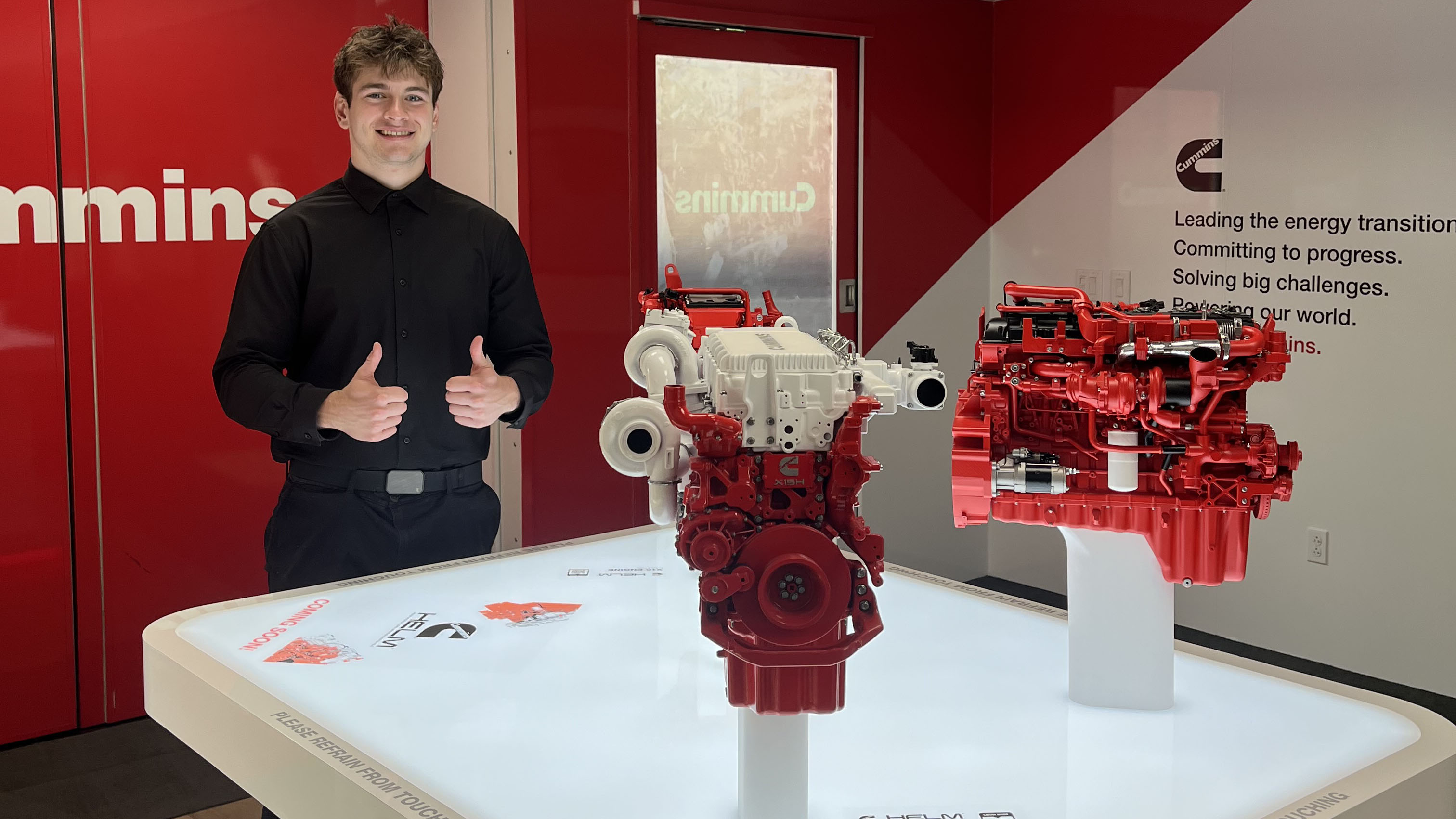
I completed my first co-op at Cummins Inc. in Indianapolis, IN during the summer of 2024 after my second year at RIT. I was given the opportunity to interview with Cummins after chatting with two of their senior packaging engineers at the 2024 Packaging and Graphic Media Science Career Fair. My experience at this career fair was one I will never forget. The opportunity to speak with industry experts from companies as renowned as Mars Wrigley, PepsiCo, Merck, etc. not only helped me gain the work experience I need to pursue a career in packaging, but also gave me the confidence to build meaningful connections and advance my professional development within the field. I completed my second co-op with Emerson's Professional Tools business at The Ridge Tool Company headquarters in Elyria, OH during the fall of 2024. The journey to find and eventually secure this position was stressful, as I quickly learned how scarce fall-only packaging co-op opportunities can be. At the end of my search, however, I found this specific job posting from Emerson on LinkedIn, and immediately applied. After a smooth interview process, I was quickly offered the position. With this having been the sole application I had submitted in pursuit of a fall co-op, being selected for the job became a major confidence boost and a source of immense pride.
Can you describe a bit about your experience in the Packaging Science program?
RIT's packaging program has been as fulfilling as I anticipated upon my first look at our impressive laboratories, equipment, and resources. Through the packaging curriculum, I have established fundamental skills in softwares such as SolidWorks, ArtiosCAD, and Adobe Illustrator. With access to these programs, I have developed and evaluated both custom and standard containers, created detailed packaging specifications, and gained a strong understanding of design concepts widely used across the packaging industry. Additionally, through the lab portions of this program's curriculum, I have been provided opportunities to utilize RIT's advanced packaging and material testing technology. With such tools, I have tested the physical properties of an array of materials by measuring the thickness, tensile strength, tear resistance, impact resistance, and seal strength of plastic films, as well as performing edge crush, ring crush, burst, and tear tests on paper-based materials. Other opportunities have included utilizing heat sealing equipment to construct plastic pouches, induction sealing equipment to seal plastic bottles, and torque testing to evaluate the strength of bottle closures. I have also had the opportunity to evaluate packages intended for distribution and transportation, conducting vibration, compression, shock, and drop tests on corrugated containers in the Packaging Science Dynamics Lab. These tests have played a crucial role in enhancing my knowledge of packaging and packaging materials, the role these components play in protecting products, and my understanding of their behavior under varied conditions across the supply chain. This knowledge, paired with the opportunities provided through the Packaging and Graphic Media Science Career Fair, have helped me gain industry experience which will certainly aid in my pursuit of a career in packaging.
What was your involvement in the day-to-day on co-op, what was the impact/goal of the project for that company? What skills did you bring from your time in your program that were useful in co-op?
At Emerson, I was informed of their sustainability initiative to achieve net zero carbon emissions within a certain time frame for their operations and value chain. One challenge Professional Tools was taking on was a significant reduction in plastic usage and plastic waste. Professional Tools includes three tool manufacturers: RIDGID, Greenlee, and Klauke. I was tasked with transitioning packaging for more than 100 Greenlee products from plastic clamshells to plastic blister packages mounted to paperboard cards displaying product information and graphics. Each day throughout this 4-month fall co-op, I utilized and refined the SolidWorks skills I had gained during my time at RIT to construct the most ideal and efficient containers to protect these products. In developing each package, I designed both the plastic blister cavities in which each product would lie, as well as the blister card to which they would attach. In addition to the 3D models, I created dimensioned drawings in SolidWorks detailing each component's specifications. Contributing to such a vital and relevant sustainability initiative for a company as notable as Emerson, while challenging, played a significant role in my professional development and taught me a number of important design concepts implemented by packaging specialists.
What makes your program stand out from other schools you could have gone to? What advice would you give to high school students who would like to pursue this field?
What makes RIT's Packaging Science program stand out is how hands-on and industry-connected the curriculum is. From the start of our educational journey to the very end, we are exposed to many of the same tools, materials, testing and design methods that professionals use. Beyond theory and concept, we are constantly applying what we learn to real projects, package testing, and design challenges.Through the excellent co-op program, we are putting this same knowledge and experience toward real-world problems, innovations, and packaging solutions. These aspects prepare us to dive into full-time opportunities, not just with experience under our belt, but with confidence as well. Being part of CET has given me a strong technical foundation, blending engineering and design principles, sustainability, and supply chain knowledge into the interdisciplinary approach the packaging industry is looking for. If I could give advice to high school students interested in packaging, it would be to remain curious about how everyday products are made, protected, and distributed. Understand that packaging affects almost everything we interact with, from food safety to the environment to the way products appear on a shelf. Take advantage of opportunities to explore materials, structural design, engineering, supply chain, and graphic design, as packaging blends each of these aspects and puts them into practice. If you are struggling to find which direction you would like to go in higher education and once you enter the workforce, know that packaging is incredibly diverse, and RIT will provide the support and resources to discover the path that fits you best.
More Featured Profiles and Work

Sanjana Babu
David López
Daniel Johnson