Redefining Healthcare Leadership through RIT Executive Business Programs
Rochester Regional Health is redefining what it means to lead healthcare. In partnership with RIT Executive Business Programs, they developed a custom program empowering physicians and department leaders with business acumen to enhance their understanding of the healthcare industry's multi-dimensions and elevate their confidence as strategic stakeholders in Rochester Regional Health’s future. “Healthcare is at a precipice, and I believe there will be a fundamental change,” CEO Chip Davis said. “The whole idea was to create a cohort of leaders who would help us in navigating a challenging time in the next few years in healthcare.”
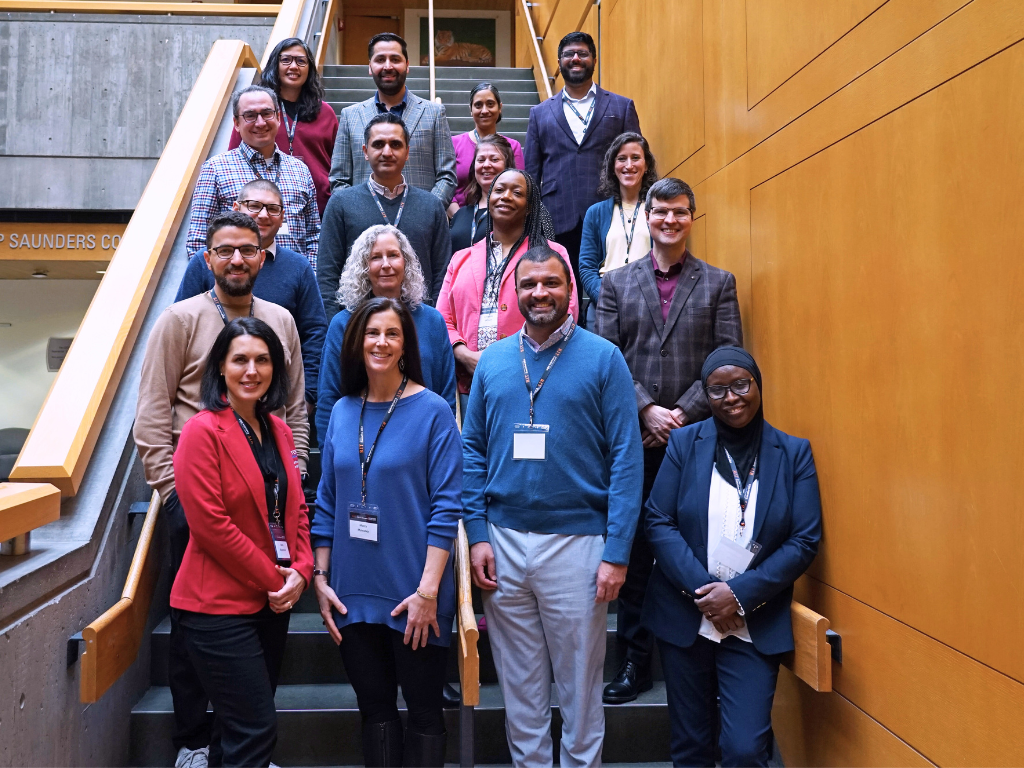
Rochester Regional Health is redefining what it means to lead healthcare. In partnership with RIT Executive Business Programs, they developed a custom program empowering physicians and department leaders with business acumen to enhance their understanding of the healthcare industry's multi-dimensions and elevate their confidence as strategic stakeholders in Rochester Regional Health’s future. “Healthcare is at a precipice, and I believe there will be a fundamental change,” CEO Chip Davis said. “The whole idea was to create a cohort of leaders who would help us in navigating a challenging time in the next few years in healthcare.” Over 12 months, 13 participants completed eight business courses focusing on accounting and finance fundamentals, strategy, marketing, innovation and negotiations. 5 physician leaders continued their learning journey enrolling in RIT’s online executive MBA program where they are diving deeper into leadership development, operations, and life sciences electives. Drawing from the experiences of 5 participants, here are five key themes that emerged:
1. Bridging the Gap Between Clinical Care and Business Strategy
Across the board, participants entered the program seeking to strengthen their understanding of the business side of healthcare. Whether it was finance or strategic planning, they recognized that clinical excellence alone wasn’t enough to lead effectively in today’s complex environment.
“As physicians, we’re trained to care for patients—but not necessarily to understand the business of medicine.” – Shubha Shastry, MD, Service Line Division Head, Nephrology
“The program helped me overcome a long-standing fear of business concepts. I now understand how decisions are made and why some projects don’t move forward. That clarity has changed how I lead.” – Selma Mujezinovic, DNP, FNP-BC | System Vice President, Advanced Practice Providers
2. Immediate Impact on Decision-Making
One of the most powerful outcomes of the Executive Education program was how quickly participants began applying what they learned. The curriculum was actionable, and relevant to their roles. Participants reported rethinking how they lead teams, structure meetings, and make decisions. With a stronger grasp of financial principles, strategic frameworks, and negotiation techniques, they began contributing more confidently to high-level discussions and organizational planning.
“I can now write up a business plan for a new endeavor. The courses helped me understand why I was met with initial resistance and how to approach it from different perspectives. My proposals are now more well-rounded factoring in operations, budget, and legalities.” – Lekeyah Wilson, MD, VP Community Engagement and Social Impact
“Midway through the program, I was appointed Chief Administrative Officer for an $86M service line.”
– Selma Mujezinovic, FNP-C | System Vice President, Advanced Practice Providers
"The program gave me the tools to approach my role with greater confidence and clarity.” – Syed Shazhad Mustafa, MD, Associate Medical Director, Allergy, Immunology and Rheumatology
3. Strategic Thinking with Confidence in Complex Systems
The Executive Education program empowered participants to think beyond their clinical roles and embrace a systems-level perspective. Through coursework in innovation, marketing, finance, and strategic planning, they developed the ability to see healthcare not just as a service—but as a dynamic, interconnected system that can be shaped through thoughtful design, resource optimization, and creative problem-solving.
This shift in thinking gave participants the confidence to lead more effectively within complex organizational structures. They gained fluency in the language of business, enabling them to engage in high-level discussions, advocate for their departments, and contribute to decisions that balance clinical excellence with financial sustainability and community impact.
Whether reimagining care delivery models, navigating capital planning, or proposing new initiatives, participants emerged with the tools to lead with clarity, strategy, and purpose.
“I’ve tried to figure out different ways to deliver care to the community—some of it involves tech, some process changes. The innovation course really helped shape that thinking.” – Luca Zatreanu, MD, Chair Department of Ophthalmology
“We’re looking at every aspect when we make a decision for the hospital system. It’s not 100% clinical, 100% financial, or 100% community impact. It’s marrying all of those different aspects to make sure that we’re making the soundest decisions for the organization.”
– Lekeyah Wilson, MD, VP Community Engagement and Social Impact
“We can often maintain and even exceed patient care standards by doing things differently or being more strategic with resources.” – Shubha Shastry, MD, Service Line Division Head, Nephrology
4. A Connected Community of Leaders
One of the most transformative aspects of the Executive Education program was the opportunity to build authentic, cross-disciplinary relationships. Participants emphasized how the cohort experience broke down silos, fostered collaboration, and offered sustained, meaningful engagement—through coursework, discussions, and problem-solving—that led to lasting professional connections, friendships, and a stronger sense of community.
“This program created connections I never would’ve made otherwise. It’s a shared journey that builds real collaboration.” – Luca Zatreanu, MD, Chair Department of Ophthalmology
“Learning alongside peers who share a passion for healthcare leadership made the journey even more meaningful.”
– Syed Shazhad Mustafa, MD, Associate Medical Director, Allergy, Immunology and Rheumatology
“The faculty were phenomenal, but what stood out most was the cohort. Learning alongside other leaders made the experience richer and more rewarding.” – Selma Mujezinovic, DNP, FNP-BC | System Vice President, Advanced Practice Providers
5. A Launchpad for Continued Growth
For many participants, the Executive Education program wasn’t the end—it was the beginning of a deeper journey. Inspired by the knowledge gained and the momentum built, several chose to continue into RIT’s online Executive MBA program, driven by a desire to expand their leadership capacity. The program’s accelerated structure, feasibility with demanding roles, and real-world relevance made the decision to continue an easy one —fueling both personal and professional advancement.
“It’s very approachable and for me, it stems from the same underlying drive to learn, and also motivation to just finish what I started.” – Luca Zatreanu, MD, Chair Department of Ophthalmology
“I really enjoyed what I learned and wanted to continue on this journey.”
– Shubha Shastry, MD, Service Line Division Head, Nephrology
A New Era of Healthcare Leadership
The RIT and RRH alliance is a catalyst for transformation through RIT Executive Business Programs. By equipping clinical leaders with the tools of business, strategy, and innovation, Rochester Regional Health is building a future where healthcare leadership is collaborative, strategic, and deeply aligned with community impact. VP of Community Engagement and Social Impact, Lekeyah Wilson, MD added, “I really did feel honored to get that first invite, and that the organization was investing in physicians to say, ‘We want you to lead, and we’re going to make sure you have the right tools to succeed.’ That made me say, ‘This is where I belong.”
More Featured Profiles and Work

Milton Walker
Selma Kolo Korkmaz
Kailee Polimeni

Karalin Jenitha Jayakumar, co-op