Vertically Integrated Project
NanoBio Discovery Lab
Goals
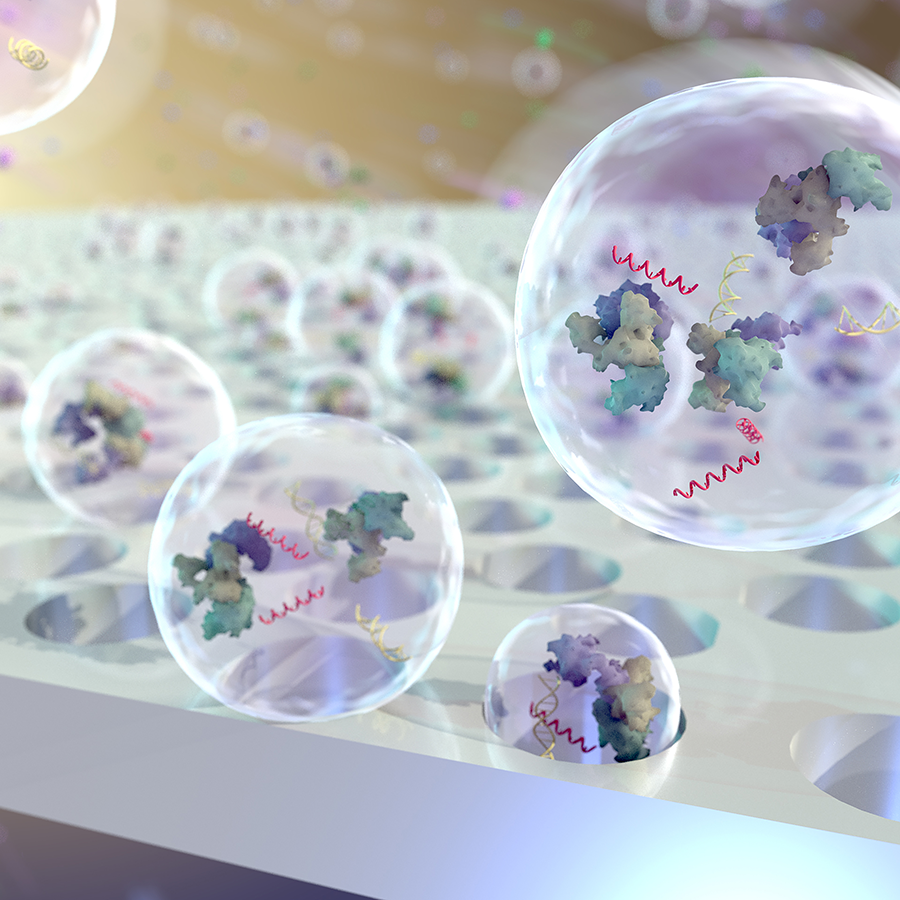
NanoBio Discovery Lab is a research-based Vertically Integrated Project focused on the isolation, purification, enrichment, and characterization of extracellular vesicles and other nanoscale biological particles. Students will work in a biomedical engineering research laboratory to develop reproducible workflows for separating extracellular vesicles from complex biological samples, evaluate purification performance, and build the documentation needed for a sustainable multi-semester research team.
The project connects hands-on undergraduate research with an active industry collaboration with Sartorius’s corporate research team, including Aslan Dehghani, Ph.D. (RIT PhD Alum ’20 and Manager of Nanoparticle Technologies). Sartorius is a global life science and bioprocessing company whose technologies support laboratory research, process filtration, fluid management, and biopharmaceutical development (https://www.sartorius.com/en). Through this VIP, students will gain practical experience with membrane-based separations, ultracentrifugation, tangential flow filtration, nanoparticle characterization, quality control, and research documentation.
NanoBio Discovery Labs will create a persistent undergraduate research team that advances experimental methods for extracellular vesicle bioseparations while preparing students for research, co-op, graduate study, and careers in biotechnology and bioengineering.
Project goals include:
- Establish reproducible laboratory workflows for extracellular vesicle isolation, purification, enrichment, and characterization.
- Train undergraduate students in high-value experimental skills used in nanobiotechnology, bioseparations, analytical characterization, and bioprocessing.
- Compare ultracentrifugation, tangential flow filtration, ion-exchange chromatography, and membrane-based separation methods for recovery, purity, reproducibility, and ease of implementation.
- Develop standard operating procedures, onboarding materials, safety documentation, training manuals, and quality-control protocols for future VIP students.
- Build a vertically integrated team structure in which experienced students mentor newer students across multiple semesters.
- Generate preliminary data that can support conference presentations, methods-focused publications, research proposals, and ongoing laboratory projects.
- Strengthen industry engagement through collaboration with Sartorius and exposure to technologies relevant to modern biomanufacturing and life science research.
Issues Involved or Addressed
Extracellular vesicles are nanoscale, membrane-bound particles released by cells. They carry biological cargo such as proteins, lipids, and nucleic acids, and they are increasingly important in diagnostics, therapeutics, cell communication studies, and biomanufacturing. However, extracellular vesicles are difficult to isolate and analyze because they are small, heterogeneous, and often mixed with proteins, lipoproteins, cell debris, and other nanoparticles.
This project addresses a central challenge in nanobiotechnology: how to create reliable, well-documented, and scalable workflows for separating and characterizing extracellular vesicles from complex samples. Students will learn to evaluate tradeoffs between yield, purity, processing time, contamination reduction, and reproducibility. They will also learn how rigorous documentation, quality control, and reporting standards make research data more trustworthy and useful.
Because the VIP is embedded in an active research laboratory and connected to an industrial sponsor, students will see how academic research questions connect to real-world bioseparation technologies, product development, bioprocessing, and workforce needs.
Methods and Technologies
- Extracellular vesicle isolation and purification
- Ultracentrifugation
- Tangential flow filtration
- Membrane-based separations
- Ion-exchange chromatography
- Sartorius filtration and separation consumables
- Nanoparticle tracking analysis
- BCA protein assays
- Western blotting and EV-associated marker analysis
- Experimental design and method benchmarking
- Quality control and reproducibility analysis
- Standard operating procedure development
- Laboratory safety and biosafety practices
- Research data management
- Technical communication
- Undergraduate research mentoring
- Industry-engaged biomedical engineering research
Students in NanoBio Discovery Lab may contribute to:
- Reviewing current best practices for extracellular vesicle isolation, purification, enrichment, and characterization.
- Designing and testing EV isolation workflows using ultracentrifugation and tangential flow filtration.
- Evaluating membrane materials, molecular weight cutoffs, processing conditions, and sample-handling steps.
- Measuring particle size, particle concentration, total protein, recovery, and purity-related metrics.
- Creating quality-control dashboards that track reproducibility across operators, days, instruments, and workflows.
- Drafting, testing, and revising SOPs, safety guides, training checklists, and onboarding materials.
- Preparing results for presentations, research proposals, manuscripts, or future student recruitment.
Academic Majors / Major Area of Interest
This project is especially well suited for students interested in
- Biomedical Engineering
- Chemical Engineering
- Biotechnology and Molecular Bioscience
- Biomedical Sciences
- Biochemistry
- Biology
- Chemistry
-
Students from other majors are welcome if they are interested in hands-on laboratory research, biomedical technologies, and industry-connected engineering projects
Students who participate in NanoBio Discovery Lab will develop the ability to:
- Explain the role of extracellular vesicles in biomedical research and why their isolation is technically challenging.
- Perform supervised laboratory workflows for EV isolation, purification, and characterization.
- Analyze experimental data using appropriate controls, replicates, uncertainty, and quality metrics.
- Interpret tradeoffs among yield, purity, throughput, reproducibility, and sample compatibility.
- Maintain high-quality laboratory notebooks, SOPs, and research documentation.
- Communicate methods and results to technical and non-technical audiences.
- Mentor newer students and contribute to a durable multi-semester research team.
Team Meeting Time and Place
Mandatory Weekly Team Meeting is Mondays 10-10:50 am. Research time and sub-team group meetings will be scheduled based on student availability.
Team Meetings will take place in the Dean’s Conference Room across from the cleanroom (17/ENG-2560)
The NanoBio Research Labs are also directly across from the cleanroom (17/ENG-2500)