Global research expands opportunities for deaf workers
NTID researcher Thomastine Sarchet builds partnerships that improve Deaf education and employment outcomes abroad
Provided
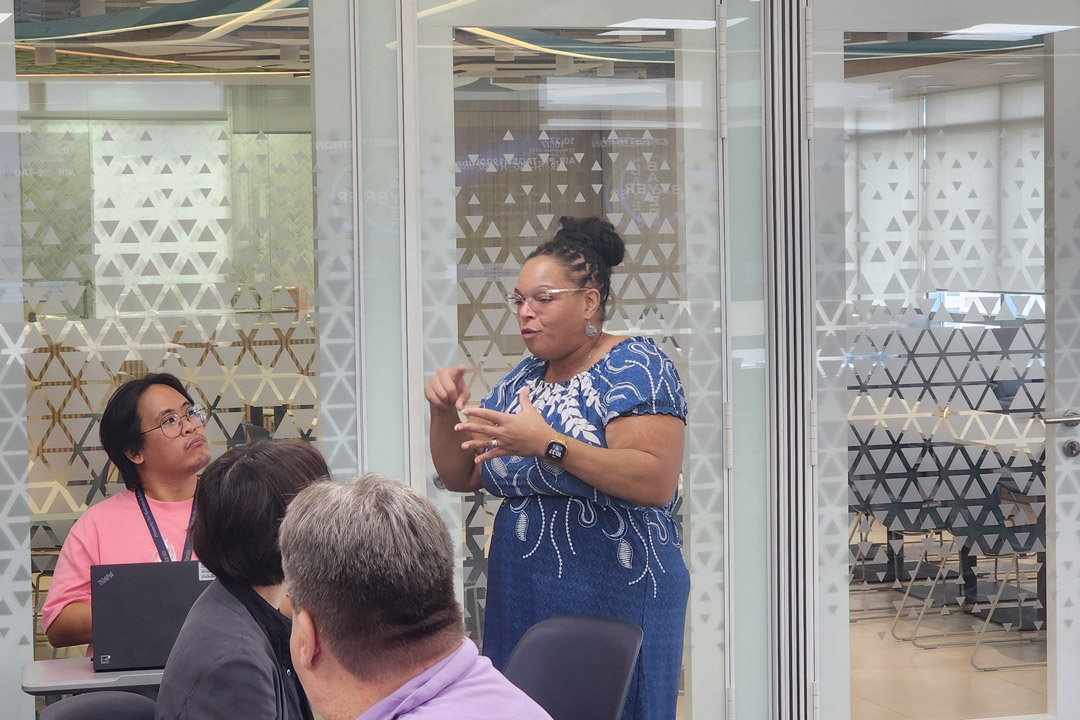
NTID Assistant Professor Thomastine Sarchet, standing, collaborates with Deaf communities across Southeast Asia to improve education systems and employment pathways.
Thomastine Sarchet’s research is about more than collecting data—it’s about expanding opportunities and dignity for deaf people worldwide.
Sarchet, assistant professor of Deaf education at RIT’s National Technical Institute for the Deaf, has spent years collaborating with Deaf communities across Southeast Asia to improve education systems and employment pathways. Her work focuses on understanding the barriers deaf individuals face in the workforce and developing and implementing practical programs that help them secure meaningful careers.
One of Sarchet’s most impactful projects has been a five-year initiative in the Philippines designed to improve employment outcomes for deaf and hard-of-hearing individuals. The project began with a comprehensive landscape study examining the employment status of deaf workers in Manila. The findings revealed that many deaf individuals struggled to find stable jobs, and opportunities were often limited to a small number of industries.
“We started by trying to understand the reality on the ground,” Sarchet explained. “The first step was identifying the barriers that deaf people face when they try to enter the workforce.”
But, her research came at a challenging moment. The COVID-19 pandemic disrupted major industries in the Philippines, particularly tourism, where many deaf individuals had previously found work. The sudden downturn further exposed how vulnerable deaf workers are during economic shifts.
In response, Sarchet and her international partners shifted the project’s focus toward finding solutions.
Her research team developed an action plan aimed at improving employment outcomes. The plan included building career coaching programs that prepare deaf individuals for the job market, training employers to understand accessibility and inclusive hiring practices, and creating workplace initiatives that support communication access for deaf employees.
Sarchet said the results are encouraging. Since the project began in 2020, Sarchet and her researchers have seen a significant increase in deaf individuals securing employment. In some cases, deaf professionals have moved into supervisory and management positions—an important milestone in expanding career advancement opportunities.
“These outcomes show that when employers understand accessibility and invest in inclusive practices, everyone benefits,” Sarchet said.
The success of the Philippines initiative has become a model, drawing attention from across the region. She is expanding her research to include other countries, like Vietnam and Cambodia, and is working to develop a toolkit based on the project’s findings so that other countries throughout Southeast Asia can adopt similar strategies.
Sarchet believes the collaborative nature of international research is essential to making lasting changes.
“The Deaf community around the world faces many of the same challenges,” she said. “When we share knowledge and build partnerships, we can strengthen education systems and create more opportunities globally.”
She believes that her work is closely aligned with the mission of NTID, which focuses on ensuring deaf individuals have access to quality education and meaningful employment.
“It’s vital that we share our experiences and innovations with other countries,” she added. “This is one way that we can help elevate Deaf education systems worldwide.”