ASLIE
Department of
American Sign Language and Interpreting Education
The Department of American Sign Language and Interpreting Education’s degrees and professional development certificate programs provide the knowledge and skills necessary to succeed in the field of American Sign Language-English interpreting. In addition, our faculty teach ASL courses for students who wish to learn to interact with deaf and hard-of-hearing people.
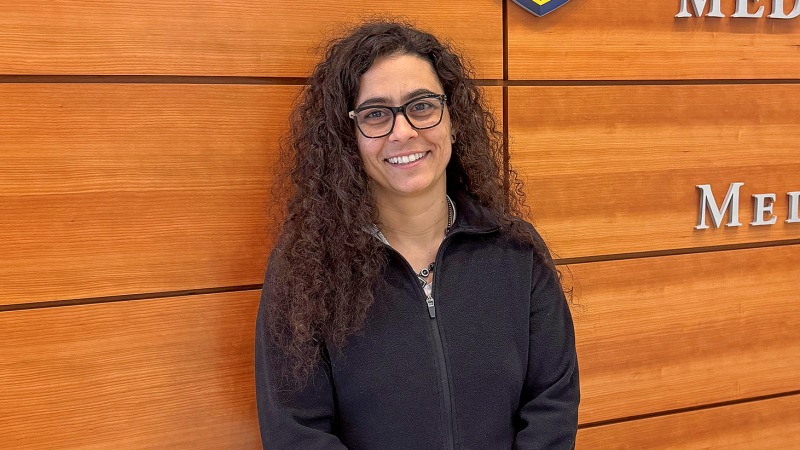
Department Chair

Positioned at the intersection of language, culture, and community, this department prepares students to build ASL proficiency and professional skills through engagement with Deaf communities. Our programs combine language development, cultural knowledge, and applied experience to prepare graduates for careers in ASL–English interpreting and related fields that serve Deaf and Hard-of-Hearing communities. Our graduates enter the profession with the communication skills, cultural humility, and professional readiness needed to contribute to a more accessible and equitable society.
Degree Programs
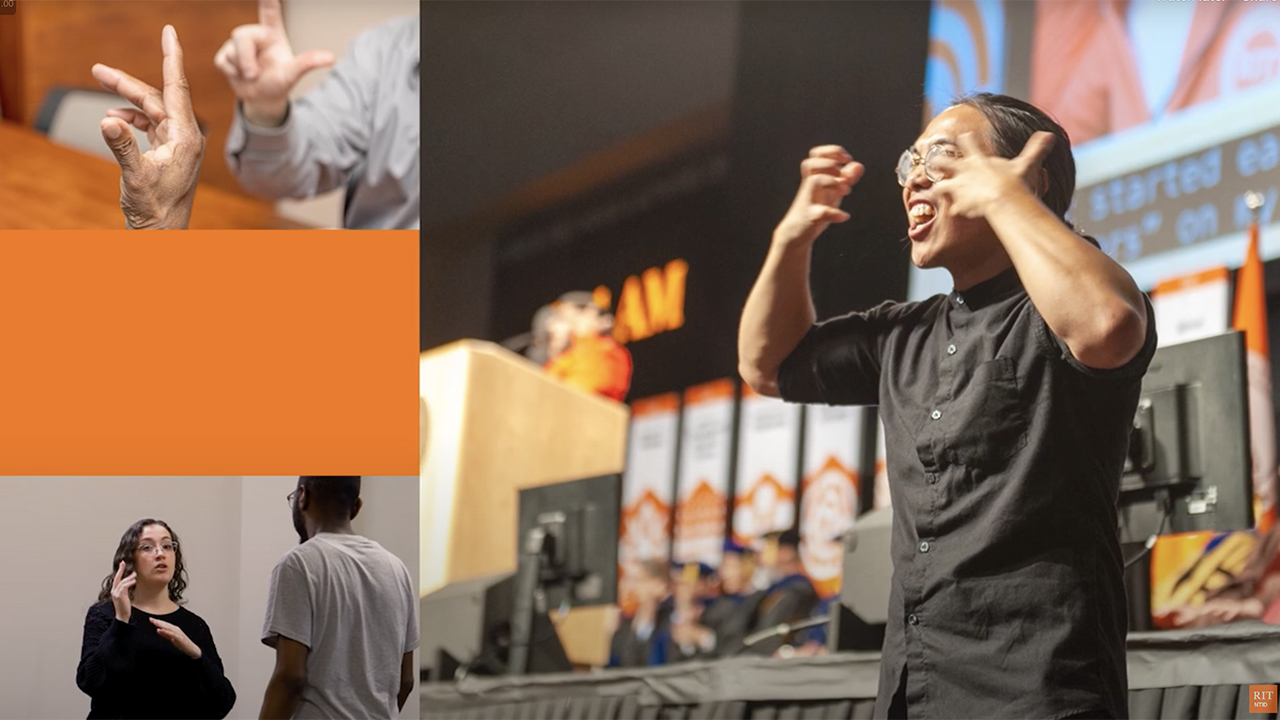
In RIT’s ASL degree, you will seamlessly facilitate communication and interaction among deaf, hard-of-hearing, and hearing people in educational, medical, corporate, and community settings.
Learn more about the ASL-English Interpretation BS programOur graduate degree in health care interpretation meets the demand for nationally-certified ASL-English interpreters qualified to work in the health care industry.
Learn more about the Health Care Interpretation MS programThe non-credit "Certificate in Educational Interpreting" (CEI) program is taught exclusively online and will run from September-May. CEI provides specialized professional development to ASL-English interpreters working in educational settings, and employs innovative teaching by experts in Deaf education and educational interpreting.
The non-credit "Certificate in Healthcare Interpreting" (CHI) program is taught exclusively online and will run from September – May. CHI provides specialized professional development to ASL/English interpreters in the area of healthcare interpreting, and employs innovative teaching by nationally recognized healthcare experts combined with practical application within healthcare environments.
The non-credit "Certificate in Deaf Interpreting" (CIDI) program is delivered using an online blended format with two-thirds of instruction occurring synchronously in Zoom and one-third completed asynchronously online. There is also a required four-day on-campus Deaf-Blind Protactile session held in September. The 20-week CIDI program runs from September to April and trains Deaf professionals to interpret in a variety of discourses: educational, international, legal, medical, mental health, business, Deaf-Blind Protactile,and government settings.
This non-credit "Certificate in Trilingual Interpreting" program is taught exclusively online and will run from September to May. This program provides professional specialized development for trilingual interpreters and aspiring trilingual interpreters with fundamental tools that contribute to their growth as interpreters and help them build skills for their trilingual work. Participants will practice their skills in bilingual interpretation between ASL and Spanish, English and Spanish, and ASL and English. In parallel with existing modules, this program offers supplemental content for participants who are fluent in Chinese (Cantonese or Mandarin).
RIT/NTID is pleased to announce a new Certificate in Signed Language Translation (CSLT) which will be launched in September 2024. The focus of this non-credit certificate is on translation between ASL and English and (other signed languages). Instruction will be provided by mostly Deaf instructors and designed for learners who have SLPI rating of Advanced Plus or ASLPI skills with 4+.
RIT/NTID is pleased to announce a new Certificate in International Sign Interpreting (CISI) which will be launched in February 2025. This non-credit certificate program is taught exclusively online. The goal of the CISI program is to prepare interpreters to facilitate communication between International Sign and English or International Sign and another national signed language. The 20-week CISI program runs from February – May (Session 1) and September – December (Session 2). The CISI program is open to both Deaf and hearing interpreters from any country.
ASL Online
Beginning American Sign Language I and II at RIT
- Have you ever met a deaf person and wished you could communicate with them?
- Have you watched a sign language interpreter and thought that you’d like to learn that beautiful language?
- Would you like to learn ASL online?
What is ASL?
ASL is a visual language used by thousands of people in the United States and parts of Canada. It’s the third-most studied language in colleges and universities across the country.
Benefits of Learning ASL
- You’ll learn to communicate with friends, clients and customers who use ASL.
- You’ll expand your horizons, learning the rich culture of the American Deaf community.
- You’ll enhance your cognitive skills, including visual-perceptual skills and spatial reasoning skills.
- If you’re a kinesthetic or visual learner, you will really enjoy learning ASL!
- ASL could satisfy a foreign language credit.
- Learning ASL could lead to a new career opportunity, such as working in a setting that serves deaf clients, in education, or interpreting.
Why NTID?
The National Technical Institute for the Deaf is the largest technological college for deaf and hard-of-hearing students in the world, and is one of the nine colleges at RIT. Faculty in NTID’s American Sign Language & Interpreting Education Department teach the ASL courses. All of our American Sign Language classes are taught by Deaf faculty members who are certified by the American Sign Language Teachers Association, and all of our interpreting instructors are certified as sign language interpreters by the Registry of Interpreters for the Deaf and are active in the Conference of Interpreter Trainers.
NTID has been offering sign language classes and programs for more than 40 years and delivering online courses since 2014. Credit obtained from taking this course may be transferrable to other colleges.
Who is eligible?
Online ASL classes are open to degree-seeking students and non-degree seeking students.
How to enroll
More course information can be found here: visit here for more information.