Design and Imaging Technology Associate in Applied Science Degree

Design the future with an AAS program in Design and Imaging Technology. Turn your creativity into a career.
Overview for Design and Imaging Technology AAS
People who work in the design and imaging field are responsible for designing, organizing, and producing print and Web-based media for business, communication, publishing, manufacturing, entertainment, and advertising markets. This is a large, exciting field that requires a variety of computer-based and traditional visual skills. The design and imaging technology program provides opportunities for students to enter various careers ranging from creative to highly technical positions at various degree levels. This program is available for qualified deaf and hard of hearing students.
As a student in the associate in applied science (AAS) degree in design and imaging technology, offered by RIT's National Technical Institute for the Deaf, you may choose a concentration in digital media, graphic design, or graphic production.
You will gain work experience through a required cooperative education experience. Depending on your specific program concentration and elective course selection, you will use traditional and computer-based methods to produce drawings, layouts, illustrations and digital photographic images; prepare documents for print, Web and digital distribution; produce interactive digital media; perform digital retouching and restoration of photographic images; produce composite digital images; design and produce websites; produce computer animations; plan and produce short-edited videos; and operate electrophotographic digital printing and inkjet systems.
Education in STEM (science, technology, engineering, math) careers is a major emphasis for students, parents and counselors as they consider which college programs match the students interests and aptitudes. Funding for STEM career preparation is often a driving factor. The design and imaging technology program is considered a STEM-career program. Graphic design and production for print, Web and digital media cannot happen without the use and application of technology and computing skills.
Read about the Career Skills you can learn in the design and imaging technology program.
O*Net Online lists STEM career clusters and graphic design is listed as being part of the Computer Science STEM disciplines.
The associate in applied science (AAS) degree in design and imaging technology is a career-focused program, designed to prepare you for direct employment in well-paying careers, following graduation. As a graduate of the AAS degree program, you also may apply for admission to a bachelor of fine arts degree program or a bachelor of science degree program in RIT’s College of Art and Design after completing the AAS degree course of study.
We prepare students for jobs in the large visual communications industry which includes graphic design, commercial digital printing, website design and development, videography, animation, packaging design, photography, and specialty graphics. Jobs have evolved from a skilled trade craft to a high-tech digital design and production workflow.
The visual communications industry changes rapidly with the advent of new technologies and software programs. The world depends on text, graphics, illustrations, video and photos for communication using printed materials, web sites, and electronic media. There will always be a demand for graduates with skills in the visual communications field.
Some industry job outlook projections include:
-
Meet Us on Campus
Learn about academics, co-op and internships, financial aid, and more at one of our on-campus open houses.
October 12 | October 24 | November 14
Careers and Cooperative Education
Typical Job Titles
| Graphic Design Technician | Digital Image Specialist | Specialty-Graphics Technician |
| Digital Photography Technician | Image/Photo Retoucher | Print Production Associate |
| Video Technician | Website Designer | Graphics Production Technician |
| Sign Design/Production | Marketing Communication Technician | Digital Printing Systems Operator |
Industries
Cooperative Education
What’s different about an RIT education? It’s the career experience you gain by completing cooperative education and internships with top companies in every single industry. You’ll earn more than a degree. You’ll gain real-world career experience that sets you apart. It’s exposure–early and often–to a variety of professional work environments, career paths, and industries.
Students in the design and imaging technology program are required to complete a cooperative education work experience prior to graduation. You may schedule your co-op after completing your second-year academic requirements.
Featured Work and Profiles
-
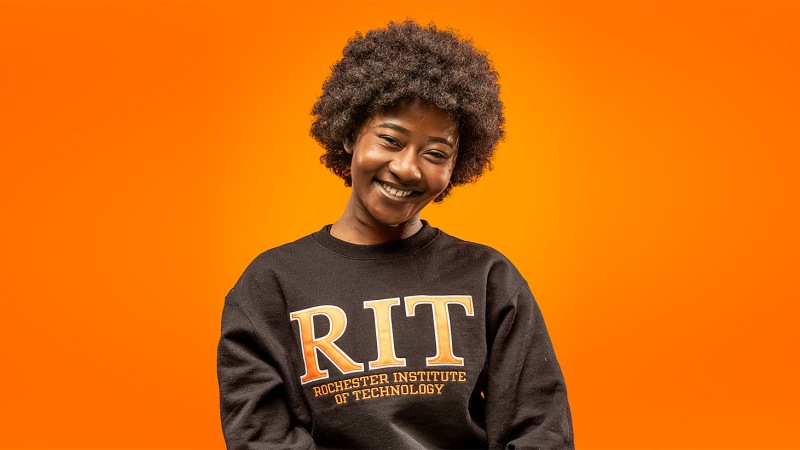
Rebecca Adeyinka
“Hands-on projects, design software training, and personal attention from faculty at RIT helped me refine my creative skills and get a strong foundation in graphic design.”
Read More about Rebecca Adeyinka -
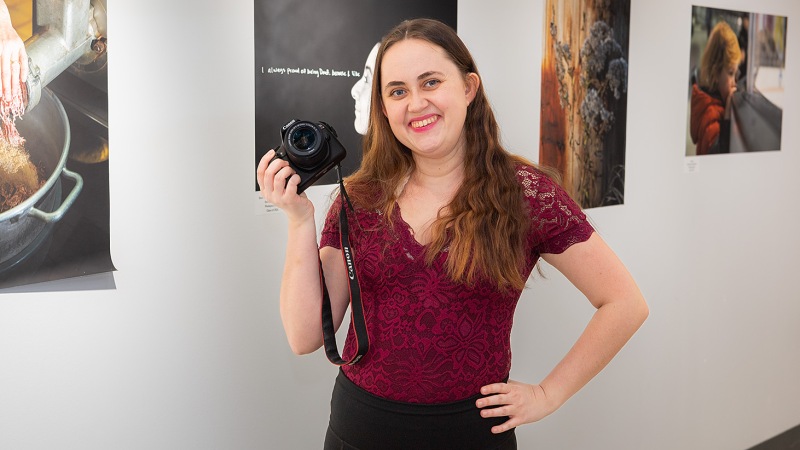
Brianna Kelley
“I transferred to RIT from a community college and it’s the best decision I made. I not only found a major I love, but I found my identity as well.”
Read More about Brianna Kelley -

Delaney McBroom
“After attending RIT’s Explore Your Future summer camp program, I realized RIT was perfect for me. I met friends so easily and had communication access.”
Read More about Delaney McBroom -
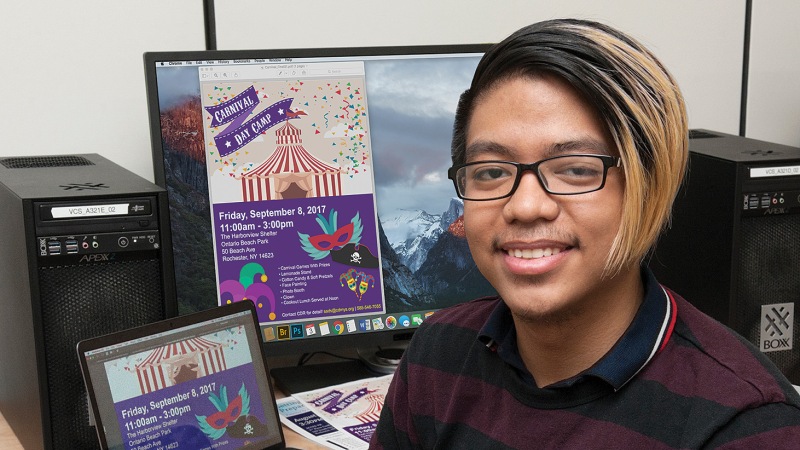
Miko Arayata
“I traveled more than 8,000 miles from home to get a degree from a college that specializes in working with deaf students.”
Read More about Miko Arayata -

Hoa (Kim) Hoang
“I chose RIT/NTID because it had the major I wanted, diversity, and many campus organizations to join, plus it provided support services and advisors for deaf students.”
Read More about Hoa (Kim) Hoang -

Brian Haslam
“My co-op at Typestries Sign and Design taught me how to approach clients with designs and ideas and how to work faster and improve my ability to work with deadlines.”
Read More about Brian Haslam
Curriculum for 2026-2027 for Design and Imaging Technology AAS
Current Students: See Curriculum Requirements
Admissions and Financial Aid
For the career-focused AAS Degree
- 2 years of high school math preferred
- 1 year of high school science preferred
- English language skills as evidenced by application materials determine acceptance into the AAS or the AOS program.
Specific English, Mathematics, and Science Requirements and other Recommendations
Successful completion of the Summer Vestibule Program is required.
- English: Placement into NENG-121 Bridge to Academic Literacies or above, including into a University Writing (UWRT) course. To earn the AAS degree, students must complete all necessary English coursework through UWRT-150 FYW: Writing Seminar.
- Mathematics: Placement into the Mathematics in Society (NMTH-140) course. Typically, students entering this major will have completed at least two years of high school mathematics.
- Science: Typically, students entering this major will have completed at least two years of high school science.
- ACT (optional): The ACT middle 50% composite score is 14-17.
Financial Aid and Scholarships
100% of all incoming first-year and transfer students receive aid.
RIT’s personalized and comprehensive financial aid program includes scholarships, grants, loans, and campus employment programs. When all these are put to work, your actual cost may be much lower than the published estimated cost of attendance.
Learn more about financial aid and scholarships


Contact
Department of Visual Communications Studies