Computer Engineering Bachelor of Science Degree

With RIT’s computer engineering BS, you’ll design hardware, components, and software for next-generation products, including autonomous vehicles and wearables.
Overview for Computer Engineering BS
Why Pursue a Computer Engineering Bachelor’s Degree at RIT
Multidisciplinary Design Experience: In your final year, you will complete a two-semester, two-course experience where you will work on a team to develop a solution to a real-world engineering problem.
Strong Career Paths: Students are hired for co-ops and full-time positions by companies such as Alion Science and Technology, Bose, Collins Aerospace, U.S. Department of Defense, IBM, JPMorgan Chase & Co., Lockheed Martin, Microsoft, MIT, Lockheed Martin, Tesla, The Boeing Company, and Thermo Fisher Scientific.
Gain Hands-On Career Experience: Four blocks of engineering co-op mean nearly a year of hands-on, full-time, paid work experience in industry.
Accelerated Bachelor’s/Master’s Available: Earn both your bachelor’s and your master’s in less time and with a cost savings, giving you a competitive advantage in your field.
STEM-OPT Visa Eligible: The STEM Optional Practical Training (OPT) program allows full-time, on-campus international students on an F-1 student visa to stay and work in the U.S. for up to three years after graduation.
RIT’s Bachelor of Science in Computer Engineering
In the computer industry, there is a great demand for computer engineers who can do it all—from designing high-performance computer hardware components and software to developing next-generation intelligent, resilient, and sustainable products and appliances that contain embedded systems.
Courses in Computer Engineering
RIT’s BS in computer engineering begins with the fundamental math, science, and technology courses that are essential to the curriculum. Emphasis is placed on selected areas of computer science, software engineering, and electrical engineering, including:
- Data structures
- Object-oriented programming languages
- Circuits
- Electronics
- Principles of software engineering
Upper-level computer engineering courses prepare you to integrate hardware and software by formulating complete system solutions. This is achieved through courses in:
- Computer architecture
- Digital systems
- Interfacing
- Computer networks
- Digital signal processing
Concentration areas provide you with an opportunity to gain additional in-depth knowledge in an area of particular interest within computer engineering. If you’re interested in conducting research, we highly encourage you to choose a concentration in an area of research that interests you and corresponds to the research initiatives of our engineering faculty. Concentrations are available in:
- Software
- High-performance computing
- Computer architecture
- Integrated circuits and systems
- Networks and security
- Computer vision and machine intelligence
- Signal processing, control, and embedded systems
Learn more about the Student Learning Outcomes and Program Educational Objectives for the computer engineering bachelor’s degree.
Hands-On Experience in Computer Engineering
In RIT’s BS in computer engineering, you will gain valuable hands-on experience through a senior design capstone experience, undergraduate research, and more.
Senior Design Capstone Experience: Computer engineering students complete a senior project that consists of a two-semester capstone design experience. You will work in multidisciplinary design project teams of four to seven students from different engineering majors, including biomedical, computer, electrical, industrial, and mechanical engineering. Teams are assigned to projects before the start of the first course. Most projects are initiated by industry sponsors, community partners, or faculty members; however, students may also propose their own project ideas. While completing your senior design project, you will develop engineering management and project organization skills, learn to communicate your ideas effectively within a multidisciplinary team, and present your project and ideas to a diverse audience of students, faculty, and industrial partners.
Furthering Your Education in Computer Engineering
Combined Accelerated Bachelor’s/Master’s Degrees: RIT offers Combined Accelerated Bachelor’s/Master’s Degrees that enable you to earn both a bachelor’s and a master’s degree in as little as five years, giving you a competitive advantage.
- Computer Engineering BS/MS: In this combined dual degree option you’ll gain a foundation in computer engineering in the bachelor’s degree program while the computer engineering master’s focuses on the design and development of computer and computer-integrated systems, with consideration to engineering factors as function, performance, security, and sustainability.
- Computer Engineering BS/Science, Technology, and Public Policy MS: The computer engineering BS/science, technology, and public policy MS allows you to build a foundation in computer engineering and develop expertise in policy analysis and management. Its cross-disciplinary approach fosters collaborative problem solving, critical and analytical thinking, and communication, equipping you to drive progress in policy areas such as cybersecurity policy, AI regulation, ethical use of technology, environmental impact of computing, intellectual property protection, and more.
- Computer Engineering BS/Artificial Intelligence MS: The dual degree in computer engineering and artificial intelligence helps students to build a strong foundation in hardware and software systems while advancing into innovative AI topics, with comprehensive elective areas enabling students to customize their MS degree. This integrated program prepares graduates for dynamic careers at the intersection of computing, engineering, and intelligent systems.
What’s The Difference Between Engineering and Engineering Technology?
It’s a question we’re asked all the time. While there are subtle differences in the course work between the two, choosing a major in engineering or engineering technology is more about identifying what you like to do and how you like to do it.
-
#57 Best Engineering Undergraduate Programs, 2026
RIT’s engineering majors are ranked among the Best Undergraduate Engineering Programs in the nation.
-

Meet Us on Campus
Learn about academics, co-op and internships, financial aid, and more at one of our on-campus open houses.
October 12 | October 24 | November 14
Careers and Cooperative Education
Typical Job Titles
| Computer Engineer | Semiconductor Engineer | Electrical Engineer |
| Firmware Engineer | Embedded Software Engineer | Test Automation Engineer |
| Manufacturing Engineer | Quality Engineer | Project Engineer |
| Sales Engineer | Hardware Engineer | Hardware Verification Engineer |
| Verification Engineer |
Industries
Cooperative Education
What’s different about an RIT education? It’s the career experience you gain by completing cooperative education and internships with top companies in every single industry. You’ll earn more than a degree. You’ll gain real-world career experience that sets you apart. It’s exposure–early and often–to a variety of professional work environments, career paths, and industries.
Co-ops and internships take your knowledge and turn it into know-how. Your engineering co-ops will provide hands-on experience that enables you to apply your engineering knowledge in professional settings while you make valuable connections between classwork and real-world applications.
The computer engineering degree requires students to complete four blocks (48 weeks) of cooperative education experience. After completing the first two years of course work, you'll spend the next two years alternating course work on campus with cooperative education experience. This employment not only adds real experience to your resume, but prepares you for more sophisticated academic work. Students have completed co-ops at companies as Motorola, Intel, Advanced Micro Devices, IBM, Hewlett Packard, Eastman Kodak Company, and for the federal government, as well as a host of smaller companies. Co-op has taken our students from the high-tech corridors of New England and California to businesses close to their hometowns. Students have worked on product development teams for companies like IBM, Intel, Hewlett-Packard, Lucent Technologies, and Kodak. They have also worked on software projects for smaller companies and the government.
During co-op experiences, computer engineering students have been on product development teams for new computers and electronic imaging systems as well as a variety of large software projects for industry and government.
Featured Work and Profiles
-

RIT Research Minute: DNA Computing
Amlan Ganguly DNA molecules and computing? RIT computer engineering department head, Amlan Ganguly and his research team are working to change DNA for more sustainable and effective computing.
Read More about RIT Research Minute: DNA Computing -
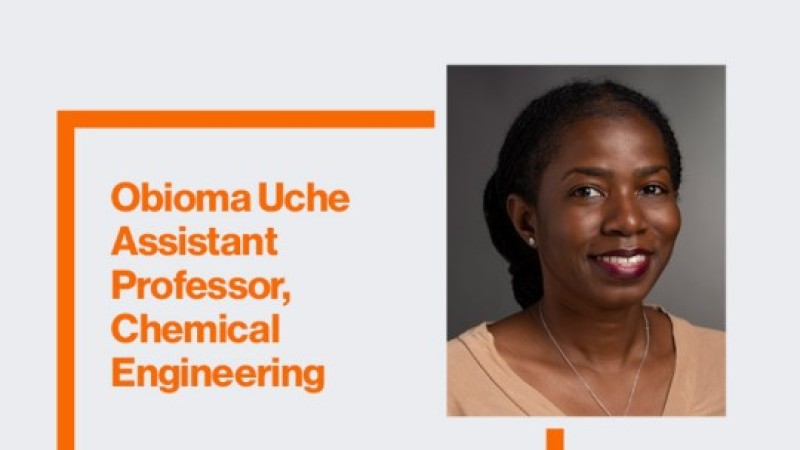
Professor Awarded NSF Early Career Grant for Sustainable Methane Conversion
Chemical engineering professor Obioma Uche has received an NSF Early Career Award to explore new catalysts that could convert methane into ethylene more efficiently,
Read More about Professor Awarded NSF Early Career Grant for Sustainable Methane Conversion -

RIT Grad to Lead Accessibility Engineering Innovations
Carter Sargent will join WW International as an accessibility engineer, focusing on creating inclusive digital experiences for users with disabilities, thanks to his specialized RIT training and co-op...
Read More about RIT Grad to Lead Accessibility Engineering Innovations -

Dr. Dongfang Liu Pioneers AI Solutions to Tackle Society Challenges
Dongfang Liu Assistant professor Dr. Dongfang Liu is advancing the field of AI with his research on human-like perception models and practical AI solutions, focusing on applications from autonomous drones to...
Read More about Dr. Dongfang Liu Pioneers AI Solutions to Tackle Society Challenges -

Combining Computer Engineering with Creativity to Inspire Change
Computer engineering student Erica Coles ('23) combines her technical skills with creativity while actively contributing to organizations supporting students of color.
Read More about Combining Computer Engineering with Creativity to Inspire Change
Curriculum for 2026-2027 for Computer Engineering BS
Current Students: See Curriculum Requirements
Admissions and Financial Aid
This program is STEM-OPT Visa Eligible when studying on campus and full time.
First-Year Admission
First-year applicants are expected to demonstrate a strong academic background that includes:
- 4 years of English
- 3 years of social studies and/or history
- 4 years of math is required and must include algebra, geometry, algebra 2/trigonometry, and pre-calculus. Calculus is preferred.
- 2-3 years of science. Chemistry and physics are required.
Transfer Admission
Transfer applicants should meet these minimum degree-specific requirements:
- A minimum of pre-calculus is required. Calculus is preferred.
- Chemistry and physics is required.
Financial Aid and Scholarships
100% of all incoming first-year and transfer students receive aid.
RIT’s personalized and comprehensive financial aid program includes scholarships, grants, loans, and campus employment programs. When all these are put to work, your actual cost may be much lower than the published estimated cost of attendance.
Learn more about financial aid and scholarships


Research
The faculty and students in the Kate Gleason College of Engineering are engaging in numerous areas of research, which takes place across all of our engineering disciplines and often involves other colleges at RIT, local health care institutions, and major industry partners. Explore the college's key research initiatives to learn more about our research in:

Related News
-
April 13, 2026

Engineering students dive into projects to learn about naval ship technologies
Students are building Navy-funded autonomous underwater systems, including a robot designed to inspect and clean ship hulls. The hands-on senior design projects teach robotics, sensing, and machine learning through real naval technology challenges.
-
March 27, 2026

RIT researchers build funding momentum
A new cohort of faculty researchers is representing how the university continues to grow its research ecosystem. RIT offers a robust suite of proposal-development workshops and seed-funding programs that help researchers generate preliminary results and strengthen future proposals.
-
February 5, 2026

Co-op course helps students break into competitive industries
The Independent Professional Development course was developed last year to reflect fluctuations in the current job market and to support students who, despite their best efforts, have not yet secured co-ops.
Contact

Department of Computer Engineering