Biomedical Engineering Master's Capstone: Residual Model Generation
Achieving a perfect prosthetic fit is a critical yet often elusive goal for amputees. A Biomedical Engineering Masters Capstone team sought to meet this need by leveraging patient-specific data to modernize prosthetic fitting and eliminate the need for exhausting, repetitive clinic visits.
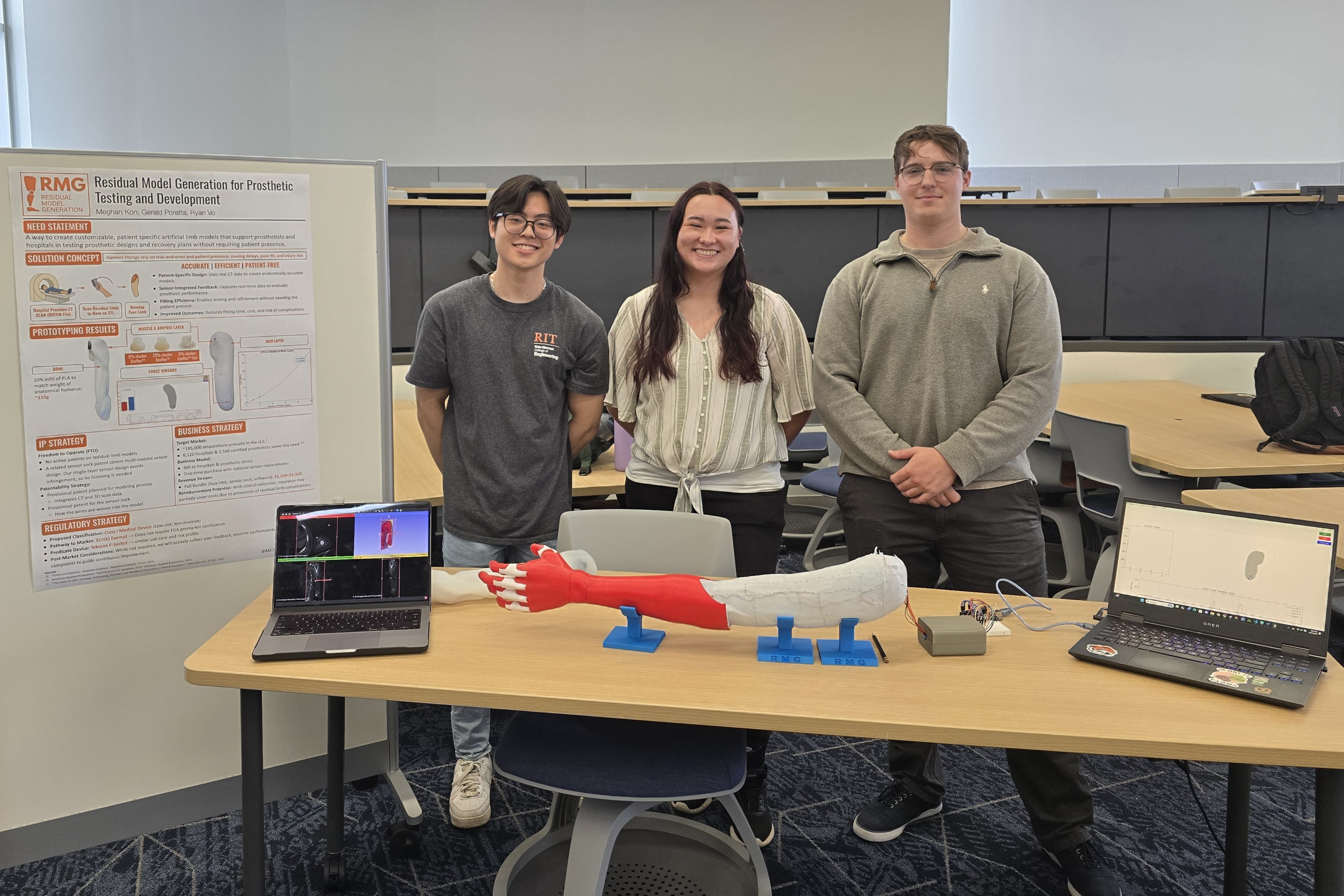
Achieving a perfect prosthetic fit is a critical yet often elusive goal for amputees. A poor interface between a residual limb and its socket can lead to severe discomfort, delayed rehabilitation, and secondary complications such as musculoskeletal cysts. Despite technological advancements, the current fitting process remains largely iterative, relying on generic models or time-consuming, direct patient trials that place significant physical and emotional strain on the individual.
A Biomedical Engineering Masters Capstone team —Meghan Kon, Gerald Porretta, and Ryan Vo— sought to meet this need by leveraging patient-specific data to modernize prosthetic fitting and eliminate the need for exhausting, repetitive clinic visits through the development of the Residual Model Generation (RMG) system. The RMG system utilizes patient-specific CT and 3D scan data to create a high-fidelity "faux limb" that mirrors an individual's unique anatomy. This multi-layered model features a 3D-printed bone core, compliant silicone layers that simulate muscle and fatty tissue, and a durable outer skin layer. By providing a realistic physical stand-in, the RMG system would allow prosthetists to test and adjust socket designs without the patient needing to be physically present.
Through rigorous prototyping, the RIT students have demonstrated that their RMG system can closely replicate human physiological properties. Successful rapid prototyping strategies allowed the team to create a model that matched the average weight of a human humerus within 10% and estimate the number of layers of power mesh needed to achieve comparable mechanical properties of the artificial skin to human skin. Furthermore, the students successfully integrated an array of thin-film force sensors that provide a real-time, 3D pressure map of the limb’s surface. This objective data would allow clinicians to identify potential pinch and pressure points before a patient ever tries on a new prosthesis.
This project serves as a demonstration of how patient-specific anatomical data can be translated into functional, high-fidelity testing platforms by bridging material science with real-time electronic feedback. Their proof-of-concept work validates the feasibility of a customizable "faux limb" and stands as a hallmark of the technical rigor and innovative thinking fostered within RIT’s engineering programs.
More Featured Profiles and Work

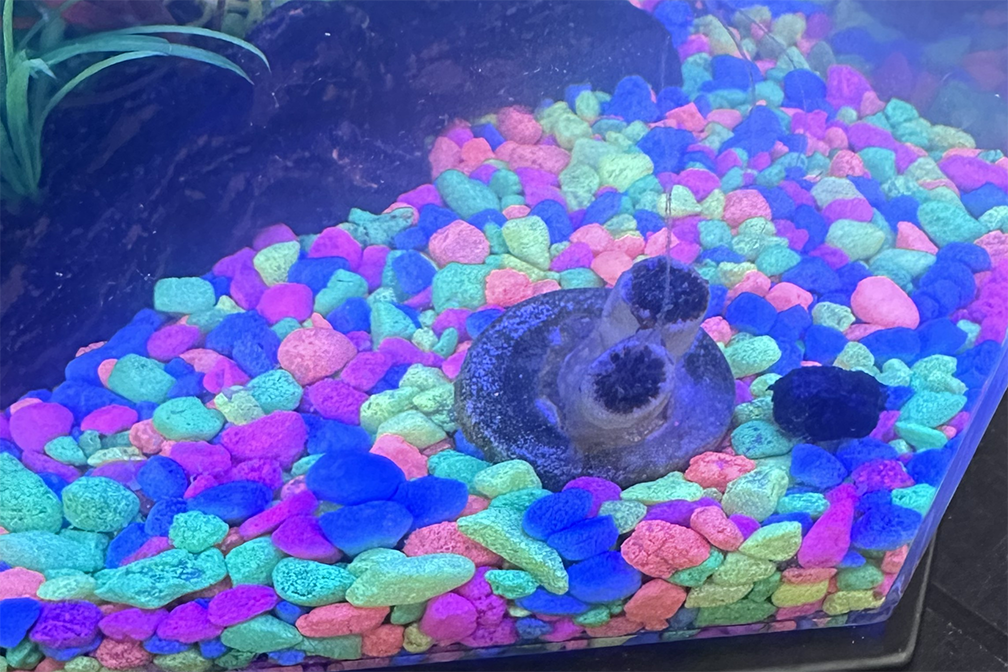
Haley Johnson, Cassidy Potter, Janessa Terry, and Will Wax
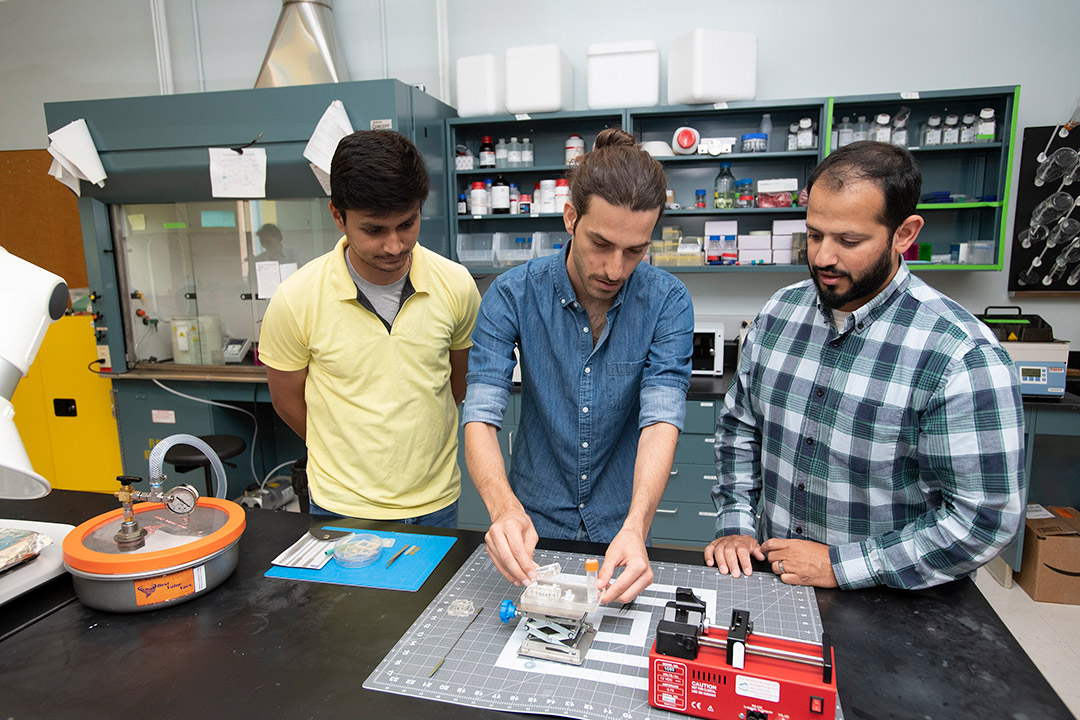
Vinay Abhyankar
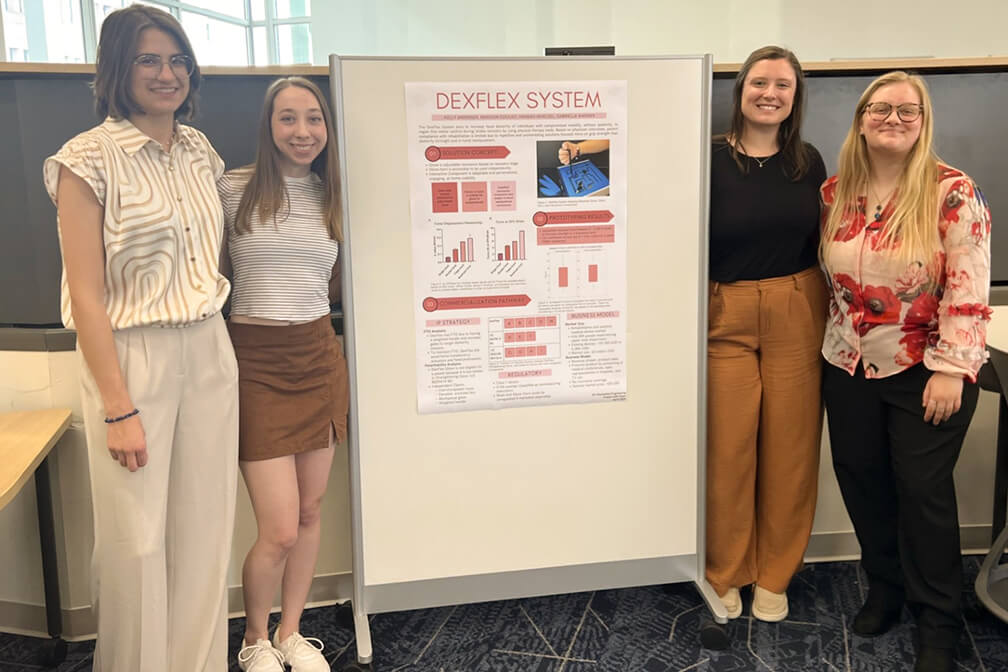
Hannah Henczel, Kelly Andersen, Gabby Wagner, Madison Dziulko