News by Topic: Imaging Science
-
April 8, 2024

Researchers introduce new way to predict landslides
Landslides are one of the most destructive natural disasters on the planet, causing billions of dollars of damage and devastating loss of life every year. A global team of researchers has provided help for those who work to predict landslides and risk evaluations.
-
April 5, 2024

Imaging science professor continues legacy of his mentors
Life experience and lessons from all of his mentors, many of whom were past recipients of the Eisenhart Award, made Salvaggio a teacher worthy of the accolade.
-
April 2, 2024
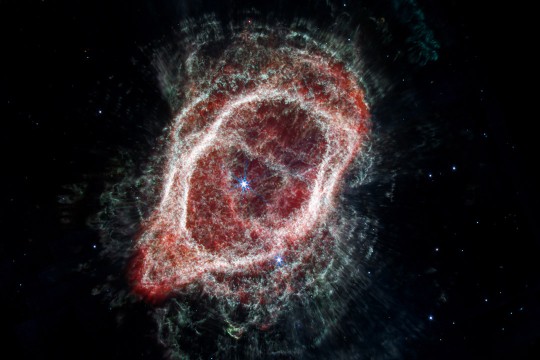
Scientists release new insight about Southern Ring Nebula
Planetary nebulae have been studied for centuries, but astronomers are getting new looks and a better understanding of the structures and compositions of these gaseous remnants of dying stars thanks to the ability to study objects at multiple wavelengths and dimensions.
-
February 1, 2024

Meet the woman creating community for Black women in film
Good Morning America speaks to Chris Wairegi '14 (film and animation and advertising photography), founder of the organization 600 Black Women, about how the nonprofit focuses on uplifting black women in the film community.
-
January 29, 2024
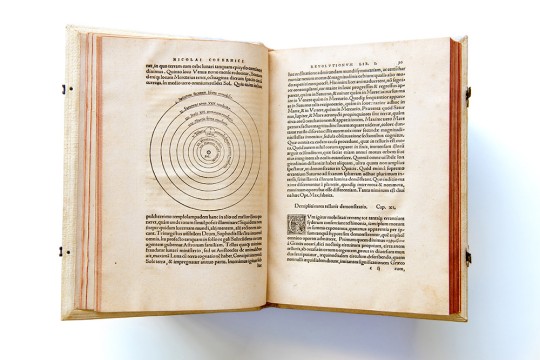
Centuries-old texts penned by early astronomers Copernicus and Sacrobosco find new home at RIT
The ancient astronomer Nicolaus Copernicus was the first scientist to document the theory that the sun is the center of the universe in his book, De Revolutionibus Orbium Coelestium (On the Revolutions of the Heavenly Spheres). That first edition book, along with a delicate manuscript from astronomer Johannes de Sacrobosco, that is contrary to Copernicus’ groundbreaking theory, has now found a permanent home at Rochester Institute of Technology.
-
October 30, 2023

Students deliver multispectral imaging system to The State Archives in Dubrovnik
The low-cost multispectral imaging system MISHA, or the Multispectral Imaging System for Historical Artifacts, was developed by RIT experts to uncover object details that aren’t visible to the naked eye.
-
October 19, 2023
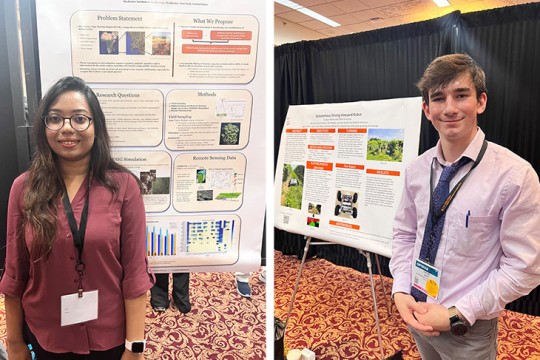
Imaging science students benefit from Industrial Associates event
Students in RIT’s Chester F. Carlson Center for Imaging Science participated in Industrial Associates at the Rochester Riverside Convention Center on Oct. 19. The event was a chance for students to connect with industry professionals and to hear about trends in the optics industry.
-
October 4, 2023

RIT surpasses $94 million in new research awards
RIT reached another record year in sponsored research awards, attaining more than $94 million in fiscal year 2022-2023. Some key areas of research include nanotechnology, optics and imaging science, cybersecurity and artificial intelligence, and growth in life sciences and health fields.
-
September 13, 2023
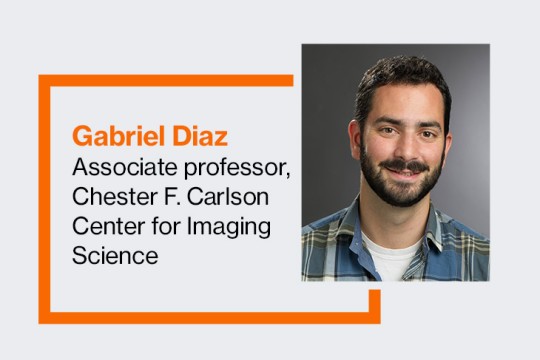
RIT researcher receives award to advance study of cortical blindness
Gabriel Diaz, associate professor in the Chester F. Carlson Center for Imaging Science, and his team are aiming to understand the effects of cortical blindness on the processing of visual information used to guide behavior, like driving a vehicle. Cortical blindness affects nearly half a million stroke patients in the United States each year.
-
August 23, 2023
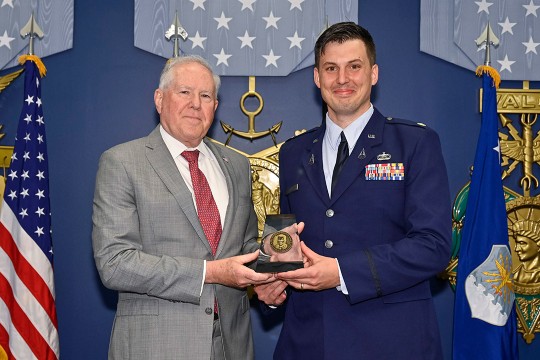
Alumnus Ronald Kemker receives U.S. Air Force’s Harold Brown Award
Alumnus Ronald Kemker ’18 Ph.D. (imaging science), a major in the United States Space Force, received the 2021 Harold Brown Award, the highest award given to a scientist or engineer who applies research to solve a problem critical to the needs of the Air Force.
-
August 7, 2023

RIT Undergraduate Research Symposium features student-led technology, art, and design solutions
More than 158 students presented research discoveries conducted over the past spring and summer at RIT’s 32nd annual Undergraduate Research Symposium on Aug. 3.
-
July 25, 2023
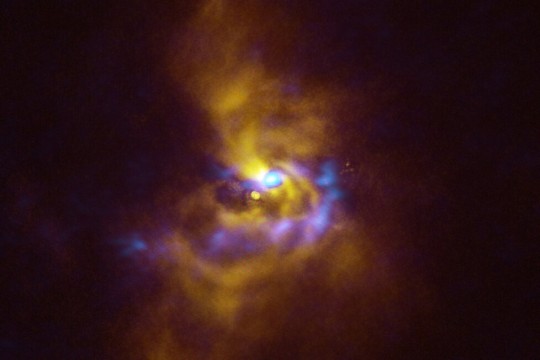
RIT professor co-authors paper on new planetary formation findings
Joel Kastner, a professor in the Chester F. Carlson Center for Imaging Science and School of Physics and Astronomy, and a team of researchers with the European Southern Observatory have discovered new evidence of how planets as massive as Jupiter can form.