News by Topic: Women
Rochester has a proud history of breaking barriers and fighting for social change. Susan B. Anthony and Anna Murray Douglass were Rochesterians and our community continues to celebrate their social contributions. RIT upholds a tradition of social equity by supporting female students with a host of clubs and organizations, as well as community resources, that provide platforms for meaningful discussion centering on feminine social justice.
-
August 31, 2022

Four revelations from the Webb telescope about distant galaxies
Nature talks to Jeyhan Kartaltepe, associate professor in RIT’s School of Physics and Astronomy, about the first images from the James Webb Space Telescope.
-
August 31, 2022

Milagros Concepcion: From Custodian to Controller
Hispanic Executive features Milagros Concepcion, associate vice president, controller, and assistant treasurer.
-
August 29, 2022

Prosthetics design integrating 3D printing takes third place in international challenge
Ph.D. student Jade Myers, who uses 3D print technology to develop upper and lower limb prostheses for amputees, was a top three winner of the nTopology-EOS 2022 Responsible Part Challenge, an international design competition.
-
August 26, 2022

Webb telescope is already challenging what astronomers thought they knew
The Washington Post talks to Jeyhan Kartaltepe, associate professor in RIT’s School of Physics and Astronomy, about the influx of data from the James Webb Space Telescope.
-
August 25, 2022

Engineering technology assistant professor honored as a 2022 KEEN Rising Star
Jennifer O’Neil was recently named a KEEN Rising Star, an honor given to recognize a faculty member’s ability to improve student learning and to equip undergraduate engineers with the tools to solve societal problems.
-
August 25, 2022

RIT students and faculty are helping to streamline the preservation of history
WROC-TV talks to Olivia Kuzio, a color science Ph.D. student, and Susan Farnand, assistant professor in the color science program, about an imaging system to help museums preserve and conserve their artifacts.
-
August 19, 2022
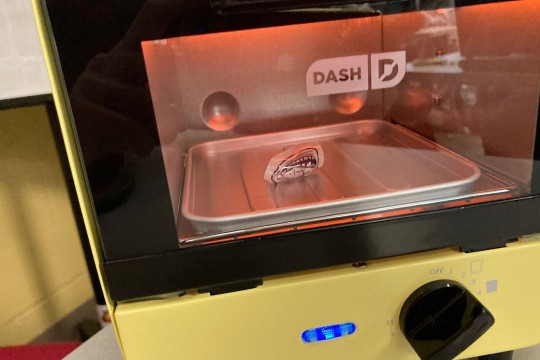
Crafting is my pedagogical love language — and it works wonders in the college classroom
Essay written by Hinda Mandell, professor in the School of Communication, published by The Boston Globe.
-
August 19, 2022

President Munson calls on RIT community to reinvigorate the campus this academic year
RIT President David Munson welcomed the community for the start of a new academic year with a call to re-energize the campus’s atmosphere to its pre-pandemic level. During his annual President’s Address in Ingle Auditorium this morning, Munson encouraged all RIT faculty, staff, and students to make a new academic year resolution to spend more time face-to-face with one another.
-
August 17, 2022

Engineering Grand Challenges Scholars Program grows integrating community-based projects to balance technical skills
Jessica Wagner and her classmates put together a plan to tame the traffic near Rochester’s International Plaza on Clinton Avenue. Students like Wagner, who are participating in RIT’s Engineering Grand Challenges Scholars program, are finding ways to integrate technical coursework with personal interests for careers that matter.
-
August 8, 2022

RIT Dubai graduate fuses careers in art and engineering
Khaleej Times profiles RIT graduate Zulfa Rasheed, who is challenging vocational traditions and proving that the worlds of art and engineering can unite in one career path.
-
August 7, 2022

Looking back on some of the universe’s oldest galaxies with James Webb
Digital Trends discusses early data from the Cosmic Evolution Early Release Science Survey (CEERS), a project RIT Associate Professor Jeyhan Kartaltepe is co-investigator for.
-
August 4, 2022

Monkeypox vaccines: A virologist answers 6 questions about how they work, who can get them and how well they prevent infection
The Conversation asks Maureen Ferran, associate professor in the Thomas H. Gosnell School of Life Sciences, about the two vaccines that can protect against monkeypox.