Rochester Institute of Technology News
Astrophysical Sciences and Technology MS
-
November 8, 2019

New study suggests ‘Pac-Man-like’ mergers could explain massive, spinning black holes
Scientists have reported detecting gravitational waves from 10 black hole mergers to date, but they are still trying to explain the origins of those mergers. The largest merger detected so far seems to have defied previous models because it has a higher spin and mass than the range thought possible. A group of researchers, including RIT Assistant Professor Richard O’Shaughnessy, has created simulations that could explain how the merger happened.
-
November 5, 2019

Watch the planet Mercury pass in front of the sun with the RIT Observatory
The planet Mercury will pass directly across the sun next week for the last time until 2032, and RIT faculty and students will help the community view the rare event. Members of the RIT Observatory will set up telescopes for public use from 7:30 a.m. to 1 p.m. on Monday, Nov. 11, in the Infinity Quad on the RIT campus.
-
October 25, 2019

Shedding light on black holes
The Christian Science Monitor talks to Manuela Campanelli, professor and director of the Center for Computational Relativity and Gravitation.
-
October 4, 2019
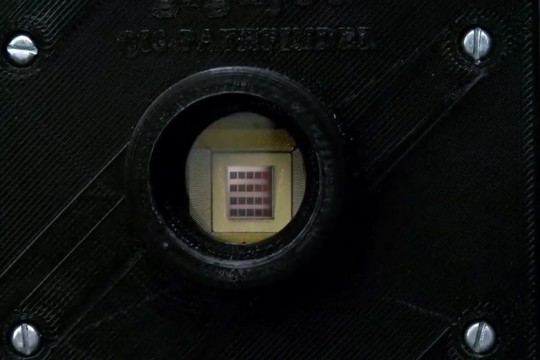
New tech at RIT may help find other planets
WROC-TV talks to student Justin Gallagher and Professor Don Figer, director of the Center for Detectors, about a sensor technology that may contribute to finding other planets.
-
September 12, 2019
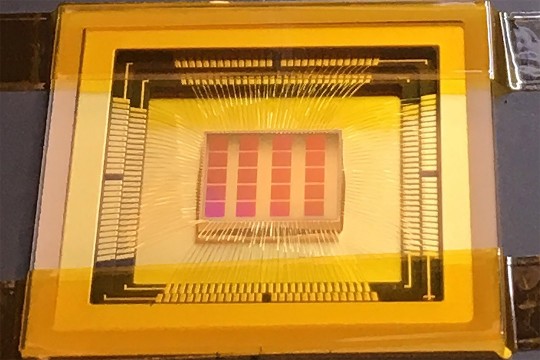
Scientists developing single photon detector to help search for habitable exoplanets
NASA is awarding a team of researchers from RIT and Dartmouth College a grant to develop a detector capable of sensing and counting single photons that could be crucial to future NASA astrophysics missions. The extremely sensitive detector would allow scientists to see the faintest observable objects in space, such as Earth-like planets around other stars.
-
July 1, 2019

RIT alumnus to serve as futures analyst for U.S. Agency for International Development
The fellowship program provides opportunities to outstanding scientists and engineers to learn first-hand about policymaking and contribute their knowledge and analytical skills in the policy realm. Brennan Ireland ’18 Ph.D. (astrophysical sciences and technology) will use his analytical skills to quantitatively evaluate countries to get a better picture of what their futures look like.
-
June 19, 2019
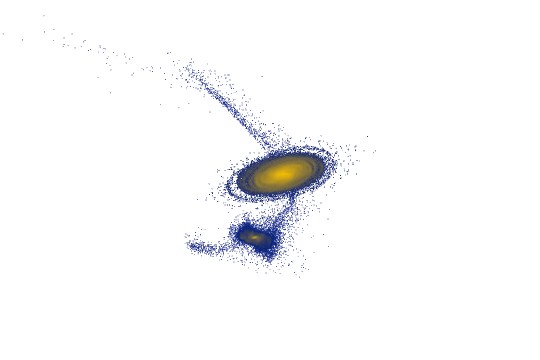
Did a Dwarf Galaxy Crash into the Milky Way?
Sky & Telescope reports that a recent study by RIT suggests the dwarf galaxy Antlia 2 had a long-ago run-in with our galaxy, rippling and warping its disk. But not everyone agrees with that scenario.
-
June 18, 2019
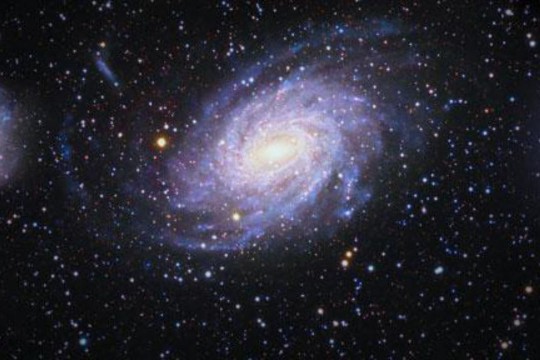
Milky Way Collided with Dark-Matter Dominated Galaxy Less Than Billion Years Ago
Sci-News features new research, led by RIT, that shows the collision of the recently-discovered dwarf galaxy Antlia 2 with the Milky Way Galaxy hundreds of millions of years ago is responsible for ripples in the Milky Way’s outer gas disk.
-
April 23, 2019

RIT researchers help conduct experiment to study how the first stars and galaxies formed
While many people flock to warm destinations for spring break, two RIT experimental cosmologists spent theirs 6,800 feet high on snow-covered Kitt Peak at the Arizona Radio Observatory. They were deploying an instrument to a 12-meter telescope for a project called the Tomographic Ionized-carbon Mapping Experiment (TIME), which aims to study the universe’s first stars and galaxies.
-
January 22, 2019
Professor Lousto recognized as outstanding physicist diversifying the field
The American Physical Society is recognizing RIT Professor Carlos Lousto for significant contributions to physics research and the advancement of underrepresented minority scientists.
-
January 21, 2019

A conversation on Photonics for Quantum
Organizers of RIT’s Photonics for Quantum Workshop discuss the future of quantum technology.
-
January 21, 2019
This Scientist Is Hunting for Planets That Orbit Dead Stars
Futurism features Jason Nordhaus, an NTID assistant professor of physics and a program faculty member in RIT’s astrophysical sciences and technology Ph.D. program.