Game design and development co-op project becomes smash mini game hit on Steam
First-person horror game by RIT student reaches 20,000 downloads in its first week.
Hallie Littlefield-Topham
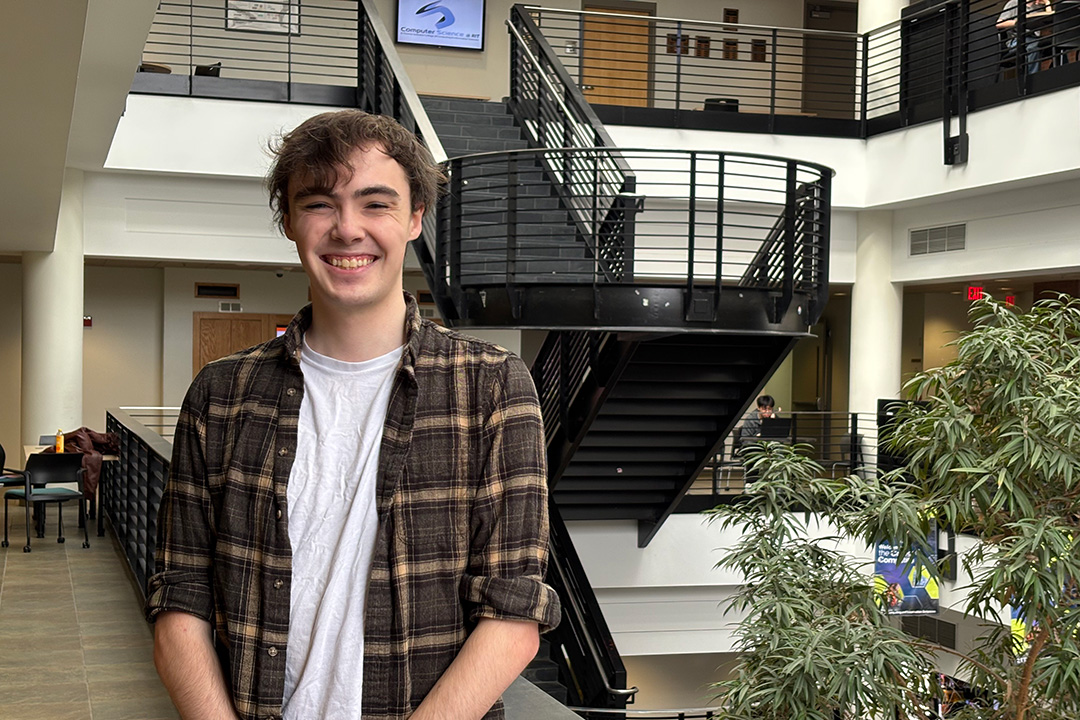
Luke Whited ‘24 developed REDSHIFT as part of an entrepreneurial co-op.
Luke Whited ‘24 (game design and development BS), a first-year game design and development MS student, recently published his miniature game, REDSHIFT to critical and audience acclaim. The game, which Whited describes as a first-person psychological horror short-story, has sold over 20,000 copies in its first two weeks, and reached the top of the charts for “new and trending” free games on Steam.
The game was developed as part of his RIT entrepreneurial co-op, in which he created his own indie games studio under the guidance of Principal Lecturer Sean Boyle, collaborating with other RIT students in areas such as sound design and digital art. Co-ops are a key component of an RIT education, providing students with opportunities to work hands-on in industry, or pursue their own entrepreneurial ventures. Along the way, he also gained meaningful mentorship and insight from game industry professionals. The 15-minute play experience follows character Samuel Chase, a field technician sent to restore power to a long-abandoned relay tower, where he accidentally activates the REDSHIFT, exposing a hidden layer of reality.
REDSHIFT began as a proof of concept developed by Whited during his game design and development BS coursework at RIT. Inspired by his mentors’ guidance to “just make things” without waiting for the perfect idea or permission to do so, Whited started with a simple character with the ability to blink. By the time he started his graduate co-op, Whited was eager to take making things to the next level. "That advice stuck with me," says Whited. "I wanted to challenge myself to go front-to-back on a full project - working real studio hours, building something polished, and actually launching it.".
During his co-op, REDSHIFT was expanded to include lots of new features, and though Whited says this came with burdensome “technical debt,” it taught him persistence, and the importance of iteration.
“Play is fundamental. Games have the power to entertain, but also to communicate ideas, tell meaningful stories, and even provide catharsis,” says Whited. Looking back on the project, Whited reiterates the advice he was given to “just make things! “I cannot repeat those words loud enough,” he stresses, “it’s up to YOU to make the incredible projects.”
If you’d like to play the released game, play it for free on Steam, or check out some other incredible student creations at rit.edu/games.

REDSHIFT is now available on Steam.