Imaging science Ph.D. student advances photo conservation
Diane Knauf receives National Park Service funding for her work using polarized imaging to study silver mirroring in historic photographs
Diane Knauf
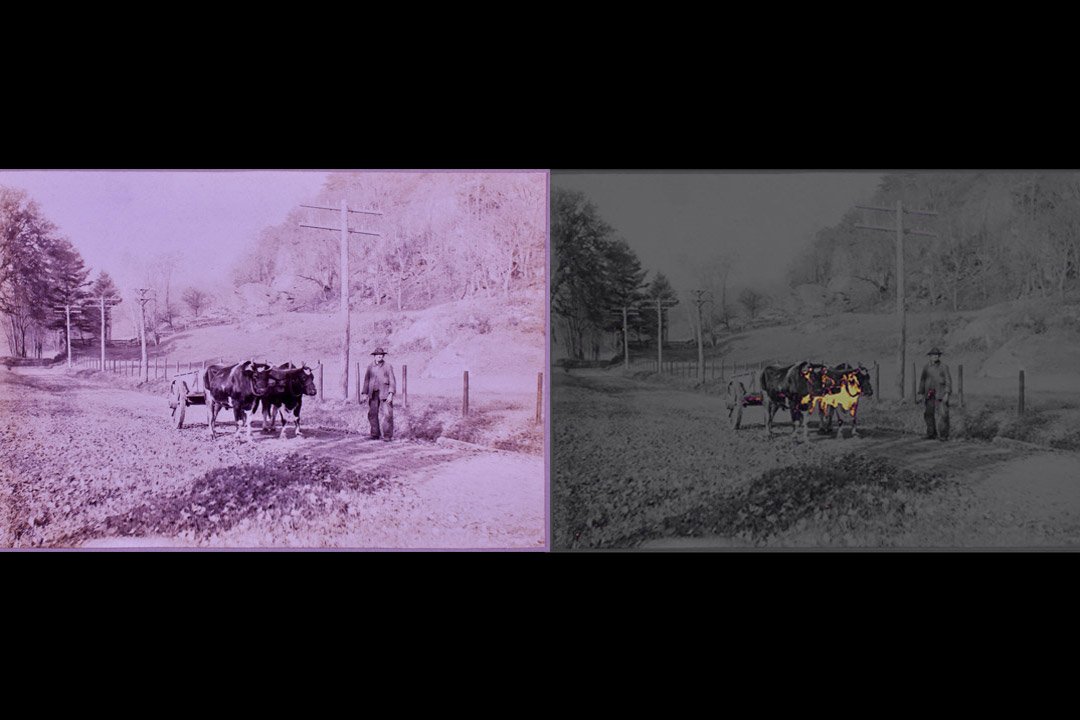
A silver gelatin print is shown in standard illumination on the left and with a yellow mask overlay on the right, highlighting regions affected by silver mirroring.
Imaging science Ph.D. student Diane Knauf is shining new light on old images with help from a grant from the National Park Service.
Using polarized light, Knauf is researching silver mirroring in historic photographs. Silver mirroring is a chemical process that deteriorates old black-and-white photos. The silver ions from silver gelatin prints, which were the standard for black-and-white photos from the late 1800s through the mid 1900s, move to the surface of the image, creating a metallic sheen.
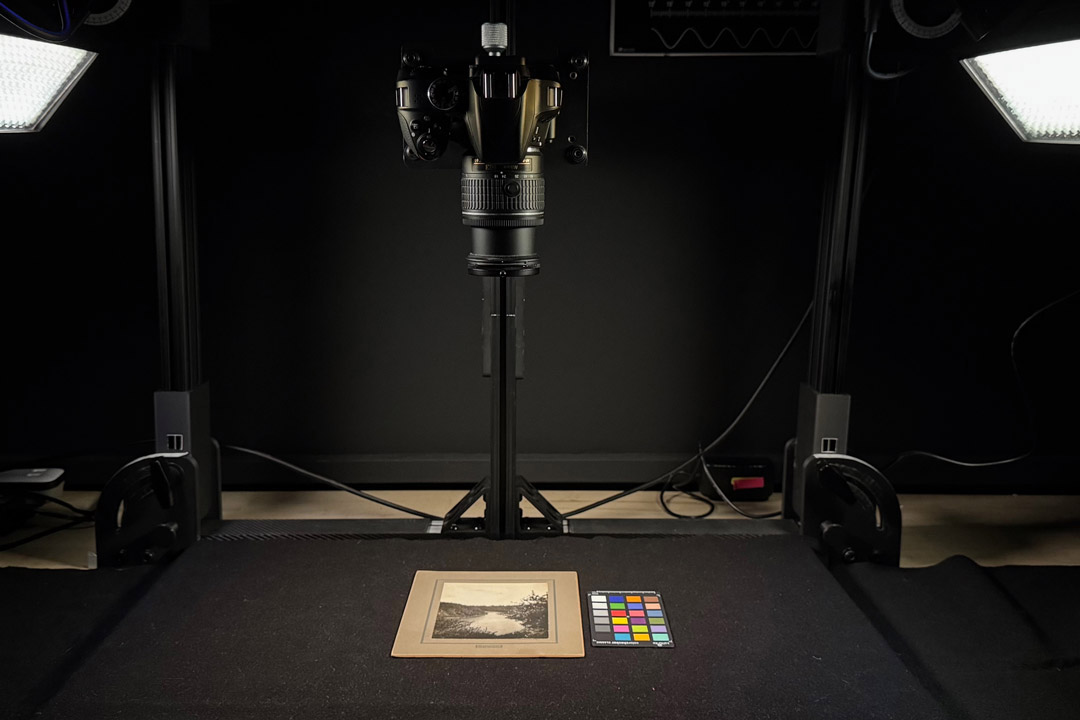
By using a linear polarization filter on both a light and a camera, Knauf can calculate and map where silver mirroring is occurring on a photograph.
Diane Knauf
Imaging science Ph.D. student Diane Knauf uses this setup in her research, using polarized imaging to aid conservation efforts of historic photographs with silver mirroring.
“What I am doing is trying to set up a protocol to image photographs that have silver mirroring so you can document where the silver mirroring is and get a percent surface coverage of the silver mirroring on the photograph,” explained Knauf. “It helps document the condition of the object so it can be known and maintained, and you can know if the condition is changing because of the storage conditions and such.”
With a bachelor’s degree in chemistry and a master’s degree in art conservation, Knauf recognized the importance of imaging in cultural heritage work. RIT’s imaging science Ph.D. program provided the opportunity to use her knowledge to conduct research in this area.
The Ph.D. in imaging science is one of 14 doctoral programs at RIT. The program, approved in 1989, is the oldest Ph.D. program at the university and was the first of its kind in the nation.
For a project in a human vision course, she wrote about polarization vision in animals and insects, and it got her thinking about what could be learned from the polarization of light when looking at art or archived objects. When she had to write a grant proposal for a seminar course, she decided to submit it for real opportunities.
RIT’s Image Permanence Institute is providing access to historic photos for her work with the National Park Service. With these resources, Knauf is bringing new insight to photograph conservation.
“Knowing where the silver mirroring is is important and knowing how it’s progressing is important,” said Knauf. “And there’s not really a good and consistent way to do that. This gives a quantified number that you compare over time. That’s the hope, that it can be used by conservators for that purpose.”


