RIT student wins HackMIT with low-cost medicine testing device
Student hackathon team builds optical dissolution tester to help identify substandard pills
Scott Hamilton/RIT
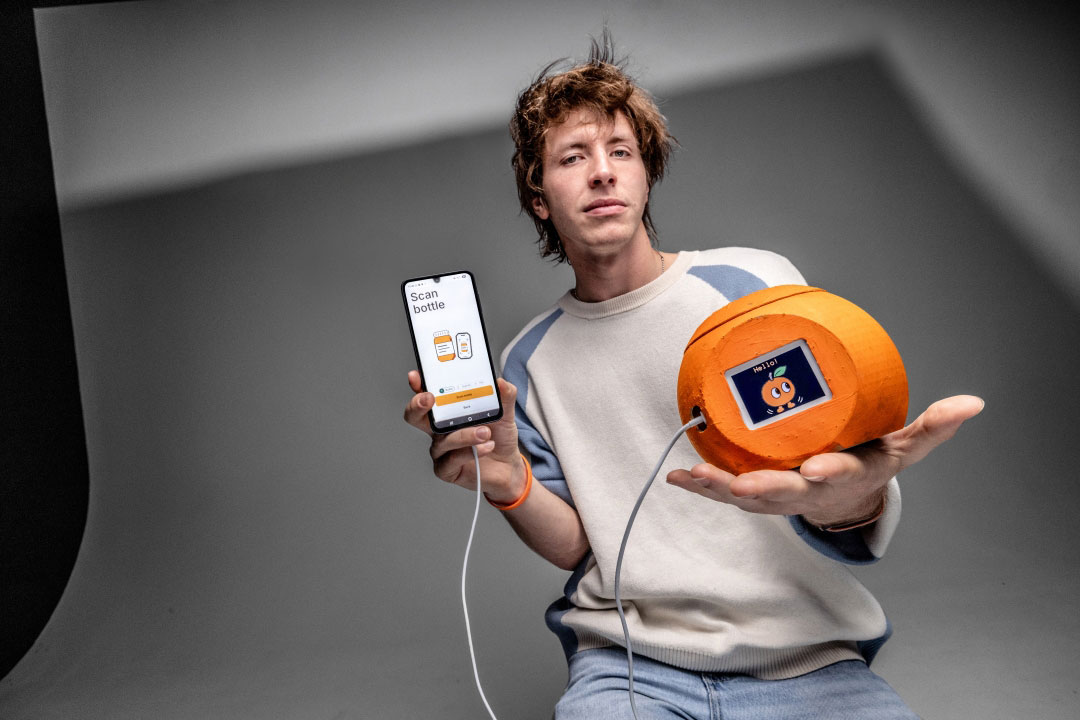
Leo Pozhenko, a software engineering BS and computer science MS student, won the grand prize at the Massachusetts Institute of Technology hackathon HackMIT 2026. His team created Peel, a low-cost optical dissolution tester paired with an AI evidence engine.
A Rochester Institute of Technology student and his team took home the first-place grand prize at HackMIT 2026, the Massachusetts Institute of Technology hackathon.
The group of students from top colleges across the country developed a low-cost testing device so anyone can check whether their medicine is real. For the project, Leo Pozhenko, an RIT student completing a combined accelerated BS/MS degree in software engineering and computer science, teamed up with Alan Tai, of Northwestern University; Viktor Minchev, from the University of California, Santa Barbara; and Nikhil Ramlukan of Johns Hopkins University.
HackMIT is an annual hackathon that brings together more than 1,000 students from around the world to build software and hardware projects in 24 hours. The grand prize-winning team earned $8,000.
“Honestly, none of us expected to win the whole thing,” said Pozhenko, who is from Austin, Texas. “Our team built something we thought was useful and it meant a lot that the judges saw it that way too.”
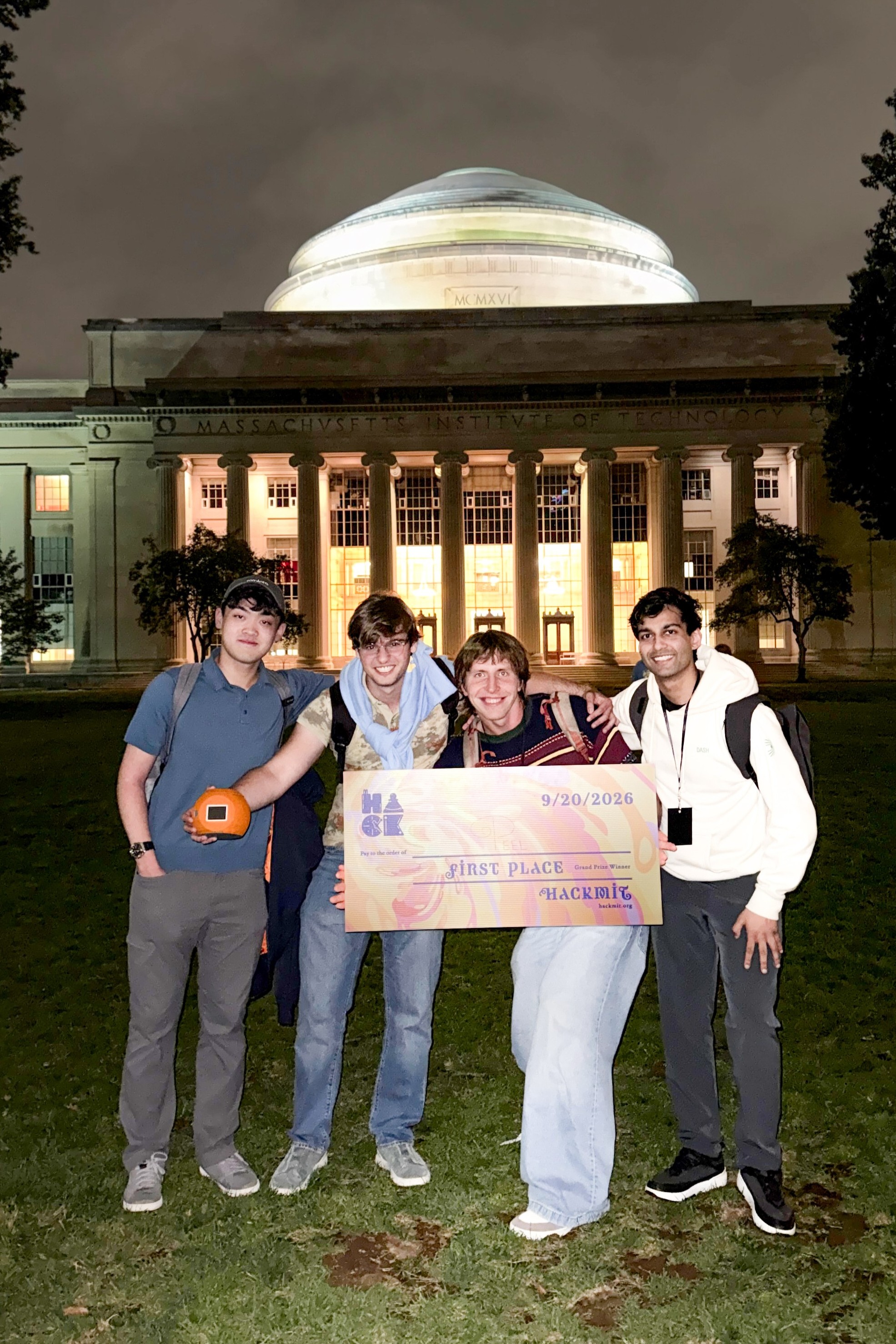
Alan Tai, left, Viktor Minchev, Leo Pozhenko, and Nikhil Ramlukan stand in front of the MIT Great Dome following their first-place grand prize win at HackMIT 2026.
The need for better pharmaceutical tests comes at a time when the World Health Organization estimates that one in 10 medicines in low- and middle-income countries are substandard or falsified. Malicious or not, this results in serious health risks and death.
Unfortunately, many of the tools for testing cost tens of thousands of dollars. The student’s goal was to make their device, called Peel, dramatically less expensive than traditional laboratory equipment.
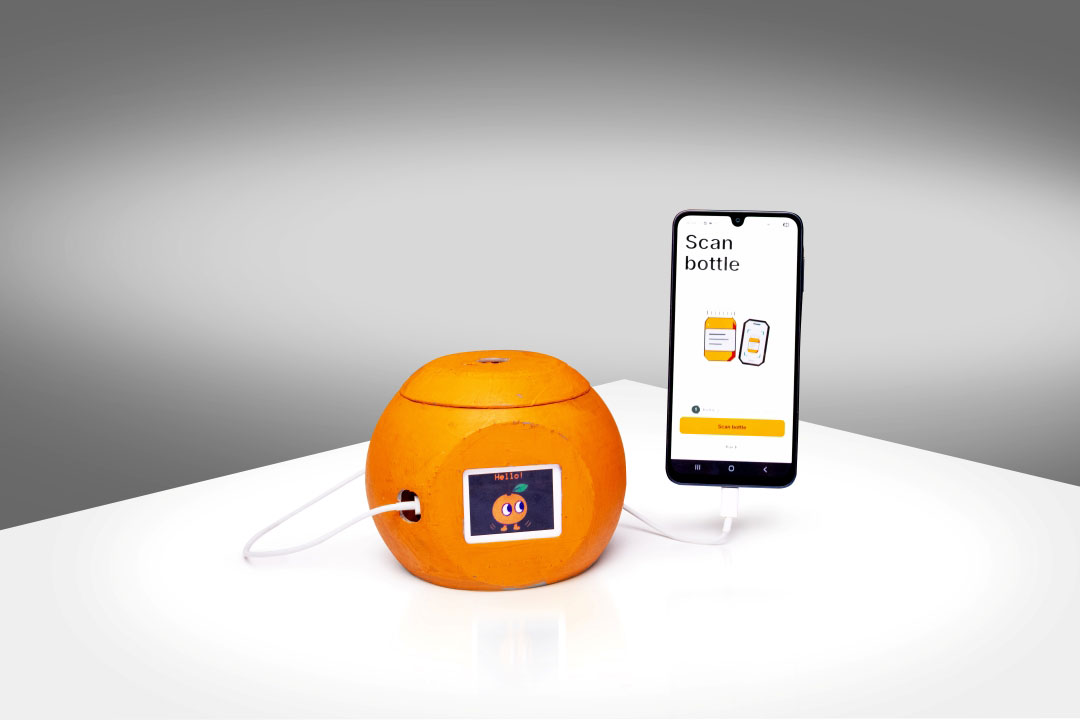
Peel runs three independent observations on every medicine it tests. It uses vision models to extract data from photographs of prescription bottles and pills. It is also an optical dissolution tester that plugs into a phone and uses light to analyze how a pill dissolves in water.
Using an AI evidence engine, the app then combines the dissolution measurements with information from drug and regulatory databases to help determine whether a medicine matches expected characteristics or may require additional lab testing.
“The internal components come to just under $30,” said Pozhenko. “And it’s not in a lab—you can use it at home. This could put the power in the hands of the people.”
Hacking it together
Pozhenko had not originally planned to attend HackMIT. He applied two hours before the deadline.
He was working late during his summer internship at Elsevier when he decided to find a hackathon to enter before the swim season started. He had only ever done one hackathon before.
“I was just thrilled to be accepted,” said Pozhenko. “There are several tracks for the event. I wanted to do the healthcare track because that is a way to directly impact people.”
Shortly before HackMIT, Pozhenko connected online with a few other students who were also interested in the healthcare track. They formed a team and began discussing the prevalence of falsified antimalarial drugs. That led them to consider the useful information they could discover by dissolving a pill in water.
“I opened the pre-approved list of hardware for the hackathon and said, ‘Yeah, this is totally possible,’” said Pozhenko.
Scott Hamilton/RIT
Peel was created in 24 hours at HackMIT by a team of students from four of the country’s top colleges. The team calls it a tiny lab technician, and they chose to paint it orange to stop ambient light from leaking into the case and affecting the readings.
Pozhenko was responsible for building the hardware. He designed the circuit and enclosure in CAD, built the magnetic stirrer, and wrote more than 1,500 lines of C++ firmware for the microcontroller. The device uses six LEDs, ranging from infrared to violet, to shine different wavelengths of light through the dissolving pill and collect readings.
“It checks how a pill dissolves, not its chemical composition,” said Pozhenko. “And, as opposed to using specific acids, we can do this process using something accessible to anyone—water.”
A banana was not the best shape for fitting components, so they went with an orange. Pozhenko’s hands were covered in orange paint while painting the Peel device. He also designed the small orange character featured in the app.
The system uses Elastic AI search to compare the results with information from drug and regulatory databases. The team mapped five indices containing information including 22,000 recalls and safety alerts from five regulators, 138,000 National Drug Code products, and 84,000 reference pills. Within seconds, the AI evidence engine can generate a report.
They explained that Peel is designed to get more accurate as more people use it, because every scan adds to a shared library of how real medicines behave. The team also developed a graph to help trace where substandard pills might be coming from.
Building the prototype in 24 hours came with its share of problems.
The team’s first 3D print failed when the power went out. They had to DoorDash paint brushes and paint from a nearby store early in the morning. They almost ran out of Deepgram credits during the demo. At one point, while mounting the mini breadboard hardware, Pozhenko knocked loose a ground connection and the device stopped working.
“I went to take a 10-minute nap on the couch at 6 a.m., and we all woke up three hours later,” Pozhenko said. “We scrambled to finish and shoot the video demo before the deadline. We hit almost every problem you can hit in 24 hours and still shipped a working demo.”
In addition to the grand prize, the team won first place in the Find the Signal track, sponsored by the software company Elastic.
The team plans to continue developing Peel, with a second version focused on improving its accuracy and reducing the size of the electronics. The goal is to make Peel roughly the size of an orange. They also hope to make the process non-destructive to the medicine.
At RIT, Pozhenko is a member of the Division III men’s swim team and the Society of Software Engineers. He credits many of his professors for his ability to think quickly during the hackathon, including courses with Kal Rabb, Richard Cliver, Daqing Hou, and Gene Wolfe.
“They gave me the foundation to understand what’s going on with hardware and to propose ideas to my team,” Pozhenko said.
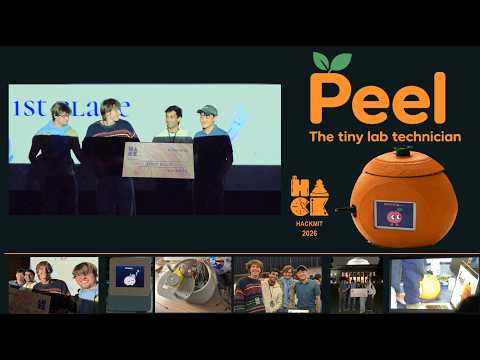
Peel - The tiny lab technician