Chronicle - Advancing NASA
Advancing NASA Missions with RIT Innovation.
RIT researchers are helping NASA tackle some of its most ambitious challenges.
Our strengths in imaging science, astrophysics, and engineering are helping NASA design longer-lasting missions, capture never-before-seen data, and answer questions that shape the future of science and life on Earth.
-
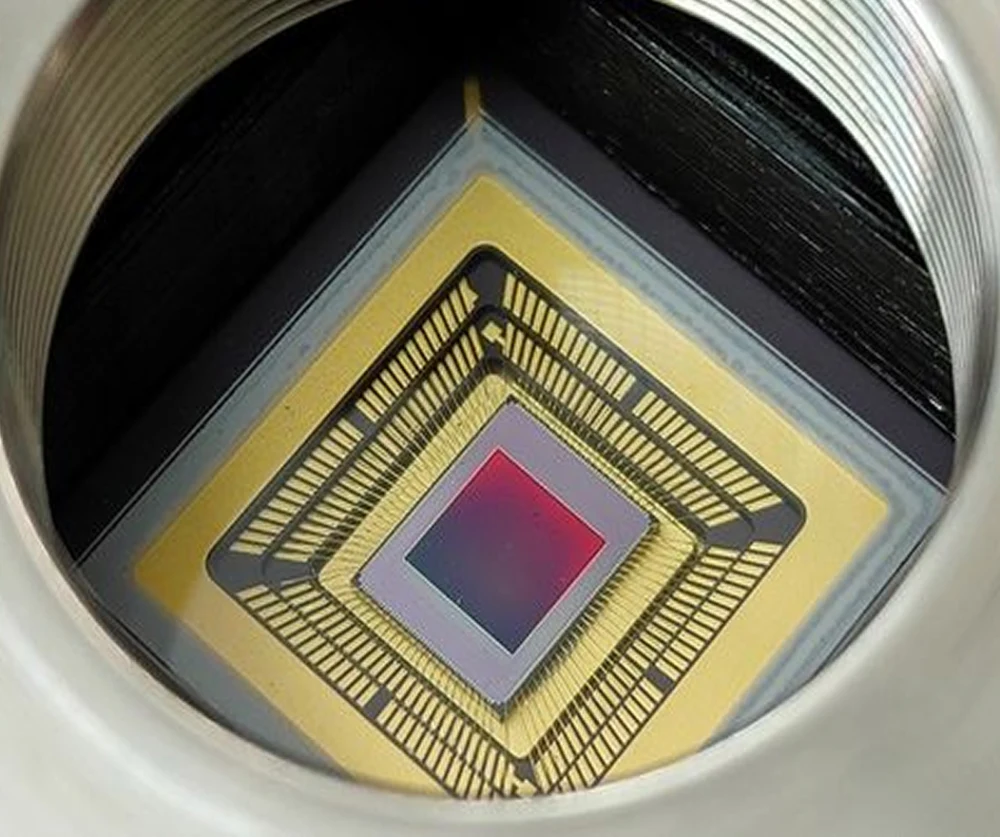
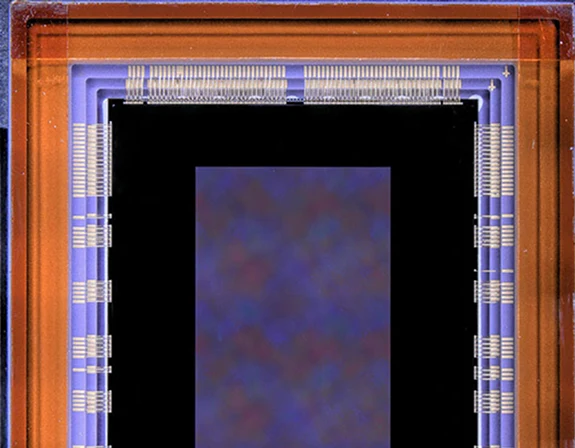
Engineering the world’s first space-ready single-photon CMOS detectors
Space missions are lasting longer due to advancing technologies, so detectors are needed that can withstand harsher environments for longer periods of time. At RIT’s Center for Detectors, scientists and engineers are developing the world’s first single-photon sensing complementary metal-oxide-semiconductor (SPSCMOS) image sensors. This breakthrough will help future NASA missions with the resilience to last longer, see deeper, and detect the faintest evidence of life beyond Earth.
Read More
-
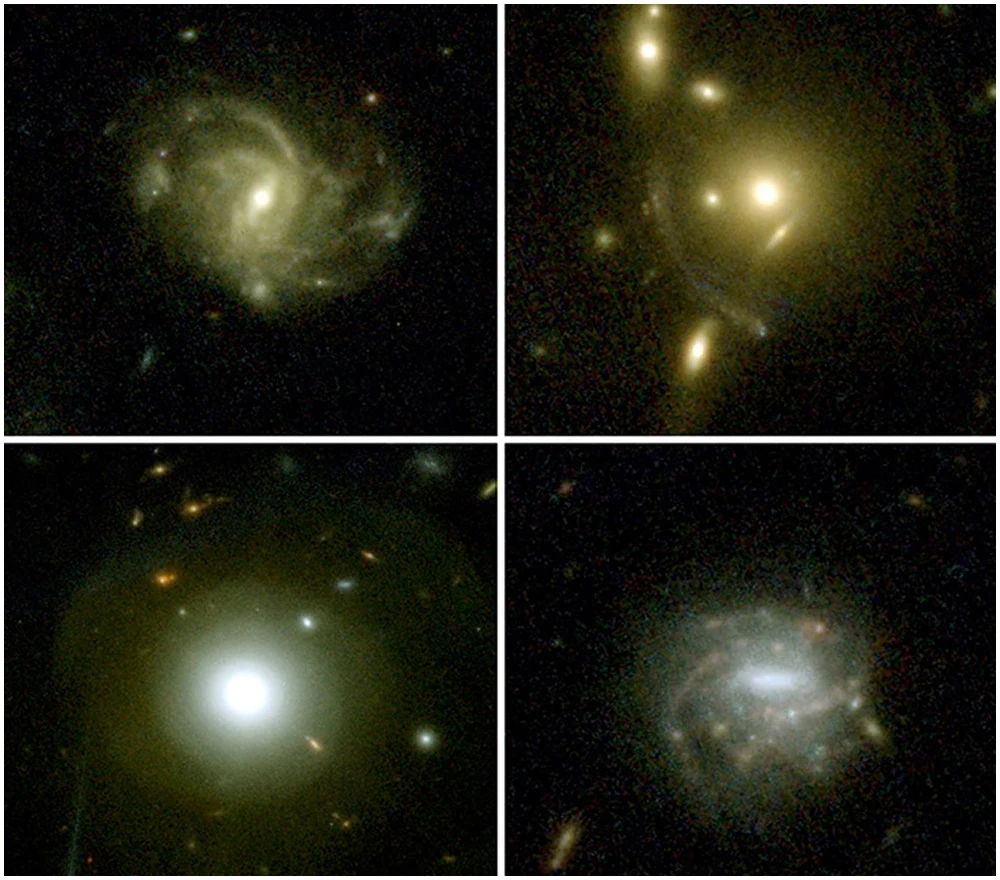
Leading exploration with the most powerful telescope ever built
RIT is at the forefront of discovery with the James Webb Space Telescope. Our researchers led COSMOS-Web, the largest general observer program of JWST’s first cycle, which is providing the most comprehensive view of the early universe to date. From shaping the telescope’s detector technology to advancing data collection and expert analysis, our researchers are driving new understanding of how the first galaxies, stars, and black holes formed.
Read More
-
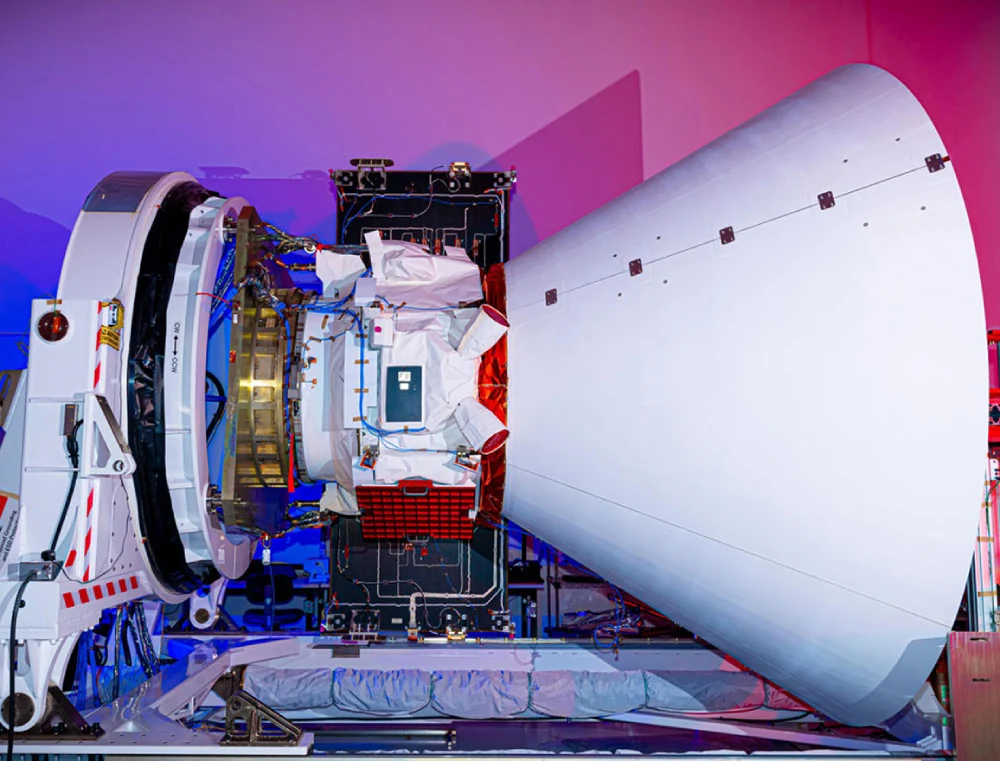
Leading exploration with the most powerful telescope
Recently launched, SPHEREx will create the first full-sky spectral map of the cosmos, revealing how galaxies formed and exploring the origin of water—the ingredient of life—in planetary systems. RIT researchers helped design and build the instrument and will play a central role in ensuring the accuracy and accessibility of the mission’s data, which will give scientists worldwide a never-before-seen 3-D view of the universe.
Read More
Every NASA partnership doubles as a classroom.
RIT’s collaboration with NASA provides faculty and students opportunities to work at the cutting edge of space science. From advancing detector technology to analyzing JWST data, RIT faculty and students gain hands-on experience that launches careers and fuels new discoveries—supporting the talent pipeline NASA and the space industry depend on.
-

Capturing the Universe’s Earliest Light
RIT researchers and students launched NASA’s CIBER-2 rocket to study faint infrared glow from the earliest stars and galaxies.
-

Two Graduate Students Earn Prestigious NASA Research Awards
RIT Ph.D. candidates Allen Wen and Sadie Coffin each won competitive FINESST grants for groundbreaking astrophysics research.
-

RIT Team Maps the Ring Nebula in 3D for the First Time
Professor Joel Kastner’s team revealed the Ring Nebula’s true ellipsoidal shape using advanced radio and space-telescope imaging.
-

Ph.D. Student Uncovers Secrets of a Young, Shrinking Exoplanet
RIT doctoral student Attila Varga discovered an exoplanet just 8 million years old that is rapidly losing its atmosphere to stellar X-rays.
-

NASA Grant Fuels Black Hole Breakthroughs
RIT researchers are modeling the light signatures of merging supermassive black holes to reveal how galaxies form and evolve.
-

Student-Led NASA Balloon Mission Reaches New Heights
Ph.D. student Kazuma Noda leads a years-long effort to test a star-tracking system aboard NASA’s high-altitude BOOP! balloon flight.
-
Undergrads Build a Cryogenic “Compass” for Rockets
RIT students designed a star-tracking instrument that uses ultra-cold detector tech to improve NASA’s deep-space navigation.