Computer Engineering Master of Science Degree

RIT’s Computer Engineering MS focuses on design methodology and advanced engineering tools for developing computer-integrated systems.
Overview for Computer Engineering MS
Why Pursue a Master's in Computer Engineering at RIT?
STEM-OPT Visa Eligible: The STEM Optional Practical Training (OPT) program allows full-time, on-campus international students on an F-1 student visa to stay and work in the U.S. for up to three years after graduation.
Five Dynamic Research Tracks: These tracks include: computer architecture; computer vision and machine intelligence; integrated circuits and systems; networks and security; or signal processing, control, and embedded systems.
Flexible Core Clusters: Choose one course from each of the following core clusters: Computer Architecture and Digital Design; Computing, Communications and Algorithms.
Hands-On Problem Solving: Your choice of a graduate project or thesis research to round out your master's degree.
The computer engineering master's focuses on the design and development of computer and computer-integrated systems, with consideration of such engineering factors as function, performance, security, and sustainability. Computer engineers design and build these systems to meet application and system requirements with attention to the hardware-software interaction. The master of science in computer engineering emphasizes the careful adoption of design methodology and the application of sophisticated engineering tools. The intensive programming and laboratory work requirements ensure significant, high-level, specialized knowledge and experience with modern facilities and state-of-the-art design tools.
RIT’s Computer Engineering Master’s Degree
The master of science in computer engineering provides you with a high level of specialized knowledge in computer engineering. You'll strengthen your ability to successfully formulate solutions to current technical problems while gaining significant independent learning experience that can prepare you for further graduate study or continuing professional development at the leading edge of the field. The computer engineering master's accommodates applicants with undergraduate degrees in computer engineering or related programs such as electrical engineering or computer science. Some additional bridge courses may be required for applicants with undergraduate degrees outside of computer engineering.
The computer engineer graduate program consists of a required course, flexible core courses, graduate electives, graduate seminar, and your choice of a thesis research or a graduate project.
Flexible Core: You will choose one course from each of the following core clusters, with your faculty advisor’s guidance.
- Computer Architecture and Digital Design
- Computing, Communications, and Algorithms
Graduate Electives: With advisor and department approval, you may request to take graduate courses outside of the department. The graduate electives are selected among the available research tracks. You are encouraged to choose most of your graduate electives within a single track, by consulting with your advisor. You must take a minimum of two electives from the department of computer engineering.
Thesis Research: Thesis research is an independent investigation of a research problem that contributes to the state of the art. Students who pursue the thesis option seek to answer a fundamental science/engineering question that contributes new knowledge in the field. You are expected to formulate the problem under a faculty advisor’s guidance and conduct extensive quantitative or qualitative analyses with sound methodology. A thesis committee will guide your research activities. Your findings are expected to be repeatable and generalizable, with sufficient quality to make them publishable in technical conferences and/or journals. For detailed information on thesis research timeline and requirements, please refer to Computer Engineering Thesis Research.
Graduate Project: The graduate project is a scholarly undertaking that addresses a current technical problem with tangible outcomes. The project generally addresses an immediate and practical problem, a scholarly undertaking that can have tangible outcomes. Examples of typical projects include implementing, testing, and evaluating a software and/or hardware system or conducting a comprehensive literature review with a comparative study. You are expected to give a presentation or demonstration of the final deliverables of your project. For detailed information on a graduate project timeline and requirements, please refer to Computer Engineering Graduate Project.
Master's in Computer Engineering Research Tracks
You are encouraged to choose most of your graduate electives within a single research track by consulting with your advisor. You may take relevant courses from other academic programs, including electrical engineering, computer science, and software engineering, to support a specific research focus. The following research tracks are available:
- Computer Architecture–The computer architecture area deals with hardware resource management, instruction set architectures and their close connection with the underlying hardware, and the interconnection and communication of those hardware components. Some of the current computer architecture challenges that are being tackled in the computer engineering department include energy-efficient architectures, high-performance architectures, graphic processing units (GPUs), reconfigurable hardware, chip multiprocessors, and Networks-on-Chips.
- Computer Vision and Machine Intelligence–Visual information is ubiquitous and ever more important for applications such as robotics, health care, human-computer interaction, biometrics, surveillance, games, entertainment, transportation, and commerce. Computer vision focuses on extracting information from image and video data for modeling, interpretation, detection, tracking, and recognition. Machine Intelligence methods deal with human-machine interaction, artificial intelligence, agent reasoning, and robotics. Algorithm development for these areas spans image processing, pattern recognition, and machine learning and is intimately related to system design and hardware implementations.
- Integrated Circuits and Systems–Modern processors demand high computational density, small form factors, and low energy dissipation with extremely high-performance demands. This is enabled by the nanoscale and heterogeneous integration of transistors and other emerging devices at a massive scale. Such nanocomputers will open unimaginable opportunities as well as challenges to computer engineers. This research focuses on designing computers with emerging novel technologies in the presence of severe physical constraints; investigating dynamic reconfigurability to exploit the power of nano-scale electronics for building reliable computing systems; and studying the applicability of emerging technologies to address challenges in computing hardware of the future.
- Networks and Security–The prevalence of interconnected computing, sensing, and actuating devices has formed our way of life. Ubiquitous access to data using/from these devices with reliable performance as well as presents exciting challenges for engineers and scientists. Being resilient to environmental uncertainty, system failures, and cyber-attacks requires advances in hardware, software, and networking techniques. This research track focuses on intelligent wireless and sensor networks, cryptographic engineering, and predictive cyber situation awareness.
- Signal Processing, Control, and Embedded Systems–This research area is concerned with algorithms and devices used at the core of systems that interact with our physical world. As such, this area considers the sensing, analysis, and modeling of dynamic systems with the intent of measuring information about a system, communicating this information, and processing it to adapt its behavior. Application areas are robust feedback-based control where uncertainty in the dynamics and environment must be considered during the design process and signal processing algorithms and devices for system sensing and adaptation.
-
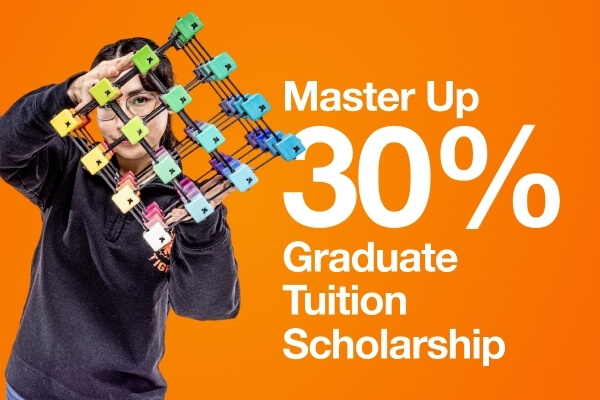
Affordable Now. Valuable for Life.
Earn your master’s degree without the full price tag. With Master Up you can receive a 30% tuition scholarship for an RIT master’s degree.
-

Don't Delay Your Ambitions Until the Fall
This program offers a spring start, which means you can jumpstart your graduate journey and begin your studies this January.
-

Discover how graduate study at RIT can help further your career objectives.
Virtual Admissions Webinars | Recordings available
Virtual Academic Sessions | October 20 - October 29
On-Campus Open House | November 20
Careers and Cooperative Education
Typical Job Titles
| Computer Engineer | Data Scientist | Embedded Systems Software Developer |
| Product Developer Engineer | Computer Vision Engineer | Hardware Design Engineer |
| Machine Learning Engineer |
Cooperative Education
What makes an RIT education exceptional? It’s the opportunity to complete relevant, hands-on engineering co-ops and internships with top companies in every single industry. At the graduate level, and paired with an advanced degree, cooperative education and internships give you the unparalleled credentials that truly set you apart. Learn more about graduate co-op and how it provides you with the career experience employers look for in their next top hires.
Cooperative education is optional but strongly encouraged for graduate students in the computer engineering master’s program.
Featured Work and Profiles
-

RIT Research Minute: DNA Computing
Amlan Ganguly DNA molecules and computing? RIT computer engineering department head, Amlan Ganguly and his research team are working to change DNA for more sustainable and effective computing.
Read More about RIT Research Minute: DNA Computing -
RIT Professor Drives Quantum Computing Advancements with New NSF-Funded Research
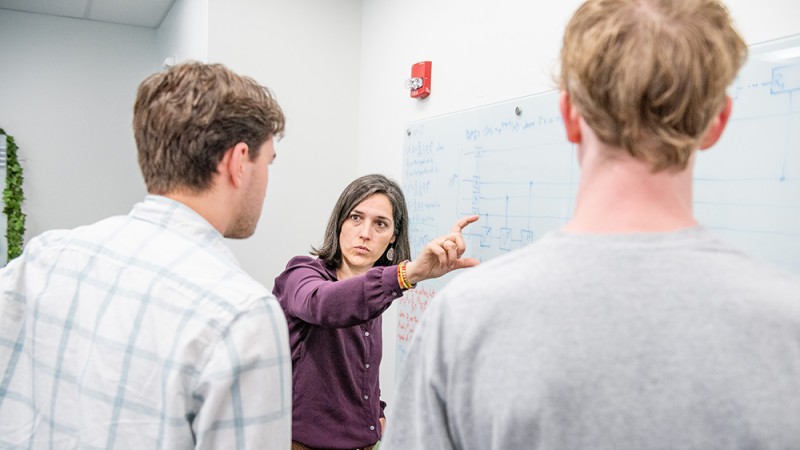
Dr. Sonia Lopez Alarcon has received a prestigious NSF grant to develop advanced compilation strategies for quantum computing, aiming to improve qubit routing scalability and reliability.
Read More about RIT Professor Drives Quantum Computing Advancements with New NSF-Funded Research -

Researcher Heads Team to Develop DNA-Based Processor for Future Tech
RIT’s Amlan Ganguly and his team have developed a groundbreaking system that leverages DNA for data storage and processing, offering a compact and sustainable alternative to traditional data centers.
Read More about Researcher Heads Team to Develop DNA-Based Processor for Future Tech
Curriculum for 2026-2027 for Computer Engineering MS
Current Students: See Curriculum Requirements
Students are also interested in
Admissions and Financial Aid
This program is available on-campus only.
| Offered | Admit Term(s) | Application Deadline | STEM-OPT Visa Eligible |
|---|---|---|---|
| Full‑time | Fall or Spring | Rolling | Yes |
| Part‑time | Fall or Spring | Rolling | No |
Full-time study is 9+ semester credit hours. Part-time study is 1‑8 semester credit hours. International students requiring a visa to study at the RIT Rochester campus must study full‑time.
Application Details
To be considered for admission to the Computer Engineering MS program, candidates must fulfill the following requirements:
- Complete an online graduate application.
- Submit copies of official transcript(s) (in English) of all previously completed undergraduate and graduate course work, including any transfer credit earned.
- Hold a baccalaureate degree (or US equivalent) from an accredited university or college in computer engineering or a related field. A minimum cumulative GPA of 3.0 (or equivalent) is recommended.
- Submit a current resume or curriculum vitae.
- Submit a personal statement of educational objectives.
- Submit two letters of recommendation.
- Entrance exam requirements: GRE required
- Submit English language test scores (TOEFL, IELTS, PTE Academic, etc.), if required. Details are below.
English Language Test Scores
International applicants whose native language is not English must submit one of the following official English language test scores. Some international applicants may be considered for an English test requirement waiver.
Duolingo (DET): 120
IELTS: 6.5
LanguageCert Academic: 70
PTE Academic: 56
TOEFL: 79/4.5
International students below the minimum requirement may be considered for conditional admission. Deaf and hard-of-hearing test takers with significant hearing loss do not need to take the listening and speaking sections for the TOEFL and IELTS. Each program requires balanced sub-scores when determining an applicant’s need for additional English language courses.
How to Apply Start or Manage Your Application
Cost and Financial Aid
An RIT graduate degree is an investment with lifelong returns. Graduate tuition varies by degree, the number of credits taken per semester, and delivery method. View the general cost of attendance or estimate the cost of your graduate degree.
A combination of sources can help fund your graduate degree. Learn how to fund your degree


Research
The faculty and students in the Kate Gleason College of Engineering are engaging in numerous areas of research, which takes place across all of our engineering disciplines and often involves other colleges at RIT, local health care institutions, and major industry partners. Explore the college's key research initiatives to learn more about our research in:
- Advanced Manufacturing
- Artificial Intelligence and Machine Learning Systems
- Biomedical and Healthcare Engineering
- Cyber-physical Systems
- Data Analysis, Modeling, and Simulations
- Energy and the Environment
- Micro/Nanoscale Systems, Devices, and Materials
AWARE-AI NSF Research Traineeship Program
The AWARE-AI National Science Foundation Research Traineeship Program provides a unique opportunity to RIT's graduate students, who are poised to become future research leaders in developing responsible, human-aware AI technologies.
Students in the computer engineering master’s degree are eligible to apply for traineeships in the AWARE-AI NSF Research Traineeship (NRT) Program. Trainees experience convergent AI research guided by accomplished RIT faculty who work in cross-disciplinary research tracks. In addition to high-touch mentoring, students also engage in curated, career-advancement activities. Learn more about the benefits of the trainee program, including training opportunities, application requirements, and deadlines.

Related News
-
April 7, 2026

RIT’s graduate programs ranked among the best by ‘U.S. News & World Report’
Seventeen graduate degree programs at Rochester Institute of Technology and the graduate schools in business and engineering are among the best in the nation, according to U.S. News & World Report’s annual rankings.
-
November 19, 2025
Manifesting quantum: How RIT researchers are navigating the next frontier of physics
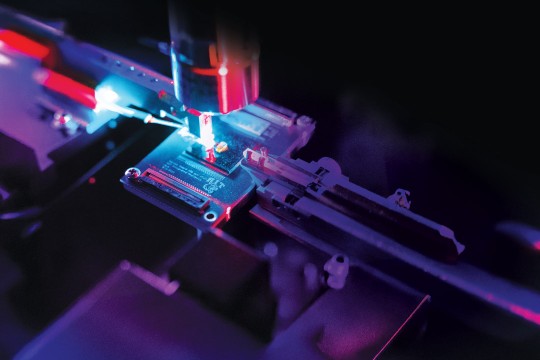
RIT researchers are zeroing in on quantum photonics, the creation, control, and detection of light. Photonics has long been a specialty of the university. RIT led the team that developed the first quantum photonic wafer, which is key to the future of mass-produced quantum communication systems.
-
May 30, 2025

Quantum Machine Learning Predicts Suitability of HHL Algorithm for Equations
Quantum Zeitgeist features research by Sonia Lopez Alarcon and Cory Merkel, associate professors in RIT's Department of Computer Engineering, and Mark Danza '25 MS (computer engineering).

