Human-Centered Computing Bachelor of Science Degree

RIT’s human-centered computing degree combines computing, psychology, and design to examine how people use technology and how computing systems can become more intuitive.
Overview for Human-Centered Computing BS
Why Study Human Centered Computing at RIT
Gain Hands on Experience: Two required blocks of cooperative education and internship mean significant hands-on, full-time paid work experience in industry.
Focused Degree Options: Choose two of six interdisciplinary concentrations to focus your education on your personal interests and career goals.
STEM-OPT Visa Eligible: The STEM Optional Practical Training (OPT) program allows full-time, on-campus international students on an F-1 student visa to stay and work in the U.S. for up to three years after graduation.
What is Human-Centered Computing?
Fundamental to human-centered computing (HCC) is a focus on humans as individuals and how they behave with technology. Students in this major find themselves at the intersection of computer advancements and human behavior around technology. Topics of consideration include the design, evaluation, and implementation of interactive computing systems and understanding the ways in which such systems can transform our lives. Given the growing reliance on computing in our everyday lives, technology no longer is the exclusive realm of tech-savvy users; industry has recognized the need to make software and devices that are usable and desirable to everyone.
Human-centered computing degrees are about leveraging technology, and exploring and adapting how people access and interact with it. Finding ways to integrate technology with our everyday lives—regardless of our physical capabilities, age, or location—is a key component of the program. HCC professionals are changing the world every day. HCC professionals have pioneered a range of development, including creating ways for computers to reproduce realistic animations of American Sign Language, designing the successor for the Fitbit, or building the next generation of speech recognition software. HCC students are the driving force at the center of the global accessibility effort.
RIT’s Human-Centered Computing BS
RIT's human-centered computing BS blends strengths from varied disciplines to understand how people use technology, and how technologies can be developed that are more intuitive and usable. This major prepares you for careers in industry or to pursue graduate study, offering options for you to specialize in different areas of computing depending on individual interests in computing, design, or psychology.
The skills that make up the core of the HCC degree include the ability to design, prototype, implement, and evaluate interactive computing systems. The program is unique in its foundation of courses grounded in psychology, design, and technology.
Human-Centered Computing Curriculum
The curriculum combines courses from three different RIT colleges to ensure students develop a firm understanding of these diverse subjects. Core courses include several foundational classes in:
- Technology
- Cognitive science and psychology
- Gestalt
- Color theory
- Creative thinking.
This is an interdisciplinary degree with six concentrations, allowing you to immerse yourself in two areas you find most interesting.
- Accessibility: Learn to develop systems that are equally accessible to all people, making the benefits of technology a reality for everyone.
- Design: Learn to integrate elements of imagery, type, actions, color, and more to form a unified graphical interface that is understandable to people everywhere.
- Front End Development: Master programming and development for desktop, web, and mobile computing interfaces, with a focus on efficient code and meeting user needs.
- Instructional Technology: Plan, organize and develop systems to effectively leverage technology to convey knowledge and skills to users.
- Natural Language Processing: Study the interactions between computers and human language. Learn about the latest advances in computational linguistics and how computers derive meaning via natural language processing.
- Psychology: Explore how humans perceive, process, and store information. Study best practices in research and evaluation, and learn how to implement them into your work.
The major also requires students to complete two blocks of cooperative education, which may begin after the second year of study.
Furthering Your Education in Human-Centered Computing
Combined Accelerated Bachelor's/Master's Degrees
Today’s careers require advanced degrees grounded in real-world experience. RIT’s Combined Accelerated Bachelor’s/Master’s Degrees enable you to earn both a bachelor’s and a master’s degree in as little as five years of study, all while gaining the valuable hands-on experience that comes from co-ops, internships, research, study abroad, and more.
+1 MBA: Students who enroll in a qualifying undergraduate degree have the opportunity to add an MBA to their bachelor’s degree after their first year of study, depending on their program. Learn how the +1 MBA can accelerate your learning and position you for success.
-

Meet Us on Campus
Learn about academics, co-op and internships, financial aid, and more at one of our on-campus open houses.
October 12 | October 24 | November 14
-

Apply for Fall 2027
Early Decision I and Early Action deadlines are November 1.
Careers and Experiential Learning
Typical Job Titles
| UX Designer | Product Designer | UI Developer |
| Software Developer | Technology Development Programmer | Web and Systems Programmer |
Industries
Cooperative Education
What’s different about an RIT education? It’s the career experience you gain by completing cooperative education and internships with top companies in every single industry. You’ll earn more than a degree. You’ll gain real-world career experience that sets you apart. It’s exposure–early and often–to a variety of professional work environments, career paths, and industries.
Co-ops and internships take your knowledge and turn it into know-how. Your computing co-ops will provide hands-on experience that enables you to apply your computing knowledge in professional settings while you make valuable connections between classwork and real-world applications.
Students in the human-centered computing degree are required to complete two blocks of cooperative education experience.
Creative Industry Day
RIT’s Office of Career Services and Cooperative Education hosts Creative Industry Day, which connects students majoring in art, design, film and animation, photography, and select computing majors with companies, organizations, creative agencies, design firms, and more. You'll be able to network with company representatives and interview directly for open co-op and permanent employment positions.
Featured Work and Profiles
-
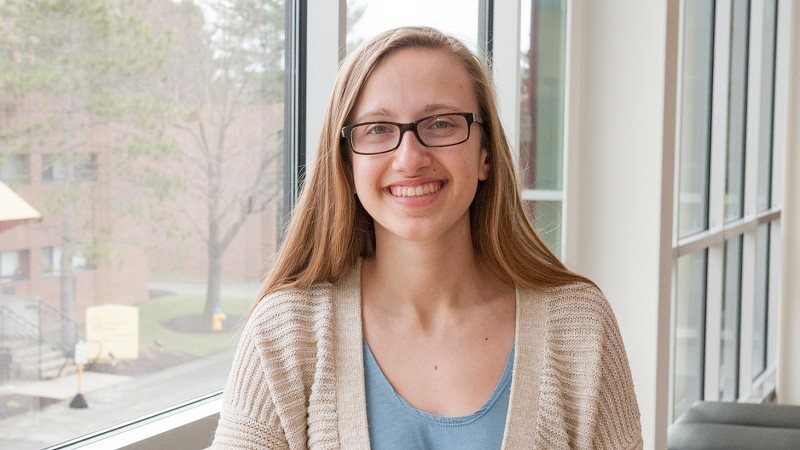
Becca Dingman
“Starting in the associate+bachelor’s degree program gave me a jump start to a bachelor’s degree.”
Read More about Becca Dingman -
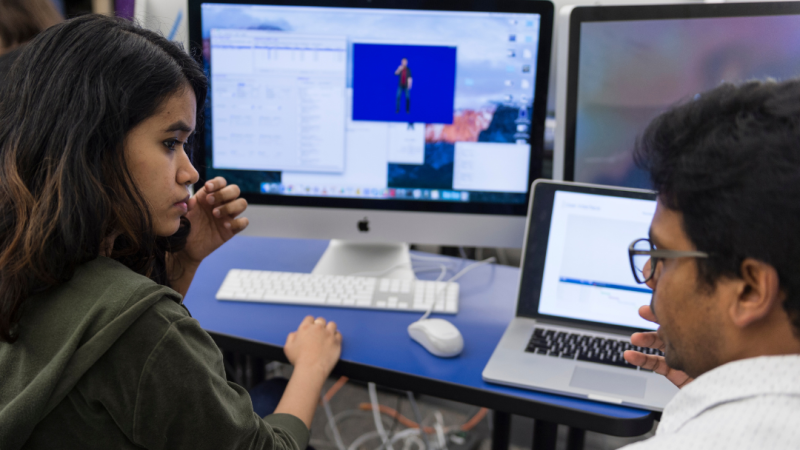
Improving lives at CAIR Lab
CAIR (pronounced "care") is a research center in the iSchool of the Golisano College of Computing and Information Sciences at RIT. CAIR brings together faculty and students who conduct and...
Read More about Improving lives at CAIR Lab -
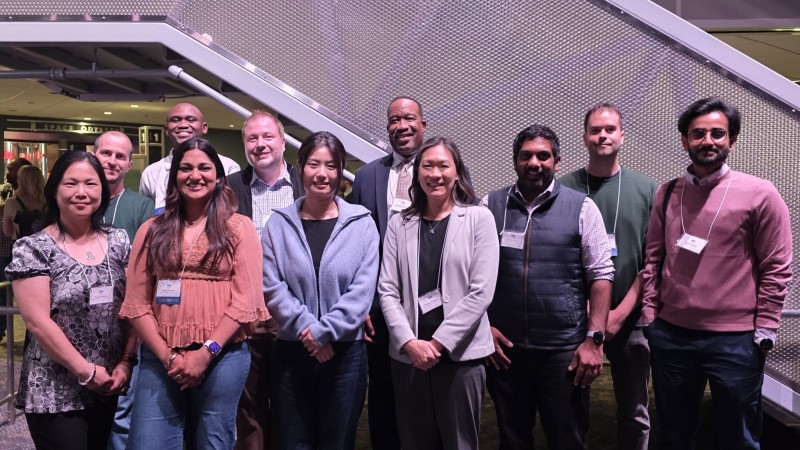
iSchool faculty and students organize, present at 2025 ACM Computers and Accessibility (ASSETS) Conference
Five iSchool faculty members and students helped organize this year’s ASSETS conference and presented research focused on accessibility.
Read More about iSchool faculty and students organize, present at 2025 ACM Computers and Accessibility (ASSETS) Conference -
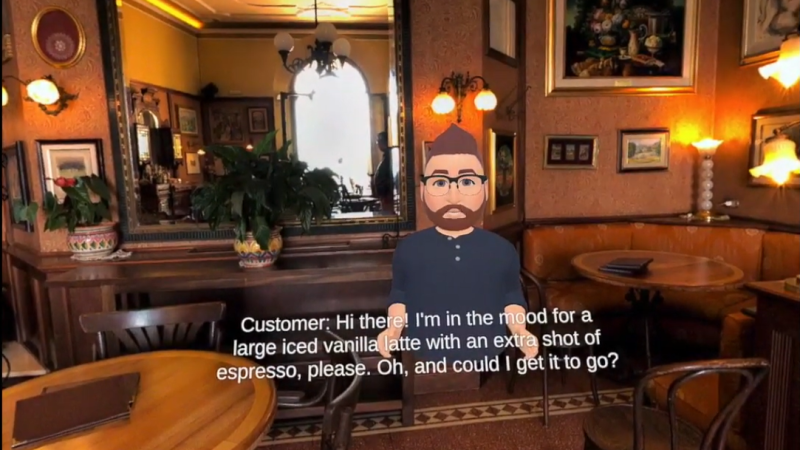
AIR Lab researchers combine AR, VR and AI to advance accessibility
Faculty and students develop tools to support job training processes for neurodivergent individuals.
Read More about AIR Lab researchers combine AR, VR and AI to advance accessibility
Curriculum for 2026-2027 for Human-Centered Computing BS
Current Students: See Curriculum Requirements
Admissions and Financial Aid
This program is STEM-OPT Visa Eligible when studying on campus and full time.
First-Year Admission
First-year applicants are expected to demonstrate a strong academic background that includes:
- 4 years of English
- 3 years of social studies and/or history
- 3 years of mathematics is required and must include algebra, geometry, and algebra 2/trigonometry. Pre-calculus is preferred.
- 2-3 years of science is required and must include chemistry or physics; both are preferred.
- Computing electives are preferred.
Transfer Admission
Transfer applicants should meet these minimum degree-specific requirements:
- A minimum of college algebra is required. Pre-calculus or calculus is preferred.
- Chemistry or physics is required.
- Computing courses are preferred.
Financial Aid and Scholarships
100% of all incoming first-year and transfer students receive aid.
RIT’s personalized and comprehensive financial aid program includes scholarships, grants, loans, and campus employment programs. When all these are put to work, your actual cost may be much lower than the published estimated cost of attendance.
Learn more about financial aid and scholarships


Related News
-
September 16, 2026
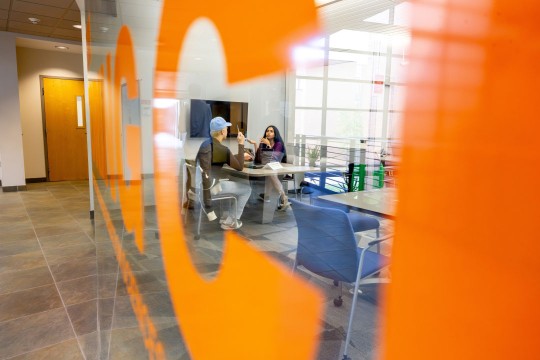
It’s OK to ask for help at RIT’s computing tutoring center
The Liangxiao Zhu Tutoring Center, in RIT’s Golisano College of Computing and Information Sciences, is open to any student taking introductory programming courses offered in the computing college.
-
May 27, 2026

RIT students experience global learning with international fellowships
The DAAD (Deutscher Akademischer Austauschdienst) Research Internships in Science and Engineering provide fully funded summer opportunities in Germany for RIT undergraduate students to gain practical research experience.
-
March 13, 2026
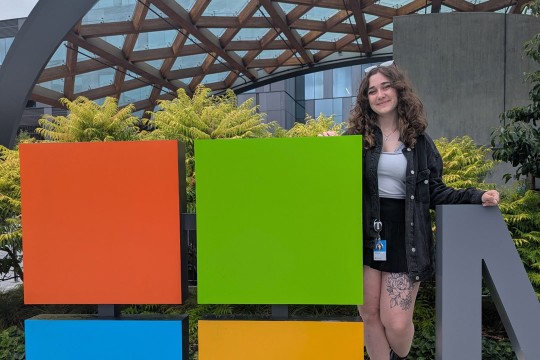
Co-op seminar class and a strategic approach help students land co-ops
Computer science major Emma Schmitt took a required co-op seminar class to help prepare for the internship search and what do to on the job, helping her land co-ops at Honeywell/LenelS2 and Microsoft.
Contact

School of Information