Experimental Psychology Alum Focuses on Animal Cognition
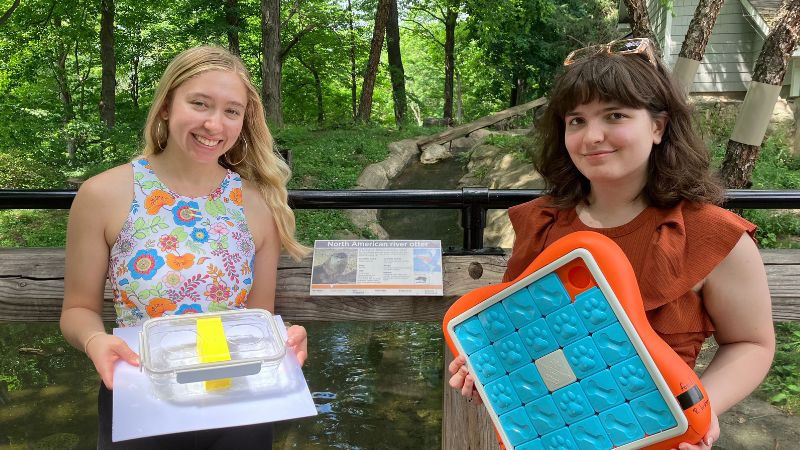
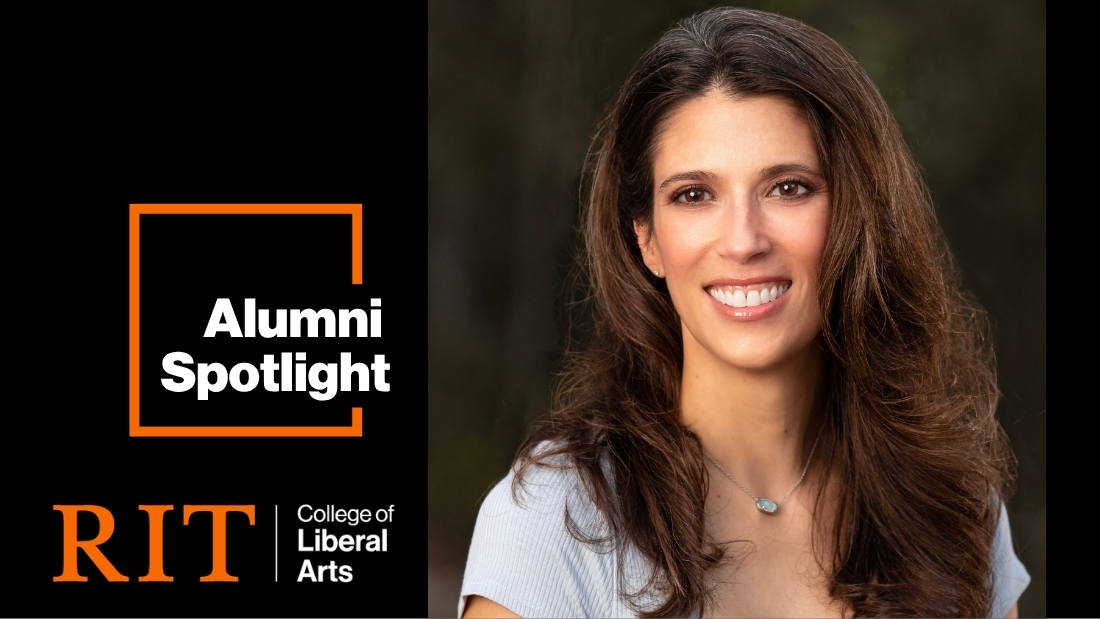
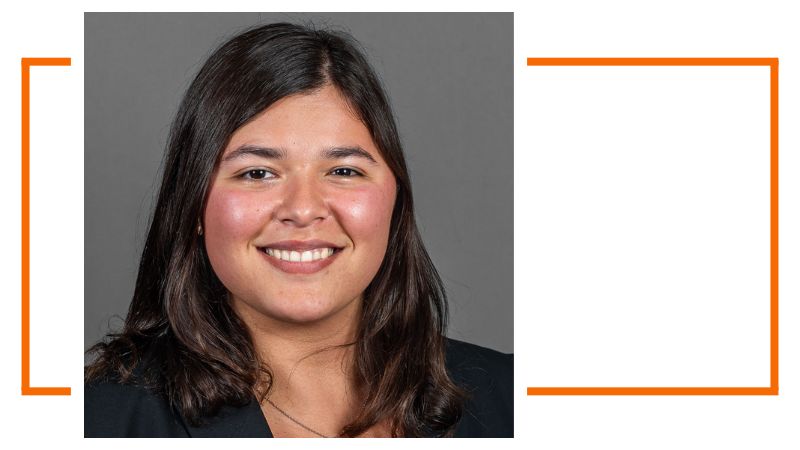
Anna Sofia Hege ’25 MS (experimental psychology) gained experience working on animal cognition research at RIT. Now that she’s graduated, she’s continuing to study animals as a research coordinator of the Language Research Center, a primate lab at Georgia State University.
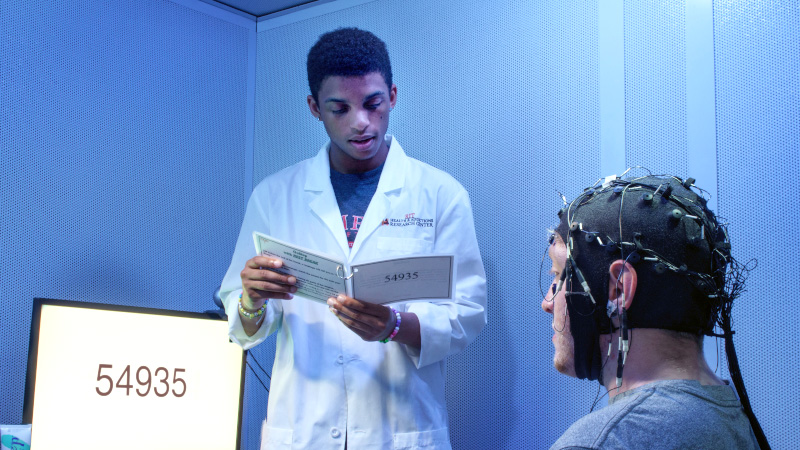
Working for two years in Professor Caroline DeLong’s Comparative Cognition and Perception Lab gave Hege the tools, skills, and experience needed to thrive in her current research role.
One of the last projects she worked on was a Big Team Science project called ManyOtters. The project brought together dozens of institutions from across the nation to explore the same research questions and offer the same puzzles to test the cognitive abilities of otters.
Hege said her time with the lab and her work on ManyOtters introduced her to new connections and ideas that she wouldn’t have found otherwise, which helped set her up for success after graduation.
“Learning about the importance of communication and organization to help coordinate such a massive project is really helpful for the position I’m in now. Communication is key when you’re working with a bunch of different moving parts,” she said.
Read on to learn more about Hege’s student experience.
Why did you apply to RIT’s experimental psychology master’s degree program?
I was originally on a veterinary path during my undergraduate career. Seeing things from the medical side made me really interested in the psychology happening in the animal's mind. I worked in a dog cognition lab during my undergrad because I was so interested in this and I really fell in love with animal research while I was there.
One of my advisors in the dog cognition lab was close with Dr. DeLong and he connected us during an animal cognition conference right before my final year of undergrad. Later, I met Dr. DeLong again when I was presenting a research poster and she invited me to apply for the experimental psychology program. Because someone I was working with knew her very well and I really liked what she and the program had to offer me, I decided to apply to RIT.
What did you do as a student research assistant in the Comparative Cognition and Perception Lab?
I have done some work in the goldfish lab, like conducting rhythm discrimination studies where we observed if fish can recognize rhythmic from arhythmic patterns. I’ve also done mental rotation studies with the fish where we present them with objects rotated at different angles to see if they can recognize those objects from different angles.
Aside from fish, I've also done a lot of work with the baboons at Seneca Park Zoo. I helped collect data on their hand preferences when they were doing cognitive tasks, and then my thesis was actually focused on what zoo visitors took away from the experience of watching baboons engage in the cognitive tasks from our research studies.
I have also done work with the otters at Seneca Park Zoo for the ManyOtters project. Mainly, I would help give the otters a set of problem-solving tasks that analyze their long-term memory and record their behavior for further study.
How did getting hands-on experience conducting laboratory research expand your skills?
I have learned a lot about scientific writing and how it is very unique and different from other kinds of writing. I learned how to write different parts of a scientific paper, whether it's a massive thesis or you're trying to write a journal article, and that has been very helpful.
I also think I gained a better understanding of how to manage feedback and that has been very valuable. As a graduate student, you get a lot of feedback from your mentors—which you do want because it makes you a better researcher—but you need to learn how to use that feedback effectively to help you improve. I think learning that skill has been very helpful.
More Featured Profiles and Work