Finance Bachelor of Science Degree

RIT’s finance bachelor’s degree involves the management, creation, and study of money, banking, investments, assets, and liabilities.
$61.5K
Average First-Year Salary of RIT Graduates from this Finance BS degree
#59
Best Undergraduate Business Schools
$300K+
Value of an investment portfolio managed by students in the Financial Management Association
Overview for Finance BS
Why Study a Finance Bachelor’s Degree at RIT
Become an expert in cash-flow analysis, capital markets, financial decision-making, or forecasting.
Stay up-to-date with financial trends by learning big data and data analytics in the Sklarsky Center for Business Analytics, a state-of-the-art facility housing Bloomberg Financial Markets technology.
Connect with Saunders alumni and key professionals through the Finance Advisory Board.
Gain relevant, hands-on experience through an immersive, applied curriculum in the classroom and a full-time, paid co-op experience.
Explore the management, creation, and study of money, banking, investments, assets, and liabilities, and the impact of technology on financial systems, cash-flow analysis, capital markets, financial decision-making, and forecasting. This is the exciting world of finance.
What is Finance?
Finance is more than tracking a budget. It is the art and science of managing cash flows, risk, and ultimately, value. Finance functions include corporate finance, budgeting, investment management, risk management, and valuation. Financial expertise determines the optimal management of money and the generation of value for clients.
RIT’s Finance Bachelor’s Degree
The world's financial markets are globally integrated. As a result, you need a finance degree that prepares you with a global understanding of financial markets, how they are integrated, and how they impact the business world.
In RIT's finance major, you'll learn about the management, creation, and study of money, banking, investments, assets, and liabilities. You'll become familiar with financial systems, which include the public, private, and government spaces, and have the opportunity to become an expert in cash-flow analysis, capital markets, financial decision-making, or forecasting. Set yourself a part with a finance degree that:
- Emphasizes the use of Big Data: You'll gain the data analytics skills to manage and analyze an organization's data to understand and forecast financial trends.
- Provides unparalleled access to technology: The state-of-the-art Sklarsky Center for Business Analytics features 12 Bloomberg terminals that connect you to Bloomberg technologies that track corporate financial data in real-time.
- Enables you to manage a real investment portfolio: In the student chapter of the Financial Management Association you'll actively manage a real $250,000+ portfolio.
- Prepares you to today's finance careers: Graduates are analytics-driven and skilled in making keen decisions by evaluating historical data and market performance forecasts.
Finance Curriculum
The finance major includes foundational courses in accounting, management, business planning, financial management, organizational behavior, and more. In addition, the financial curriculum includes advanced courses in investments, financial analysis, and strategic management. Finance electives enable you to select courses for more in-depth study in areas such as options and futures, business law, financing new ventures, financial analytics, and more. You will also spend time monitoring markets and analyzing financial trends in the Sklarsky Center for Business Analytics, which features Bloomberg Terminals and the latest in finance-based technology, computing power, and software.
Furthering Your Career in Finance
Today’s finance careers require advanced degrees grounded in real-world experience. RIT’s Combined Accelerated Bachelor’s/Master’s Degrees enable you to earn both a bachelor’s and a master’s degree in as little as five years of study, all while gaining the valuable hands-on experience that comes from co-ops, internships, research, study abroad, and more.
- +1 MBA Early Acceptance Pathway: Successful RIT applicants who are offered admission into the BS degree in finance as an incoming first-year student may also be offered conditional early acceptance into the +1 MBA Early Acceptance Pathway. This option enables you to earn both your BS degree and an MBA in as little as five years of study. Learn how the +1 MBA Early Acceptance Pathway can help you add a competitive advantage to your studies.
- +1 MBA: Students who enroll in a qualifying undergraduate degree have the opportunity to add an MBA to their bachelor’s degree after their first year of study, depending on their program. Learn how the +1 MBA can accelerate your learning and position you for success.
-

Meet Us on Campus
Learn about academics, co-op and internships, financial aid, and more at one of our on-campus open houses.
October 12 | October 24 | November 14
-
A National Leader in Business Education
RIT’s Saunders College of Business is among the best business schools in the nation for an undergraduate business degree, according to U.S. News & World Report.
-

Apply for Fall 2027
Early Decision I and Early Action deadlines are November 1.
Careers and Experiential Learning
Typical Job Titles
| Account Manager | Acquisitions Associate | Analyst |
| Closing Coordinator | Equities Derivatives Product Controller | Equity Trader Assistant |
| Financial Advisor | Investment Banking Analyst | Junior Finance Associate |
| Professional Financial Advisor | Reconciliation Analyst |
Industries
Cooperative Education
What’s different about an RIT education? It’s the career experience you gain by completing cooperative education and internships with top companies in every single industry. You’ll earn more than a degree. You’ll gain real-world career experience that sets you apart. It’s exposure–early and often–to a variety of professional work environments, career paths, and industries.
Co-ops take your knowledge and turn it into know-how. Business co-ops provide hands-on experience that enables you to apply your knowledge of business, management, finance, accounting, and related fields in professional settings. You'll make valuable connections between course work and real-world applications as you build a network of professional contacts.
Students in the finance degree are required to complete at least one block of cooperative education.
Careers in Finance
RIT's finance major prepares you for management positions in financial, commercial, industrial, and governmental organizations. You will learn the principles of financial decision-making as you build an understanding of the economic, legal, and financial environment in which these principles operate. Careers in finance can be found in all types of sectors, including government, industry, service, and not-for-profit organizations.
Featured Work and Profiles
-

Where Analytics and Strategy Meet: A Summer at Constellation Brands
Andrew Maust ’27 "The most distinctive advantage I have gained from my Saunders experience is the ability to approach business problems from both a business and technical perspective. Through my coursework in Finance...
Read More about Where Analytics and Strategy Meet: A Summer at Constellation Brands -
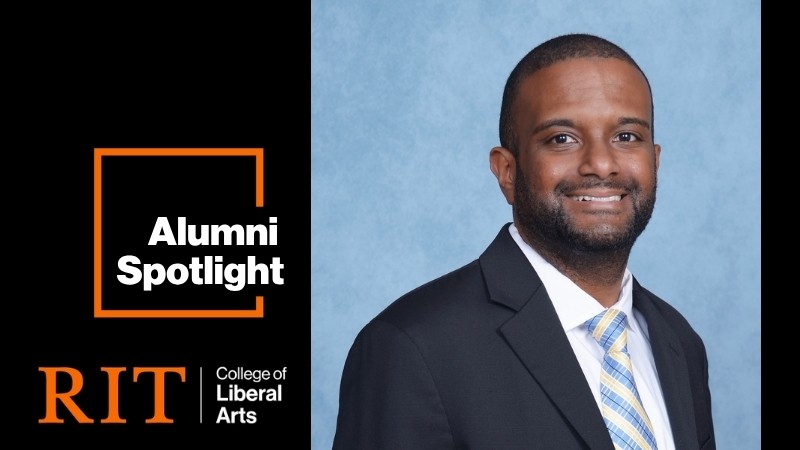
RIT economics alumnus represents Dominican Republic at World Bank Group
Julio Eduardo Diaz Sosa ’12 says RIT’s blend of liberal arts, technology, co-op, and critical thinking helped launch his career in international finance.
Read More about RIT economics alumnus represents Dominican Republic at World Bank Group -
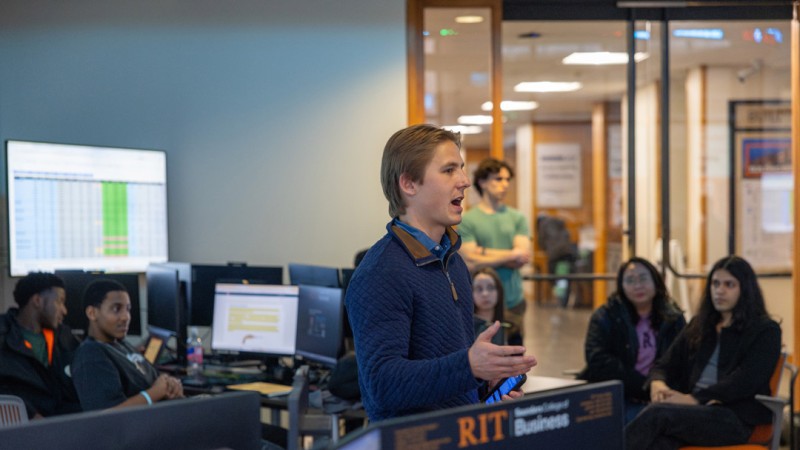
Student investors grow RIT’s portfolio
Owen Cavo ’27 RIT's Financial Management Association gives students a hands-on education in investing—along with a $450,000 portfolio
Read More about Student investors grow RIT’s portfolio -
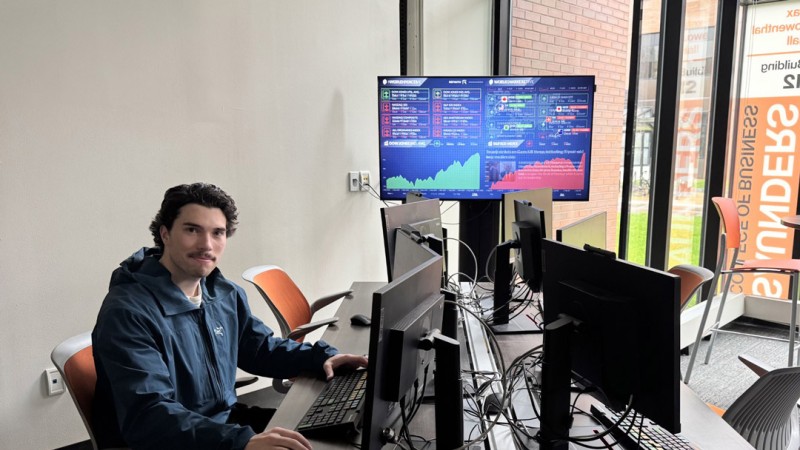
Hockey and finance set future path for Saunders graduate
Tyler Mahan ’26 Finance graduate Tyler Mahan has juggled a demanding academic and athletic career, leaving RIT with a choice between professional hockey and a career at Deloitte.
Read More about Hockey and finance set future path for Saunders graduate -
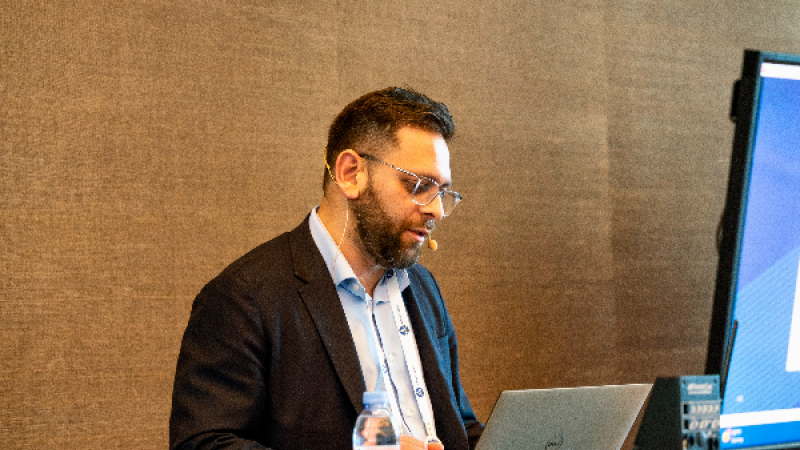
From Transfer Student to Chief Growth Officer: How RIT Shaped My Career
Sourav Srimal ’07 "RIT didn’t just prepare me for my first job—it prepared me for a career." SOLVE | Boston, Massachusetts
Read More about From Transfer Student to Chief Growth Officer: How RIT Shaped My Career -
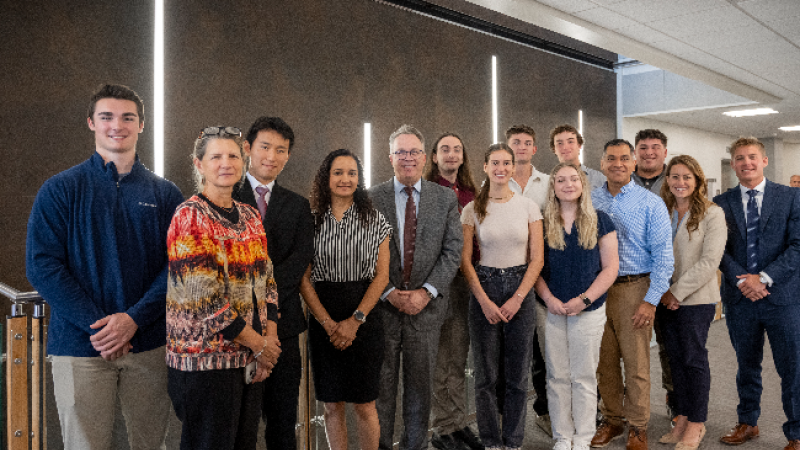
Finance Student Moderates Conversation with Fed Reserve Bank of NY President
Owen Cavo ‘26 (finance, MIS) moderated a Conversation with Federal Reserve Bank of NY President/CEO John C. Williams at RIT, September 29, 2025. Students were invited to have lunch with President...
Read More about Finance Student Moderates Conversation with Fed Reserve Bank of NY President
Curriculum for 2026-2027 for Finance BS
Current Students: See Curriculum Requirements
Admissions and Financial Aid
First-Year Admission
First-year applicants are expected to demonstrate a strong academic background that includes:
- 4 years of English
- 3 years of social studies and/or history
- 3 years of math is required and must include algebra, geometry, and algebra 2/trigonometry. Pre-calculus is preferred.
- 2-3 years of science
Transfer Admission
Transfer applicants should meet these minimum degree-specific requirements:
- A minimum of college algebra is required. Pre-calculus or calculus is preferred.
Financial Aid and Scholarships
100% of all incoming first-year and transfer students receive aid.
RIT’s personalized and comprehensive financial aid program includes scholarships, grants, loans, and campus employment programs. When all these are put to work, your actual cost may be much lower than the published estimated cost of attendance.
Learn more about financial aid and scholarships


Related News
-
September 28, 2026

QS World Rankings 2027
Saunders College of Business at Rochester Institute of Technology is nationally and internationally ranked and recognized. Saunders received several high rankings from QS World, which in 2027 ranked 1,503 top universities around the globe.
-
August 3, 2026

RIT startup program teaches founders to listen
The Bernard Kozel StartUp Program is a 12-week immersive summer experience open to students from across the university and run through Saunders College of Business.
-
May 27, 2026

This Startup Is Using AI To Keep Oral History Alive
Black Enterprise highlights the launch of Oria by alumnus Josiah Faison '23 (finance), a digital storytelling platform designed to help families and communities preserve oral histories and generational memories through AI-powered archiving tools.
Contact

Saunders College of Business