Industrial Design Bachelor of Fine Arts Degree

In RIT’s industrial design BFA, you’ll create and develop innovative products for both consumers and manufacturers with your choice of diverse industries to work in.
$59.5K
Median First-Year Salary of RIT Graduates from this Industrial Design BFA degree
Overview for Industrial Design BFA
Why Study Industrial Design at RIT
Accelerated Degree Option: RIT’s 4+2 BFA/M.Arch. enables you to complete your industrial design degree and enter the second year of RIT’s master of architecture degree with advanced standing.
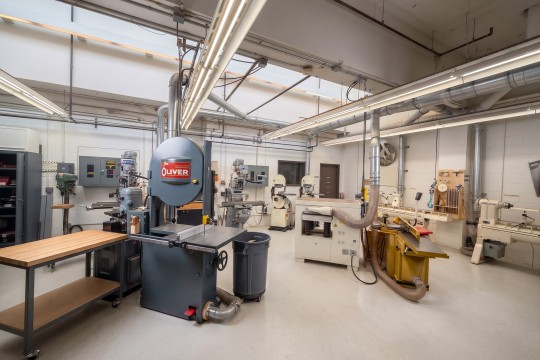
Industry Standard Technology: Our Fab Lab is equipped with 12 3D printers, in addition to laser cutters, CNC routing devices, and other technology, all for you to utilize when completing projects and class assignments.
Gain Real-World Experience: Six designs from Metaproject, the industrial design senior project, are currently in production at various companies.
Award Winning: RIT's School of Design, which houses the industrial design major, is ranked among the best, with Business Week naming it one of the top 10 design schools in the country.
From athletic wear and home goods to stereo systems and medical devices, there are a variety of industries that RIT’s industrial Design prepares you for. Learn how to create and develop inventive products for both consumers and manufacturers in an industry of interest to you.
What is Industrial Design?
Industrial design is a field of design that focuses on the creation of products, systems, and services that are both aesthetically pleasing and functional. It involves the process of designing and developing the appearance, ergonomics, usability, and user experience of various products and objects that are mass-produced for mass consumption.
Industrial designers work to improve the functionality, usability, and visual appeal of products across a wide range of industries, including consumer electronics, furniture, automobiles, appliances, medical devices, and more. They collaborate with engineers, marketers, and manufacturers to create products that meet the needs and preferences of consumers while also considering factors such as cost, sustainability, and manufacturing feasibility.
RIT’s BFA in Industrial Design Courses
RIT's industrial design BFA gives you the knowledge and skills needed to succeed as an industrial product designer and produce products used by factories, businesses, and everyday people.
This industrial product design degree blends technical instruction with studio assignments. You will develop the aesthetic sensitivity, technical competence, and the analytical thinking needed to improve the user experience and design products that meet human needs.
The industrial design degree integrates major courses in package, exhibit, and furniture design. In addition to a mix of studio and open electives, the liberal arts, and art history electives. Bring your conceptual ideas to life in product design courses by developing your technical 2D communications skills and 3D prototyping ability, then learn how to formally move your ideas and products to the marketplace. These industrial design courses incorporate developing expertise in other areas like:
- Computer skills
- Design perspectives
- Career preparation
You will also be exposed to the related areas of:
- Photography
- Engineering
- Information technology
Furthering Your Education in Industrial Design
Combined Accelerated Bachelor’s/Master’s Degrees
Today’s careers require advanced degrees grounded in real-world experience. RIT’s Combined Accelerated Bachelor’s/Master’s Degrees enable you to earn both a bachelor’s and a master’s degree in as little as five years of study, all while gaining the valuable hands-on experience that comes from co-ops, internships, research, study abroad, and more.
- 4+2 BFA/M.Arch. Pathway: A BFA degree takes four years to complete and an M.Arch. degree typically takes an additional three to four years. In RIT’s 4+2 BFA/M.Arch. Pathway, you’ll complete a BFA in industrial design or interior design and then enter the second year of RIT’s NAAB-accredited master of architecture degree with advanced standing. Learn how this accelerated pathway enables you to earn a BFA and an M.Arch. degree in as little as six years, saving you time and money.
- +1 MBA: Students who enroll in a qualifying undergraduate degree have the opportunity to add an MBA to their bachelor’s degree after their first year of study, depending on their program. Learn how the +1 MBA can accelerate your learning and position you for success.
Professional Organizations
The School of Design maintains memberships in a variety of professional organizations, including Industrial Designers Society of America, ACM Siggraph, Society of Environmental Graphic Designers, American Society of Interior Designers, American Institute of Architects, ICOGRADA, American Institute of Graphic Arts, and International Interior Design Association.

-

Meet Us on Campus
Learn about academics, co-op and internships, financial aid, and more at one of our on-campus open houses.
October 12 | October 24 | November 14
-

Apply for Fall 2027
Early Decision I and Early Action deadlines are November 1.
Careers and Experiential Learning
Typical Job Titles
| Creative Director | Creative Designer | Entrepreneur |
| Ergonomist | Ethnographer | Industrial Designer |
| Product Designer | Researcher | Softgoods Designer |
| Structural Designer | User Experience (UX) Designer |
Industries
Cooperative Education and Internships
What’s different about an RIT education? It’s the career experience you gain by completing cooperative education and internships with top companies in every single industry. You’ll earn more than a degree. You’ll gain real-world career experience that sets you apart. It’s exposure–early and often–to a variety of professional work environments, career paths, and industries.
Co-ops and internships take your knowledge and turn it into know-how. Your art and design co-ops will provide hands-on experience that enables you to apply your artistic capabilities in dynamic professional settings while you make valuable connections between classwork and real-world applications.
Cooperative education, internships, and other experiential learning opportunities are strongly encouraged for students in the BFA in industrial design.
Creative Industry Days
Connect with Design Industry Leaders
RIT’s Office of Career Services and Cooperative Education hosts Creative Industry Days, which connects students majoring in art, design, film and animation, photography, and select computing majors with companies, organizations, creative agencies, design firms, and more. Creative Industry Days are a series of events that allow you to network with company representatives and interview directly for open co-op and full-time employment positions.
Featured Work and Profiles
-

Medical Device Designs
RIT students in the Industrial Design (BFA and MFA) and Graphic Design programs showcased the power of industry partnership as they worked with medical technology company Stryker to design home...
Read More about Medical Device Designs -

RIT Student Applied Design Skills to Fingerboarding During Teak Tuning Internship
RIT industrial design student Maggie Wagner applied her problem-solving skills to the miniaturized world of fingerboarding during an internship at Teak Tuning.
Read More about RIT Student Applied Design Skills to Fingerboarding During Teak Tuning Internship -
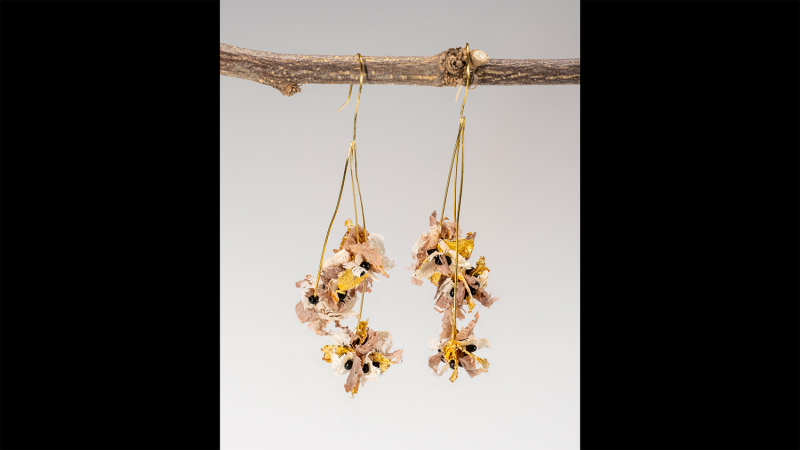
Designing Sustainable Jewelry
Jill Schmid ’26 (industrial design) brought jewelry she made at RIT to the world stage after being named a finalist for Kering’s Generation Award X Jewelry. For the competition, select designers...
Read More about Designing Sustainable Jewelry -

Student-athletes combine passions for sports and design
Three industrial design student-athletes used their collaborative mindsets to help bring their vision of an 8-foot-tall NCAA championship trophy to life.
Read More about Student-athletes combine passions for sports and design -

Sewing together accessibility and functionality
Emily Ohl '26 (industrial design) was the steady hand behind many award-winning costume designs in RIT theater performances.
Read More about Sewing together accessibility and functionality -
'Safe' Designs with Industry Partner Gardall
RIT industrial design students thought outside the (safe) box for their course collaboration with security equipment manufacturer Gardall Safe Corporation.
Read More about 'Safe' Designs with Industry Partner Gardall
Curriculum for 2026-2027 for Industrial Design BFA
Current Students: See Curriculum Requirements
Admissions and Financial Aid
First-Year Admission
First-year applicants are expected to demonstrate a strong academic background that includes:
- 4 years of English
- 3 years of social studies and/or history
- 3-4 years of mathematics
- 2-3 years of science
- Studio art experience and a portfolio of original artwork are required. View Portfolio Requirements for more information.
Transfer Admission
Transfer applicants should meet these minimum degree-specific requirements:
- Studio art or design experience and a portfolio of original artwork are required. View Portfolio Requirements for more information.
Financial Aid and Scholarships
100% of all incoming first-year and transfer students receive aid.
RIT’s personalized and comprehensive financial aid program includes scholarships, grants, loans, and campus employment programs. When all these are put to work, your actual cost may be much lower than the published estimated cost of attendance.
Learn more about financial aid and scholarships




Related News
-
August 18, 2026

RIT student applied design skills to fingerboarding during Teak Tuning internship
RIT industrial design student Maggie Wagner applied her problem-solving skills to the miniaturized world of fingerboarding during an internship at Teak Tuning, a leading professional fingerboard designer and manufacturer.
-
August 7, 2026

RIT students gain real-world experience solving healthcare challenges
Multidisciplinary teams of RIT students collaborated on eight projects during the Studio 930 internship program, designing accessible healthcare solutions for children and adults with disabilities.
-
July 22, 2026

Classroom collaboration leads to student internship at Church & Dwight
After Gavin Komoda '28 (industrial design) built connections during a program-wide collaboration with Church & Dwight, he was offered an internship in the product engineering department of the consumer goods company.
Contact

School of Design