News by Topic: Artificial Intelligence
As one of the highest-ranked universities in the nation for computer science, RIT is a hotbed for research on artificial intelligence. Both professors and students alike work on numerous projects to see how AI can be ethically used to improve areas such as energy, medicine, and combatting false information.
-
February 14, 2020
Helping heart surgeons see more clearly
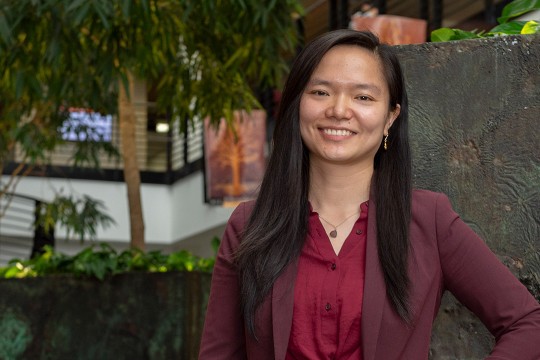
Associate professor Linwei Wang is leading an international group of researchers and clinicians developing computational systems for creating individualized 3D imaging of a patient’s heart. With these 3D heart models, clinicians now have a noninvasive way to study their patients.
-
January 30, 2020

Don’t expect a $550 million settlement to stop Facebook from scanning your face
Vox talks to Evan Selinger, professor of philosophy, about restrictions on facial recognition technologies.
-
November 19, 2019
Facial recognition: Do you really control how your face is being used?
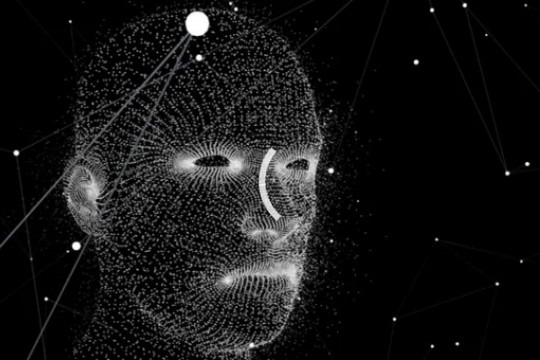
USA Today talks to Evan Selinger, professor of philosophy, about regulation of facial recognition technology.
-
November 18, 2019

A conversation with Steve Hoover
Steve Hoover, who was recently named the Katherine Johnson Executive Director of RIT’s new Global Cybersecurity Institute, is bringing together academia and industry to help tackle the world’s cybersecurity problems.
-
October 23, 2019

World Remanufacturing Conference brings industry thought leaders to Rochester
More than 140 thought leaders and executives from around the world gathered in Rochester for the third-annual RIC-RIT World Remanufacturing Conference, which featured the latest information on emerging trends and issues of critical importance to the remanufacturing industry.
-
October 22, 2019

RIT researchers win first place in international eye-tracking challenge by Facebook Research
The team, led by three Ph.D. students from the Chester F. Carlson Center for Imaging Science, won first place in the OpenEDS Challenge focused on semantic segmentation.
-
October 21, 2019

RIT cybersecurity research recognized at top computing conference in London
RIT researchers are heading to London in November to share four of their top cybersecurity research projects at an Association of Computing Machinery (ACM) conference. The RIT research varies from studying new machine-learning cyberattacks to an analysis of Security Operations Center issues.
-
October 17, 2019

What Happens When Employers Can Read Your Facial Expressions?
Guest essay co-written by Evan Selinger, professor of philosophy, published by The New York Times.
-
October 4, 2019

RIT faculty earns NSF CAREER award to study human behavior using machine learning
Ifeoma Nwogu, an assistant professor of computer science, received an NSF Faculty Early Career Development (CAREER) award and grant for her five-year project to study human behavior by using machine learning techniques to analyze and find patterns in the many signals that individuals display during social interactions.
-
September 9, 2019

I create manipulated images and videos – but quality may not matter much
Guest essay by Christye Sisson, associate professor of photographic sciences, published by The Conversation.
-
August 7, 2019

RIT awarded NSF funding to conceptualize Quantum Photonic Institute
The National Science Foundation awarded RIT a grant to conceptualize a new institute that would be at the forefront of quantum science and technology. RIT received $150,000 in funding from the NSF’s Quantum Leap Challenge Institutes program to create a plan for an institute that would expand quantum science and technology capabilities through quantum photonic integrated circuits.
-
August 6, 2019

Global Cybersecurity Institute to open in 2020
Cybercrime is costing the world trillions of dollars, and analysts say that there aren’t enough qualified professionals to prevent those attacks. To address this problem, RIT is creating the Global Cybersecurity Institute (GCI), aimed at meeting the demand for computing security and artificial intelligence professionals, while developing future technologies, protocols and human understanding needed to address the global cybersecurity crisis.