News by Topic: Faculty
-
February 13, 2020
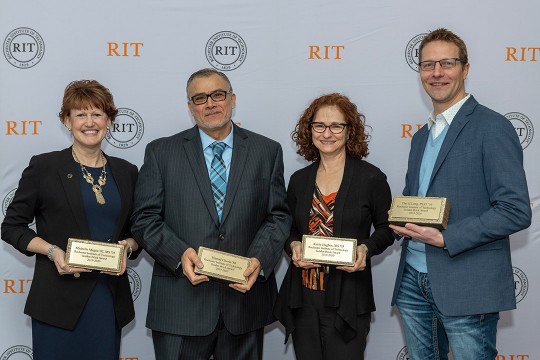
Four RIT faculty and staff alumni acknowledged with the Golden Brick Award
Michelle Magee ’05 MS, senior associate director for Employment Engagement in the Office of Career Services and Cooperative Education; Hamad Ghazle ’88, director of the diagnostic medical sonography program; Kerry Hughes ’03 MS, project and events manager for the Office of the Provost; and David Long ’16 Ph.D., director of RIT MAGIC Center, and were honored with the Golden Brick Award for going above and beyond their duties to volunteer or serve in leadership roles at RIT.
-
February 12, 2020

How the T-Mobile-Sprint merger will increase inequality
Essay by Amit Batabyal, the Arthur J. Gosnell Professor of Economics, published by The Conversation.
-
February 11, 2020
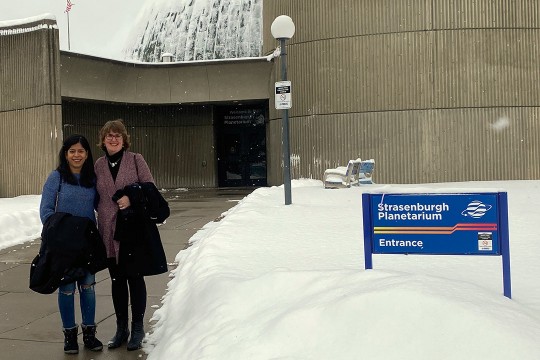
RIT international students waiting for a friendship volunteer
Faculty and staff members at RIT are encouraged to volunteer with Rochester Global Connections, which pairs community members with international students to help them feel more welcome. There are 30 RIT international students currently in the program, but another seven are waiting for a pairing.
-
February 11, 2020

‘Stolen’ elections open wounds that may never heal
Essay by Sarah Burns, associate professor of political science, published by The Conversation.
-
February 10, 2020

RIT scientists discover the nearest-known ‘baby giant planet’
Scientists from RIT have discovered a newborn massive planet closer to Earth than any other of similarly young age found to date. The baby giant planet lies only about 330 light years from our solar system. The discovery, published in the Research Notes of the American Astronomical Society, provides researchers an exciting new way to study how gas giants form.
-
February 7, 2020

RIT’s liberal arts dean recognized by National Academies for exceptional service
James Winebrake, dean of RIT’s College of Liberal Arts, has been recognized as a national associate of the National Academies of Sciences, Engineering, and Medicine. The prestigious designation is offered to fewer than 50 people per year by the National Academies and recognizes people who have made exceptional contributions to the work of the academies.
-
February 6, 2020

Can Trump be impeached again?
The Washington Post asks Sarah Burns, associate professor of political science, if President Trump can be impeached again.
-
February 6, 2020
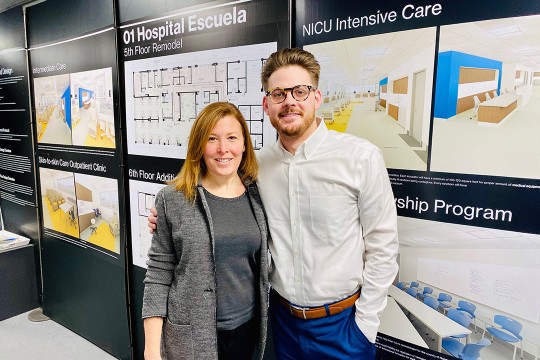
Podcast: Hope for Honduras
Intersections: The RIT Podcast, Ep. 31: A multidisciplinary contingent from RIT is creating design solutions to improve the quality of medical care and education in Central America. Mary Golden, interior design program chair and director of RIT Hope for Honduras, speaks with Christian Perry, a healthcare designer and co-founder of Little Angels of Honduras, about important initiatives to help reduce infant mortality in that region.
-
February 5, 2020
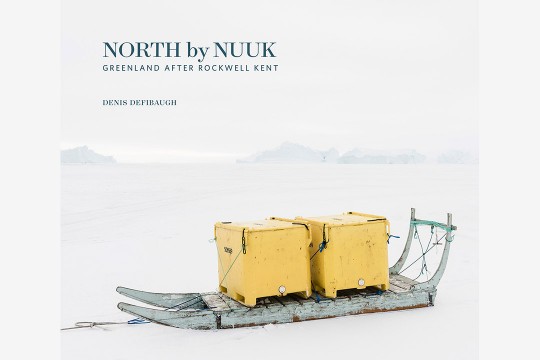
RIT photography professor documents Greenland’s changing landscape
Contemporary Greenland is the subject of a new collection of photographs and essays by RIT photography professor Denis Defibaugh, who spent more than a year on the island. North by Nuuk: Greenland after Rockwell Kent, published by RIT Press, documents scenes from daily life and from nature, such as an Inuit hunter and his sled dogs, stark landscapes and portraits of the people who live in remote communities.
-
January 31, 2020
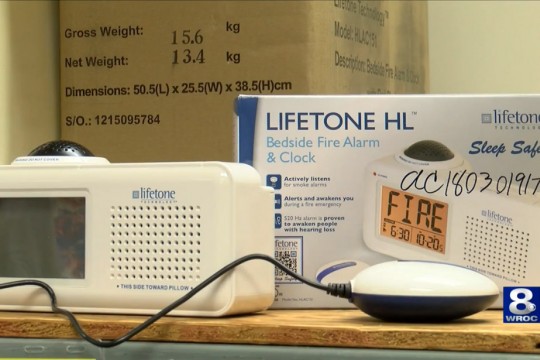
Red Cross installing specialized smoke alarms for deaf hard-of-hearing in Rochester
WROC-TV talks to Gary Behm, associate vice president of Academic Affairs at NTID, about bed shaker alarms that wake up individuals who are deaf or hard-of-hearing if a traditional smoke detector is activated.
-
January 30, 2020

Don’t expect a $550 million settlement to stop Facebook from scanning your face
Vox talks to Evan Selinger, professor of philosophy, about restrictions on facial recognition technologies.
-
January 30, 2020
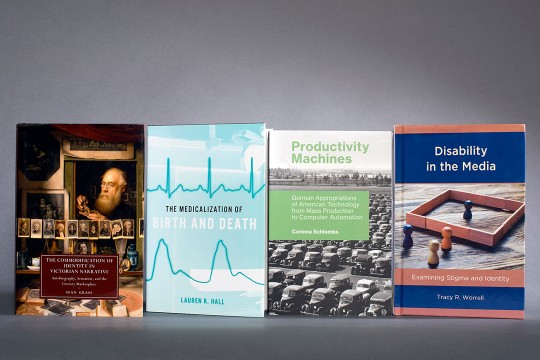
College of Liberal Arts faculty write books on varied topics
Four faculty members from RIT’s College of Liberal Arts have recently written books on diverse subjects: how disability is viewed in the media, the commercialization of 19th-century autobiographies, how birth and death costs and practices have changed over the years, and how Germany adopted technology and a productivity culture after World War II.