RIT announces new biological sciences master’s program
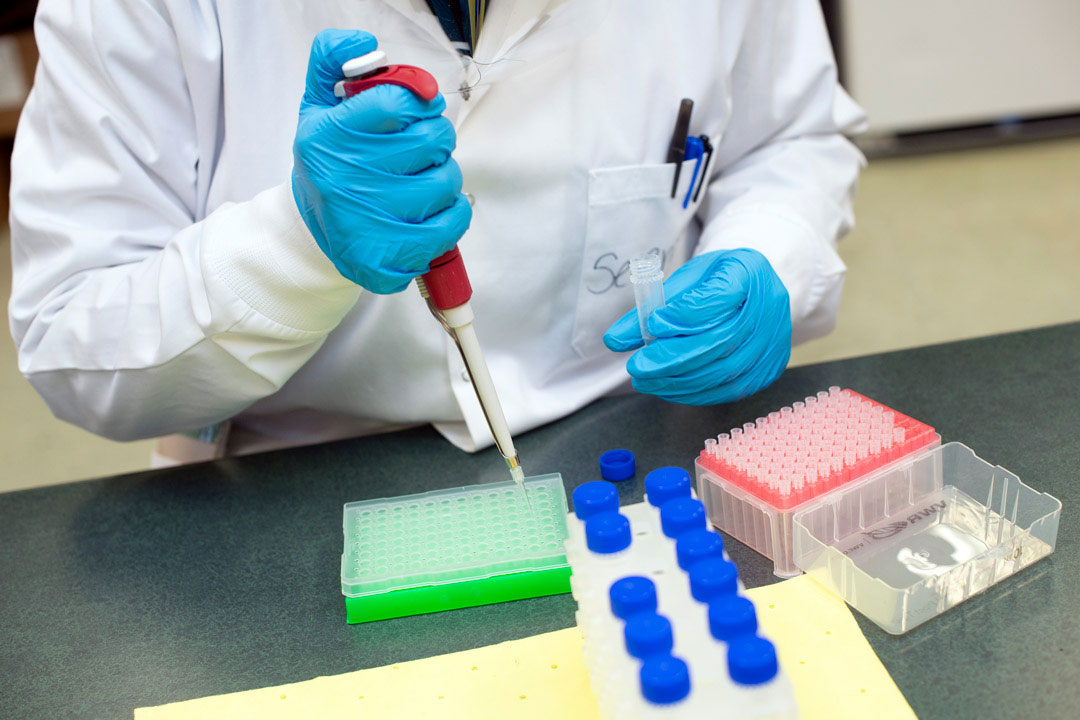
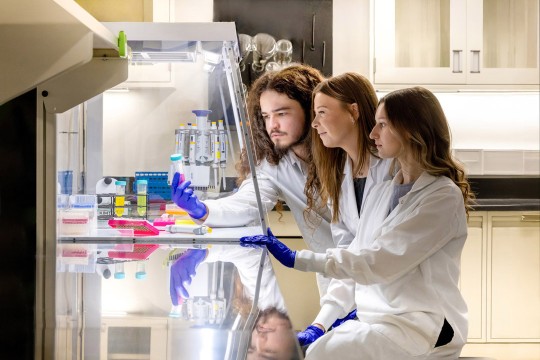
A student conducts biological research in a lab at RIT’s College of Science. The college is launching a new master’s degree in biological science that gives students hands-on experience.
Rochester Institute of Technology will launch a new master's degree in biological sciences in fall 2027.
The program prepares students to solve complex scientific problems by integrating biological knowledge with computational, analytical, laboratory, and field-based approaches. Students can select one of four specialized tracks: bioinformatics; environmental science; ecology and evolutionary biology; or cellular and molecular biology.
“This new program provides students an opportunity to gain valuable graduate-level skills in STEM communication, ethics, and data analysis while offering specialized concentrations, so students can delve more deeply into their chosen area,” said Kate Wright, head of the Thomas H. Gosnell School of Life Sciences (GSOLS). “Our hands-on curriculum and project or thesis-based research will help students achieve the next level in their career trajectory.”
Bioinformatics students will focus on using computational approaches to analyze complex biological data, with coursework and research opportunities in genomics, proteomics, high-throughput sequencing, machine learning, big data, and programming.
"In GSOLS, bioinformatics students don’t just learn computational biology, they put it into practice," said co-program director and associate professor Crista Wadsworth. "Students work alongside faculty on cutting-edge research, gaining hands-on experience analyzing real biological datasets, and contributing to discoveries that address important questions in the life sciences, including antibiotic resistance, disease dynamics, and microbial diversity."
Cellular and molecular biology studies the mechanisms that govern cell function, with emphasis on molecular techniques, genetic analysis, gene regulation, and microscopy.
Students in the ecology and evolutionary biology tract will focus on how organisms interact with one another and their environments, with emphasis on conservation biology, evolution and adaptation, microbial ecology, and biodiversity.
Environmental science students will use interdisciplinary approaches to understand and address environmental challenges, integrating ecological fieldwork, environmental policy, sustainable practices, and geospatial analysis.
Biological sciences master’s students will work closely with College of Science faculty on active research projects, which also includes the opportunity to co-author published papers and present at conferences.
RIT’s College of Science promotes novel ways of thinking and implementation in a rapidly changing world, providing scholars with hands-on experience and multidisciplinary research. Faculty and staff mentor students to become the next generation of problem solvers to expand and explore the frontiers of science and mathematics.
The program is co-directed by Carmody McCalley and is currently accepting applications. For more information on the MS in biological sciences, go to the degree webpage.