Global Futures Bachelor of Science Degree

RIT's Global Futures BS combines futures thinking, global awareness, tech literacy, and problem-solving to help you adapt, thrive, and lead in a changing world.
Overview for Global Futures BS
Why Pursue a Global Futures BS at RIT?
RIT Drives New Possibilities for the World. Technology, creativity, and vision are at the heart of RIT, an international think tank that researches, tests, and applies fresh solutions that advance every industry. As a global futures major, join like-minded changemakers and tap into resources found only at world-renowned STEAM institutions like RIT.
An Education Crafted to Meet Your Unique Goals. Select courses, experiences, and focus areas to build knowledge and skills in the areas that are most important to you and your unique career goals.
Future-Proof for the Lifetime of Your Career. Skills like trend analysis, scenario planning, and quantitative and qualitative research that are in demand today and adaptable for tomorrow. As tech and society quickly evolve, you’ll be equipped with skills and expertise that will support the lifetime of your career.
Global and Career Experiences Outside of the Classroom. Tap into RIT’s nationally-ranked co-op and internship program and expansive study abroad options that let you learn alongside innovators from across the globe.
Accelerated Bachelor’s/Master’s Available: Earn both your bachelor’s and your master’s in less time and with a cost savings, giving you a competitive advantage in your field.
What is Global Futures?
RIT’s global futures BS is a multidisciplinary, transformative, and future-proof program of foresight studies that equips students for a lifetime of success in an ever-changing world.
The global futures BS is strategic foresight training that explores and reimagines the future of economies, political systems, science and technology, climate, and global society. Because shaping the future first requires an understanding of the past, you’ll study the complex issues, events, and ideologies that have led us to where we are today. The curriculum draws from a multidisciplinary mix of courses in areas such as public policy, science and technology, anthropology and sociology, economics, history, and more.
Grounded in these perspectives, you’ll expand your thinking and your skill set to both influence and adapt to forecasted rapid technological advances and global shifts in the workforce and environmental and societal needs. The high-demand skills you’ll develop—global business and economic literacy, trend analysis, strategic problem solving, design thinking, and cross-cultural collaboration—result in a foundation for careers in nearly every industry sector.
A Perfect Complement to Degrees in Computing, Business, Health, and Tech
For inquisitive minds and out-of-the-box thinkers, the global futures BS offers the opportunity to explore multiple disciplines in one undergraduate degree. As a primary major, it pairs well with minors and double majors in areas such as:
Business
- Business Analytics
- Management
- International Business
- Supply Chain Management
Computing and Technology
- Computer Science
- Cyberpolitics
- Cybersecurity Risk Management
- Networking and Systems Administration
Humanities and Health Care
- AI in Society
- Global Public Health
- Health, Culture, and Society
- International Relations
Environment and Science
- Environmental Studies
- Water Resources
- Sustainable Product Development
- Science, Technology, and Society
Read RIT’s full list of minors and immersions for even more options
Read RIT’s full list of undergraduate majors
Students who choose to double major in both the global futures BS and another RIT undergraduate major will plan their academic progress in close collaboration with academic advisors.
RIT’s Pre-Law Program
Law schools welcome applications from students majoring in a wide range of academic programs. RIT’s pre-law program will help you navigate the admission process for law school, explore Syracuse University’s College of legal careers, and guide you through course selection to ensure you build the skills and competencies required of competitive law school applicants. The program is open to students in all majors who are interested in pursuing a career in law.
Furthering Your Career in Global Futures
Combined Accelerated Bachelor’s/Master’s Degrees
Today’s careers require advanced degrees grounded in real-world experience. RIT’s Combined Accelerated Bachelor’s/Master’s Degrees enable you to earn both a bachelor’s and a master’s degree in as little as five years of study, all while gaining the valuable hands-on experience that comes from co-ops, internships, research, study abroad, and more.
- Global Futures BS/Science, Technology, and Public Policy MS: In this combined accelerated degree, you'll develop a foundational understanding of the international political, social, and economic forces at play, and understand how they impact the policymakers of tomorrow. You'll be equiped to make informed and intelligent decisions regarding science, technology, and the public good.
- +1 MBA: Students who enroll in a qualifying undergraduate degree have the opportunity to add an MBA to their bachelor’s degree after their first year of study, depending on their program. Learn how the +1 MBA can accelerate your learning and position you for success.
3+3 Accelerated BS/JD Programs
RIT has partnered with Syracuse University’s College of Law and University at Buffalo School of Law to offer accelerated 3+3 BS/JD options for highly capable students. These programs provide a fast track to law school where you can earn a bachelor’s degree at RIT and a Juris Doctorate degree at Syracuse University or University at Buffalo in six years. Interested students may apply to the option directly, with successful applicants offered admission to RIT and conditional acceptance into either Syracuse University’s College of Law or University at Buffalo School of Law.
RIT's global futures degree is one of the approved majors for the 3+3 option.
Learn more about Accelerated Law 3+3 Programs.
RIT’s Teaching Partnership Programs
Whether your goal is to go into early childhood or elementary education, become a secondary education teacher with a content area specialty at the middle or high school level, or work in the higher education or counseling fields, RIT’s partnership programs with local universities provide a guided pathway to a career in teaching.
These 4+1 or 3+2 programs enable you to earn your bachelor’s degree at RIT and a master’s degree in education at one of our partner universities. As you progress, you’ll benefit from focused academic advising, career exploration opportunities, and resources for research, learning, and skill development.
RIT’s global futures degree is eligible for RIT’s Teaching Partnership Program.
Learn more about RIT’s Teaching Partnership Programs.
-
Meet Us on Campus
Learn about academics, co-op and internships, financial aid, and more at one of our on-campus open houses.
October 12 | October 24 | November 14
-

Apply for Fall 2027
Early Decision I and Early Action deadlines are November 1.
Careers and Experiential Learning
A Career Toolbox for a Lifetime
RIT’s global futures BS builds an enduring set of skills that will never become obsolete, even as technology rapidly changes the ways we work and communicate, such as:
- Critical and Analytic Thinking
- Design Thinking and User Experience Techniques
- Cross-Cultural Collaboration and Communication
- Strategic planning, problem solving, scenario planning
- Trend and Data Analysis
- Economics and Business Literacy
- Research and Analysis, Qualitative and Quantitative
- Use and Adoption of Emerging and Converging Technology
Typical Job Titles
| Strategic Planner | Strategic Project Manager | Scenario Planner |
| User Experience Researcher | Foresight Analyst | Policy Analyst |
| Research Analyst/Research Specialist | Risk Analyst | Strategic Foresight Consultant |
| Forecasting Specialist/Forecasting Manager | Change Management Analyst | Business Development Analyst/Business Development Manager |
| Market Research Analyst | Innovation Strategist/Innovation Manager | Technology Foresight Specialist |
| Organizational Development Consultant | Organization Effectiveness Manager | Corporate Strategist/Corporate Development Manager |
| Sustainability Strategist | Research Manager |
Industries
Cooperative Education and Internships
What’s different about an RIT education? It’s the career experience you gain by completing cooperative education and internships with top companies in every single industry. You’ll earn more than a degree. You’ll gain real-world career experience that sets you apart. It’s exposure–early and often–to a variety of professional work environments, career paths, and industries.
Co-ops and internships take your knowledge and turn it into know-how. A liberal arts co-op provides hands-on experience that enables you to apply your knowledge in professional settings while you make valuable connections between course work and real-world applications.
The major encourages students to participate in a study abroad opportunity, an internship, or a cooperative educational experience in the selected world region of study.
Internships may also be available with organizations that are engaged with global issues, human rights, or international populations, including refugees and immigrants. A number of students have worked as interns under the supervision of human rights lawyers for the New York State Division of Human Rights in Rochester, NY, and for the United Nations Association of Rochester. These international experiences enhance employment prospects after graduation.
Study Abroad Builds Perspectives for Change-Making at a Global Scale
Our world is more interconnected than ever before, and solutions to complex issues in emerging science, society, and technology are not limited by cultural boundaries and national borders. That’s why study abroad and the study of a modern language is a requirement for the global futures BS.
From short-term experiences like a summer conflict and peacekeeping program at RIT’s Kosovo campus to full semester of study or interning abroad virtually anywhere, immersive learning experiences like these bring multifaceted world issues into fuller dimension. Studying abroad also helps build skills you’ll put to work when you launch your career, such as cross-cultural understanding, communication, and collaboration.
As you progress through the program, you’ll first study global challenges and issues through course work. Then, equipped with fundamental language skills and a foundational knowledge base, you can study abroad and engage more deeply with the places and people that are driving progress.
Featured Work and Profiles
-
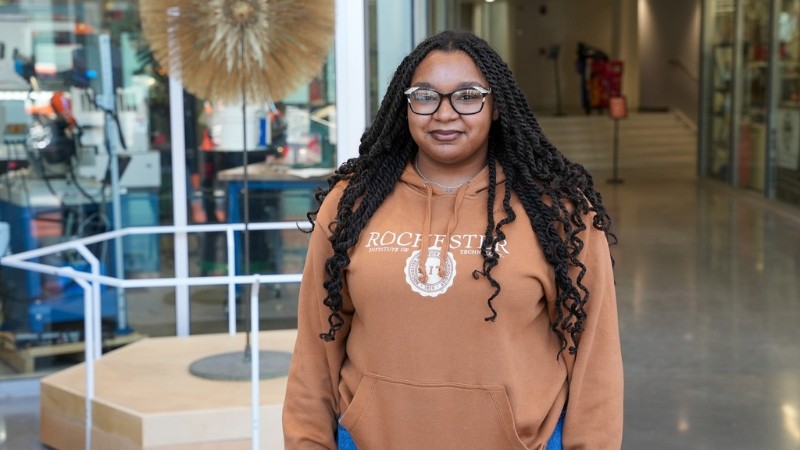
MaKayla Oscar finds purpose in global study, community, and growth at RIT
MaKayla Oscar is leaving RIT with more than a degree, she is leaving with a clearer sense of purpose, a stronger sense of self, and a deeper understanding of how meaningful change often begins with...
Read More about MaKayla Oscar finds purpose in global study, community, and growth at RIT -
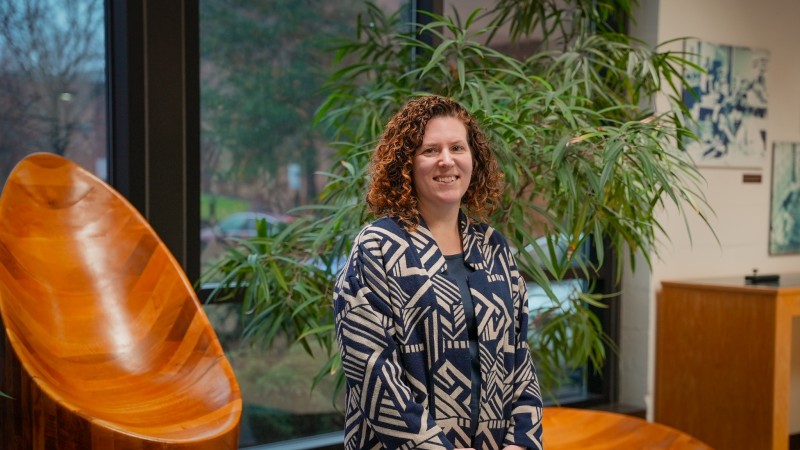
Faculty Researcher Spotlight: Kaitlin Stack Whitney, Ph.D., Associate Professor, Science, Technology, and Society
Kaitlin Stack Whitney Bridging the gap between biological practice and social critique, Kaitlyn Stack Whitney, Ph.D., investigates how historical human assumptions about gender and behavior have shaped scientific knowledge...
Read More about Faculty Researcher Spotlight: Kaitlin Stack Whitney, Ph.D., Associate Professor, Science, Technology, and Society -
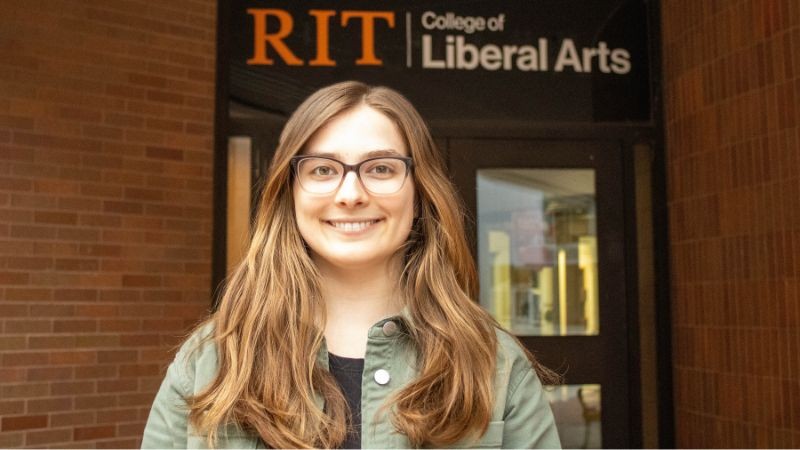
Double the Possibilities for this 2025 Grad
Double the Possibilities for this 2025 Grad Meet Adrienne Sanza, a May 2025 grad whose RIT experience included two majors, two minors, and two transformative study abroad experiences.
Read More about Double the Possibilities for this 2025 Grad -

RIT Alumna Takes on Top National Security Challenges
Brianna Alverson addresses national security challenges at the Johns Hopkins Applied Physics Laboratory. Her work on cyber threats and emergency preparedness help secure the nation.
Read More about RIT Alumna Takes on Top National Security Challenges -

RIT Graduate Awarded Prestigious Fulbright to Teach in Kosovo
After earning a double major in applied modern language and culture (Spanish) and international and global studies, D’Anthony will travel to a university in Kosovo for a 10-month...
Read More about RIT Graduate Awarded Prestigious Fulbright to Teach in Kosovo -

Exemplary Writing Earns RIT Student the Coveted COLA Kearse Award
Jen VanStrander received the College of Liberal Arts' Kearse Undergraduate Writing Award for a capstone project analyzing social and legal issues faced by Southeast Asian labor migrants.
Read More about Exemplary Writing Earns RIT Student the Coveted COLA Kearse Award
Curriculum for 2026-2027 for Global Futures BS
Current Students: See Curriculum Requirements
Admissions and Financial Aid
First-Year Admission
First-year applicants are expected to demonstrate a strong academic background that includes:
- 4 years of English with a strong performance is expected.
- 3 years of social studies and/or history with a strong performance is expected.
- 3 years of math is required and must include algebra, geometry, and algebra 2/trigonometry.
- 2-3 years of science.
Transfer Admission
Transfer applicants should meet these minimum degree-specific requirements:
- A minimum of college algebra is required.
Financial Aid and Scholarships
100% of all incoming first-year and transfer students receive aid.
RIT’s personalized and comprehensive financial aid program includes scholarships, grants, loans, and campus employment programs. When all these are put to work, your actual cost may be much lower than the published estimated cost of attendance.
Learn more about financial aid and scholarships



Related News
-
October 2, 2025
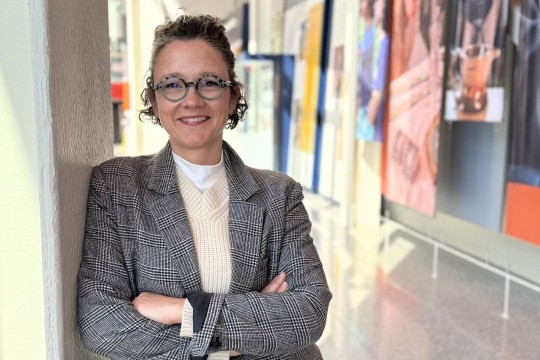
New Global Futures Interdisciplinary Degree Equips Grads with Toolbox for Lifelong Success
Flash forward 50 years, and what will it take for our workforce, our communities, or our societies to thrive? While none of us has a magic crystal ball, the new Global Futures undergraduate degree program developed by the RIT College of Liberal Arts aims to equip grads with the mindset, tools, and skills to anticipate and envision a pathway for future flourishing.
-
May 13, 2024
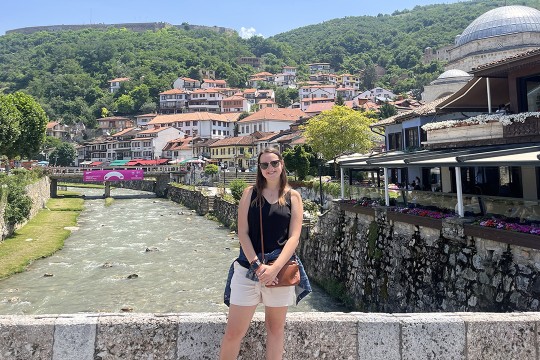
New graduate Peyton D’Anthony wins Fulbright award to teach in Kosovo
Peyton D’Anthony enjoys identifying patterns and creating new connections. Those are just two of the skills she hopes to instill in her students as a teacher in Kosovo this fall.
-
May 13, 2024
Students will ‘live, learn, and explore’ abroad thanks to international fellowships and scholarships
Throughout the course of the academic year, hundreds of RIT students prepare to compete for some of the most prestigious international fellowships and scholarships available. Intensive research projects, applications, essays, and interviews all play a critical role in their selection.
Contact

Institute for Interdisciplinary Innovation