Good Phone
Story by Felícia Swartzenberg
Photos by Traci Westcott
At one point in Dennis Williams’ career, every city branch of the Rochester (N.Y.) Public Library had a payphone. Over the years, he’s watched this resource slowly disappear, but the need hasn’t gone away.
“No matter what public library you go to, you will likely see patrons using the staff phones,” said Williams, the Lyell Branch Library manager. “Branches like ours get a huge amount of traffic from people that do not have phones. Sometimes they need to make connections for services, or sometimes they just need to call a parent to get a ride.”
When RIT Assistant Professor Eric Kunsman approached Williams and former branch manager Shamika Fusco about bringing a public phone back into the library, they were eager to integrate it.
“Once people find out about it, they regularly come in and make a beeline right for that service. About 50 percent of them will come back to use the computers or other library services,” Williams said.
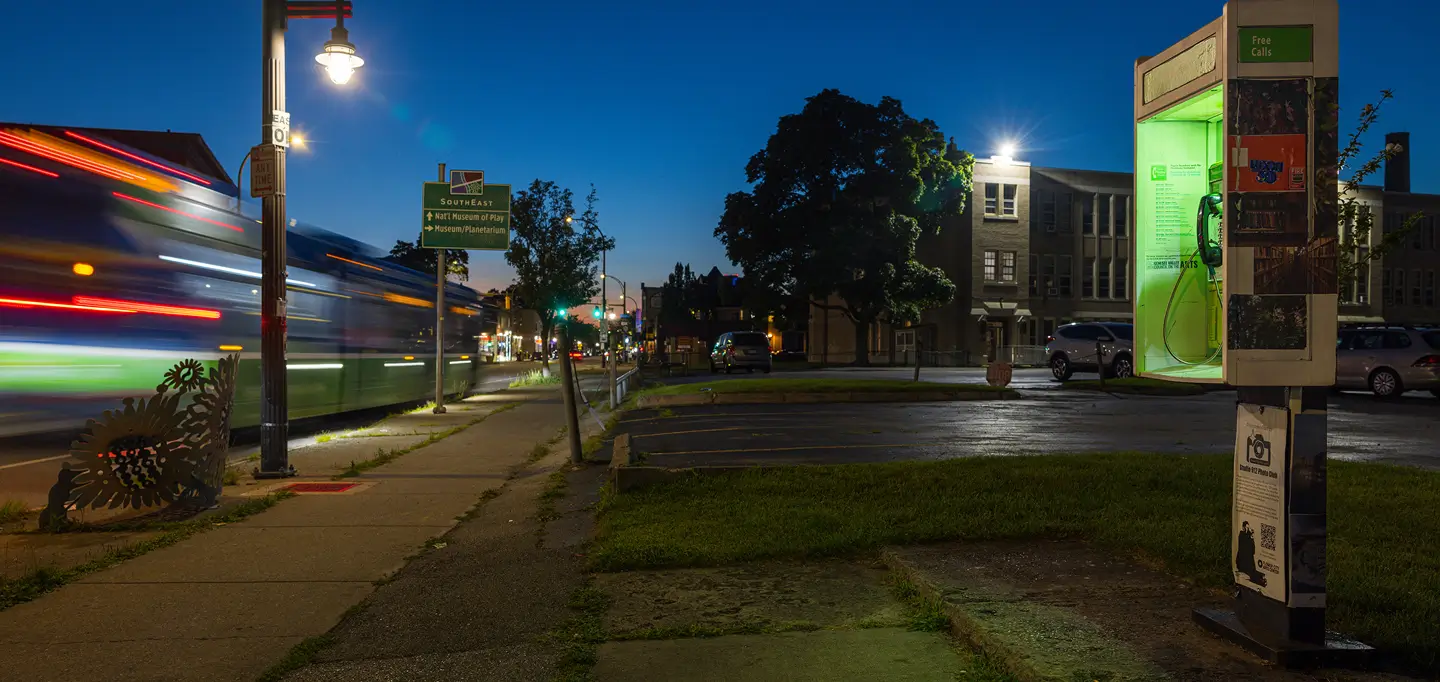
Success stories like this were the end goal when Kunsman established the GoodPhone Project, a grassroots effort to provide free public phone service and high-speed Wi-Fi to Rochester area residents. The project upcycles old, discarded payphone parts into Voice over Internet Protocol (VoIP) phones and makes them available for anyone to use.
Kunsman’s interest in payphones began with a photography project. But after all the payphones in town were removed, his photography became a catalyst for action.
He leaned into the strength and spirit of RIT’s maker-focused community and created a model for how Rochester and other cities can introduce free public phones. In the process, he demonstrated how a photographer’s creative practice can extend beyond a camera.
A creative spark
When Kunsman drives to Booksmart Studio, his business located on Walnut Street in downtown Rochester, he’s greeted by lush foliage, dappled sunlight, and his neighbor Roberto, the “friendliest and busiest mechanic in the city,” working out of his garage.
From his perspective, moving his studio to this quiet, dead-end street was a wise one.
Kunsman teaches full time at RIT’s National Technical Institute for the Deaf (NTID), the world’s first and largest technological college for deaf and hard-of-hearing students, and the School of Photographic Arts and Sciences, which is nationally recognized for its degree programs. When he isn’t on campus, he spends much of his time at his studio.
In 2017, on the first day he moved in, Kunsman was greeted by three 9-year-olds—Harry, Elijah, and Grumpy—who asked if they could help him carry moving boxes. When their parents noticed them talking to a stranger, they came over to introduce themselves.
Kunsman quickly made friends with the parents, and his two children became playmates with the trio of 9-year-olds.
It was a picture-perfect caricature of a friendly neighborhood. Yet, when he told his friends and colleagues about the move, he was shocked to hear them call the area a “war zone.”
“I was trying to figure out why people had that quick biased reaction—and everyone had it. Not one person I spoke to said, ‘Oh, that’s a smart move,’ but they don’t even know these people,” he said. “Those reactions still boil my skin.”
Fueled by frustrated curiosity, Kunsman reflected on those conversations and began to explore around his studio to form his own opinions.
The abandoned houses, corner stores, and other details people pointed to as signs of danger weren’t a reflection of crime rates or lack of safety, as his friends suggested. Instead, he saw them for what they were: the visual markers of poverty and inequity.
Kunsman, who has been teaching courses on photography, printing, and digital workflow processes at RIT since 2000, felt called to use his artistic practice to push back against these unfair judgments and encourage others to understand the full story.
“I started photographing payphones because it was an inanimate object I could document that didn’t require people. Everybody was already judging the area, and I was worried that as soon as I put someone in the photo the same instant labeling would be applied,” he said.
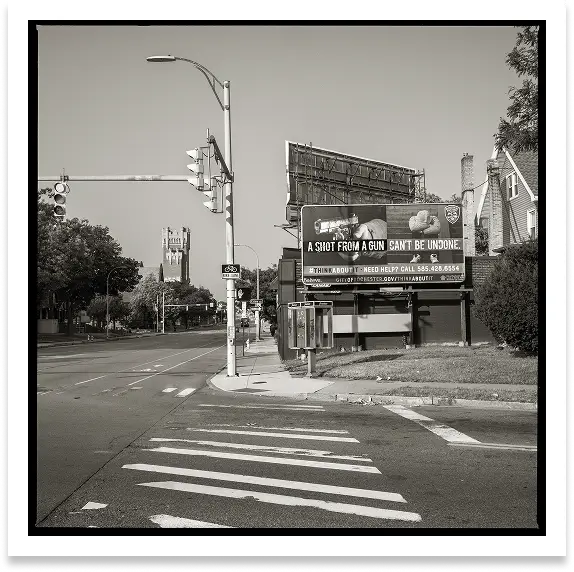
Kunsman chose to take these photos using an old Hasselblad camera and Kodak film as a conceptual nod to how the decline of blue-collar industry led to sustained poverty in the city. He also chose to present his body of work in black and white as a way of visually “leveling the playing field.”
The project started casually. On days when he had free time, Kunsman hopped into his truck and drove around to photograph as many payphones as he could find.
In 2018, he procured a list of all 1,455 payphones in Monroe County (N.Y.) from Frontier Communications, making his scavenger hunt a little easier. That same year, he began photographing payphones in different cities across the country.
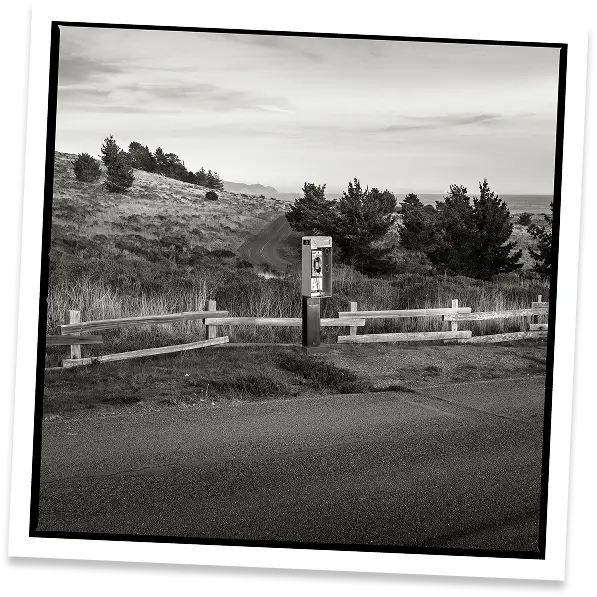
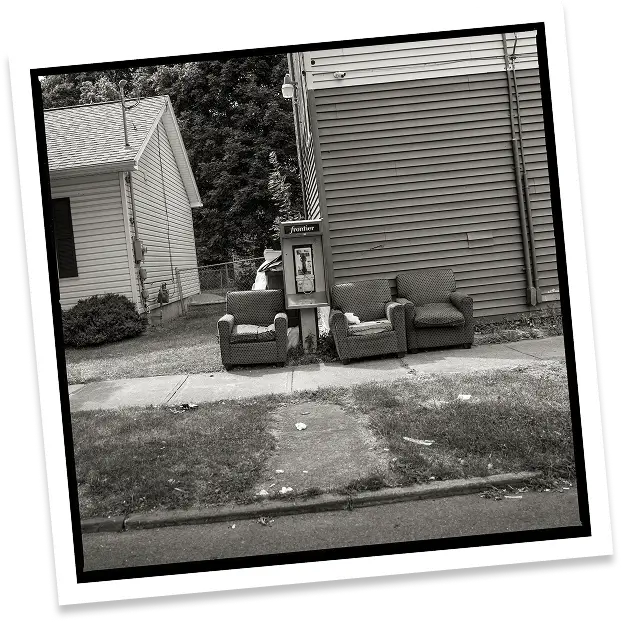
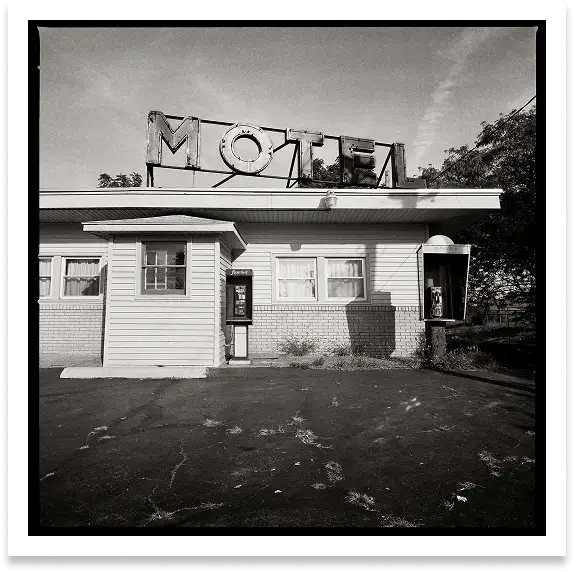
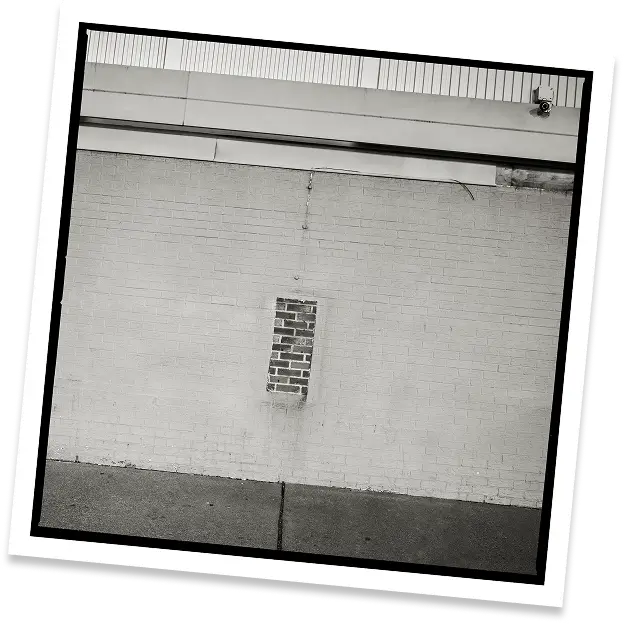
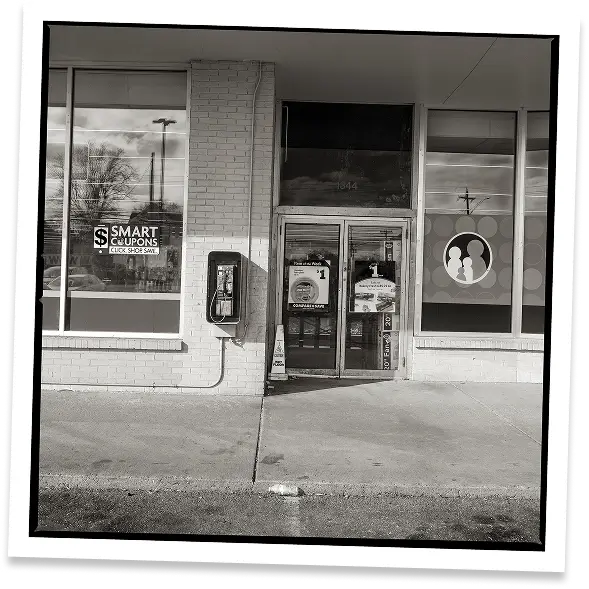
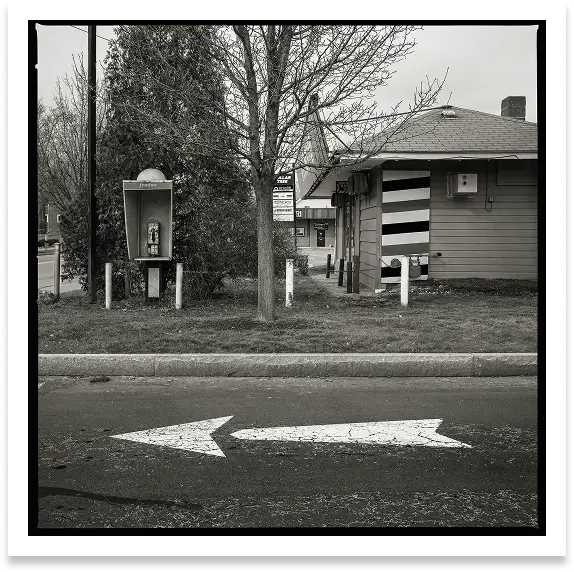
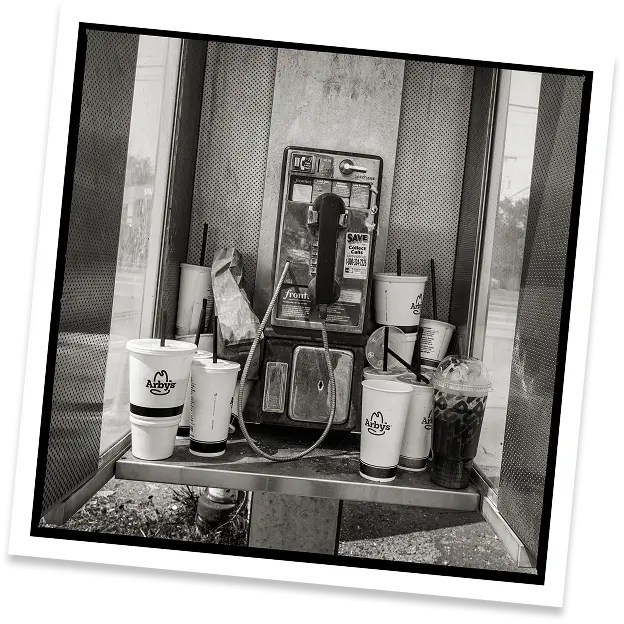
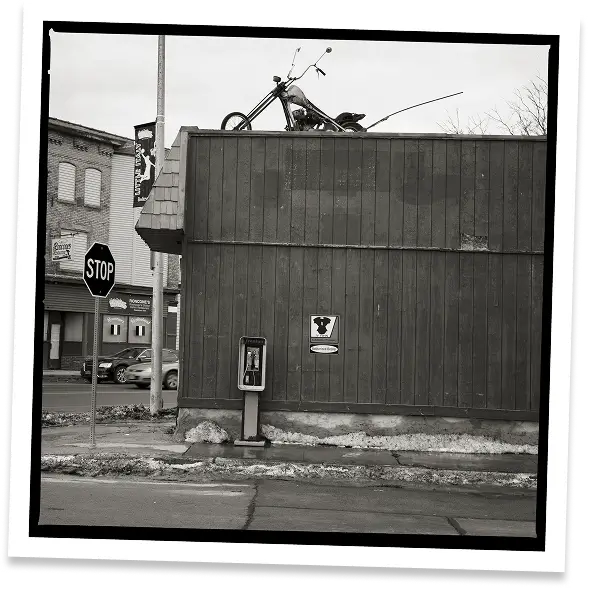
As Kunsman amassed more images and discovered new phones, he was surprised to find that many of them were still heavily used.
While Kunsman was photographing at Busy Bee Diner, located on West Main Street in Rochester, a gentleman rushed outside to confront him and hurriedly asked, “You’re not going to rip that out, are you?” Kunsman explained what he was doing, and the man was relieved because he used the phone frequently.
“He was the first person who told me that he hated how people looked at him when he used the phone. He wasn’t doing something wrong, he was just calling his family,” said Kunsman. “That’s when I realized that I needed to find a way to integrate voices like his. I’m not just a man on a soapbox. I’m trying to tell other people’s stories.”
The realization marked a turning point in Kunsman’s relationship to the work and his artistic approach.
In 2021, Kunsman debuted an exhibition of his portraits, titled “Felicific Calculus: Technology as a Social Marker of Race, Class, & Economics in Rochester, N.Y.,” at CEPA Galley in Buffalo, N.Y.
His photographs were shown alongside an interactive map—created by Rebekah Walker ’24 MS (science, technology, and public policy)—that compared the locations of all the local payphones to census data showing economic status, ethnicity, age, sex, and crime rates throughout Monroe County.
The exhibition also featured a faux payphone that played first-hand testimonies from people who still rely on this seemingly antiquated service.
“Felicific Calculus” has been shown in galleries across the country and internationally, and the photos have been published in magazines like Bloomberg Businessweek, Harper’s Magazine, Dodho, and Fast Company.
The work also has received multiple awards.
Art into action
In January 2024, Frontier Communications disconnected every payphone in Monroe County, leaving the physical phones in place while revoking service. Later that year, the federal Affordable Connectivity Program also ended, leaving community members with two options: pay for a cell phone plan or lose easy access to making calls.
When Kunsman heard this news, he remembered the man who confronted him at Busy Bee Diner. He also thought of the pair of friends he met outside of a homeless encampment at an abandoned strip mall in Arizona, who told him that the city disconnected service from the payphones at the mall simply because they moved in.
The reality of Rochesterians being cut off from phone connections, of a lifeline being taken from people who are already struggling, wasn’t something Kunsman could silently watch. Instead, he used his photography as a launch pad and sought a solution.
Michael Riordan ’97 MS (graphic arts systems), a longtime collaborator of Kunsman’s and former RIT professor, was familiar with Kunsman’s payphone work and helped connect him with Walker and others to move the exhibition forward. Riordan also acted as a sounding board for Kunsman’s ideas.
After leaving RIT, Riordan deepened his focus on Independent Good, a local organization he founded that works toward making large-scale positive community impact by providing creative and consulting services for clients. When Kunsman expressed his desire to establish the GoodPhone Project and bring payphones back into the community, Riordan was eager to help.
“One of the biggest things I learned during my 20 years at RIT was the power of a network. If you’re trying to make something bigger happen, it must be a collaborative effort,” he said. “This project showcases what the RIT community should be doing. We’re a bunch of doers and makers, so let’s get together and solve these issues.”
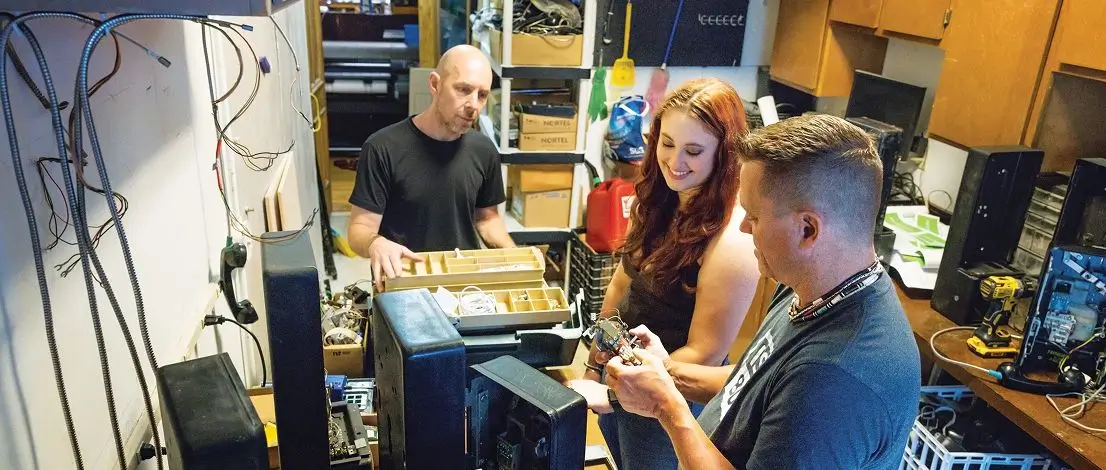
At its inception, the GoodPhone Project’s core team comprised Kunsman, Riordan, Walker, and Janelle Duda, former staff member of RIT’s Center for Public Safety Initiatives and founder of On the Ground Research, which supports local community intervention organizations.
Their first step toward establishing a free phone service was to consult others doing similar work. Futel, a grassroots organization in Portland, Ore., has installed 25 free payphones across five cities: Portland; Seattle and Long Beach, Wash.; Detroit and Ypsilanti, Mich.
In 2025, more than 30,000 phone calls were made from Futel phones.
Futel founder and director Karl Anderson offered guidance on how Kunsman could create a free phone network in Rochester, but the team still lacked a key technical element: an Asterisk server to facilitate telephone calls. California-based data communications service provider Littlejohn Communications came to the rescue by setting up the server and giving them insight into how to manage a VoIP network.
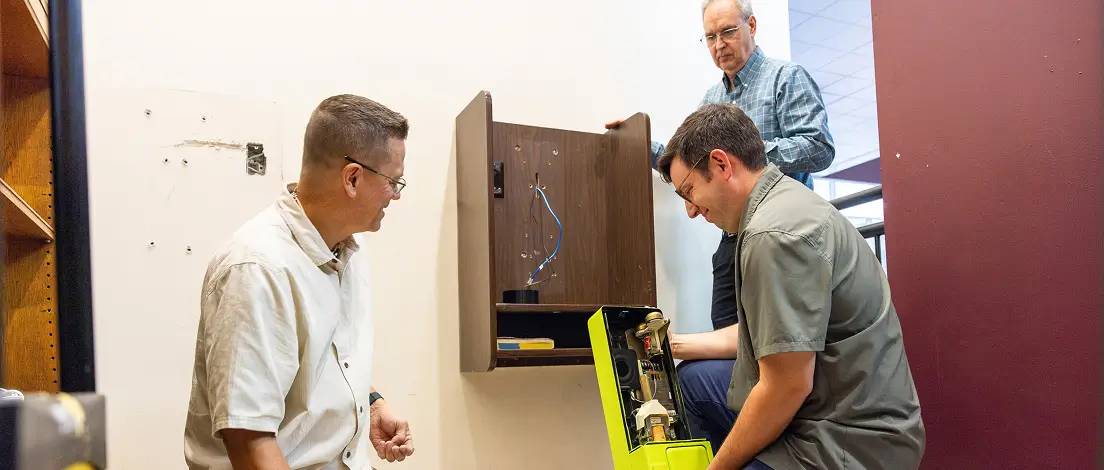
Armed with strong community support and technical know-how, the team installed the first GoodPhone at Father Tracy Advocacy Center in July of 2024. The installation was made possible by funding from NTID’s Scholarship Portfolio Development Initiative grant program.
Local news outlets publicized the phone installation, and one story from WXXI News caught the eye of Bill Canning ’24 (EMBA), a financial planning and analysis analyst at Greenlight Networks.
Canning was looking to get more involved with the community. While payphones and VoIP were somewhat outside his scope of expertise, he was happy to learn—and the simplicity of the technology was a pleasant surprise for him.
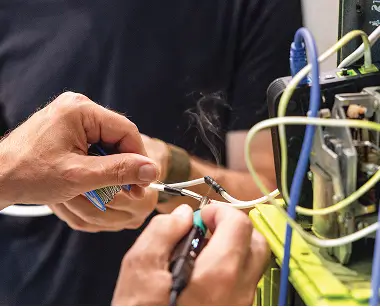 Once the team procures an old payphone, either via donations or dumpster diving, the first step is to remove all the internal parts that make the device coin operated. Then, they place a small ATA device inside, which transforms a signal that can be transmitted over internet connections to a more analog signal the old phone recognizes, and vice versa. From there, all that is needed is electrical power and internet access to get the phone up and running.
Despite working for nearly 10 years in telecommunications, Canning was unaware of the vital role payphones play until he joined the project team.
“If there is a need for something like the GoodPhone, there are probably a lot of other things I’m used to having that others don’t have access to,” he said. “It makes me wonder what other gaps there are that can be addressed with creative solutions. How else can I help?”
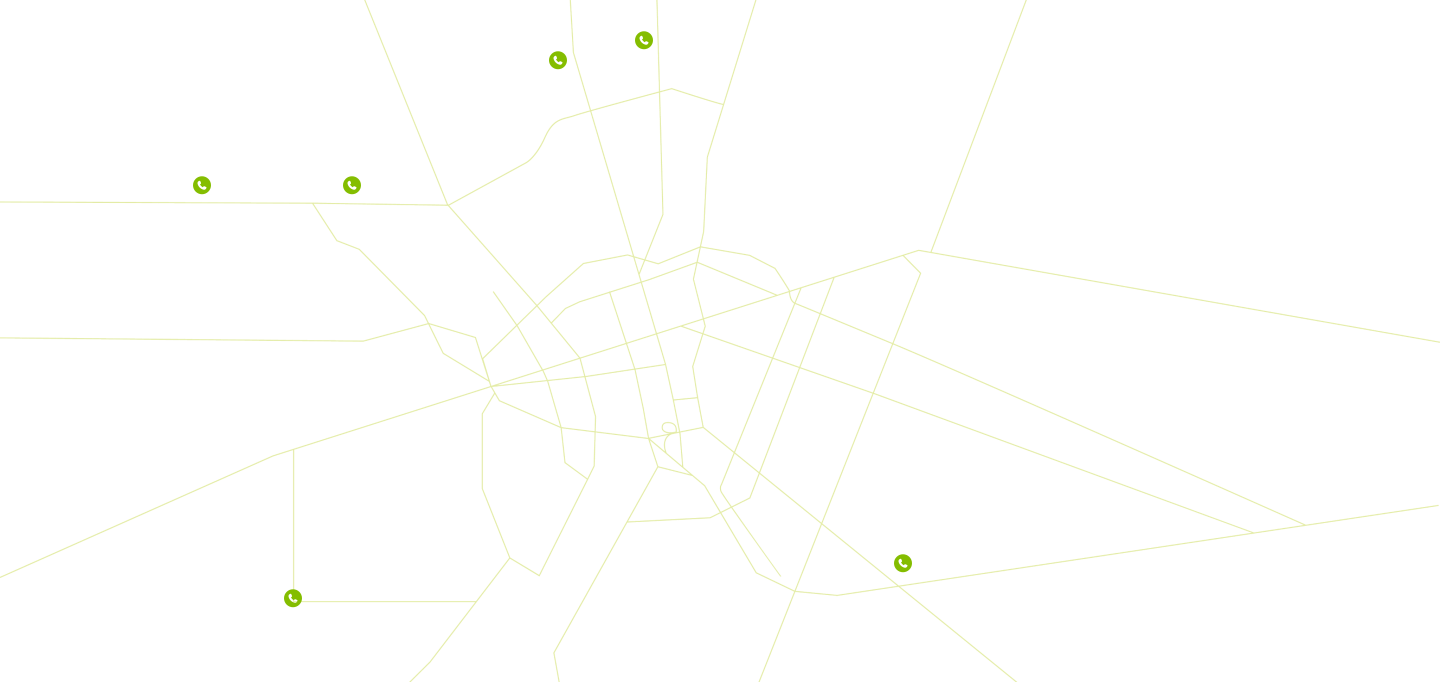
In 2025, with grant support from NTID and Genesee Valley Council on the Arts, the team installed five additional phones throughout the city.
Between December of 2025 and June of 2026, the six phones have made more than 3,500 outgoing calls, totaling more than 8,200 minutes of conversations. GoodPhones have facilitated roughly 400 calls per month in 2026, and Kunsman says the demand consistently outpaces the working network.
Lessons that last
Working with the GoodPhone Project was one of the most important experiences Brianna Hill ’24 (individualized program) says she had at RIT. She often leans on the lessons she gained from this work in her full-time job as a program and media outreach specialist at the Finger Lakes Boating Museum.
“It was exciting to see how I could do more with my photography,” said Hill, from Hammondsport, N.Y. “I saw that I didn’t have to just stop at the camera and be a spectator. My art could lead to a positive change if I make that effort.”
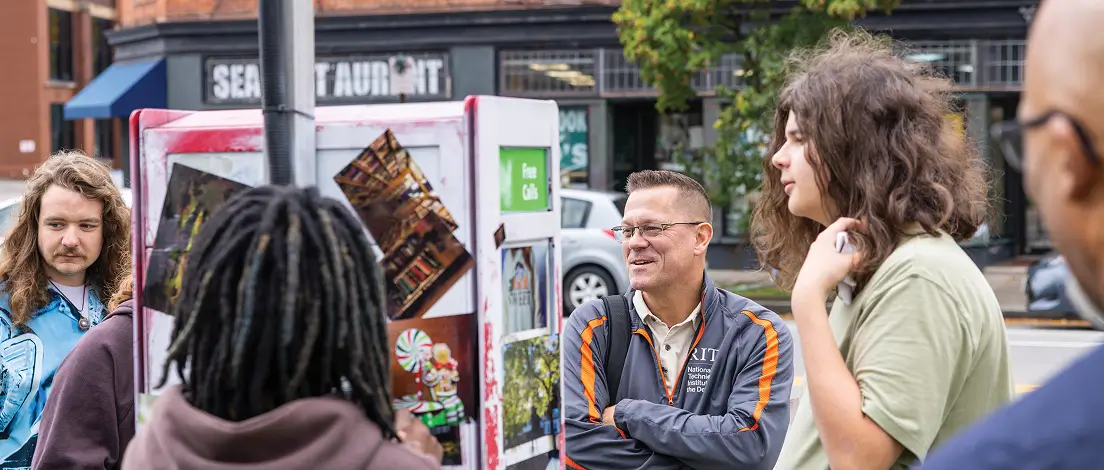
Hill met Kunsman during RIT Orientation when he welcomed her and three other NTID-supported photography students to campus. When he received funding from NTID to hire a co-op student at his studio in 2022, Hill applied.
During the second week of her co-op, she joined Kunsman to volunteer with Father Tracy Advocacy Center for street outreach. They handed out resources like food and water, socks, and Naloxone Nasal Spray.
“We walked down all the ‘bad’ streets others warned me about, and we just talked to people. It reinforced my beliefs of not judging an experience that I haven’t lived myself, and not giving credence to the stigma that gets put onto people or places,” said Hill.
Christye Sisson, director of RIT’s School of Photographic Arts and Sciences, hopes all photography students can gain this perspective before they graduate.
“The ability to translate emotional weight, human empathy, sensitivity, and narrative storytelling with an image is a skill that takes time. It’s not something achieved by simply taking a photograph, which is why we work so hard with students to hone that element of artistry,” said Sisson. “Eric’s work and need to effect a difference is a wonderful example for our students of how the power of photography, the power of persistence, and certainly the power of personality can drive a project forward.”
While funding for phone installations has been harder to come by these days, the team has not lost steam. Kunsman secured a new grant from Genesee Valley Council on the Arts to re-photograph some of the payphone locations around Rochester to help raise awareness and drive support. But now, what he sees most on his drives are empty spaces and blemishes on concrete.
Unless they know what to look for—or they memorized the locations like Kunsman has—most people won’t even register the loss.
“I can’t believe how many of them have been removed and thrown away,” Kunsman remarked as he drove to the fifth empty location where a phone used to be. “There might come a time when the only phones left in the city are GoodPhones.”
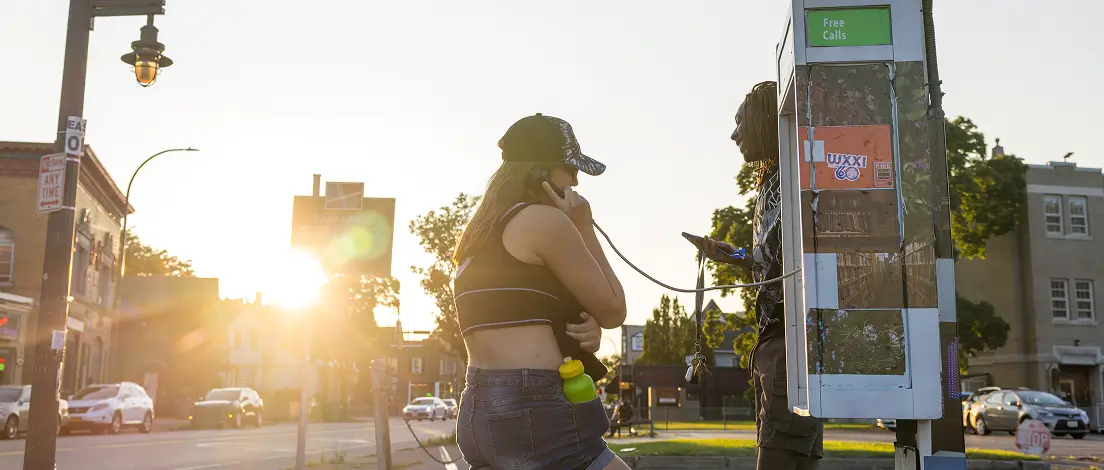
By the end of 2026, Rochester Public Libraries aims to install GoodPhones at five of its city branches, with the goal of expanding the service to all 10 branches in 2027.
The team is also in the early stages of planning with Monroe County officials to install more GoodPhones throughout the city to support the county’s Code Blue cold weather emergency plan.
Another goal of the team is to provide guidance for people in other cities who want to establish their own community phone networks; an act made possible by careful planning to ensure the project is easily scalable for other locations.
“Our goal is to build that foundation so we can turn it over to other people, and maybe it becomes its own nonprofit,” Kunsman said. “I really do hope it outgrows me and the team.”


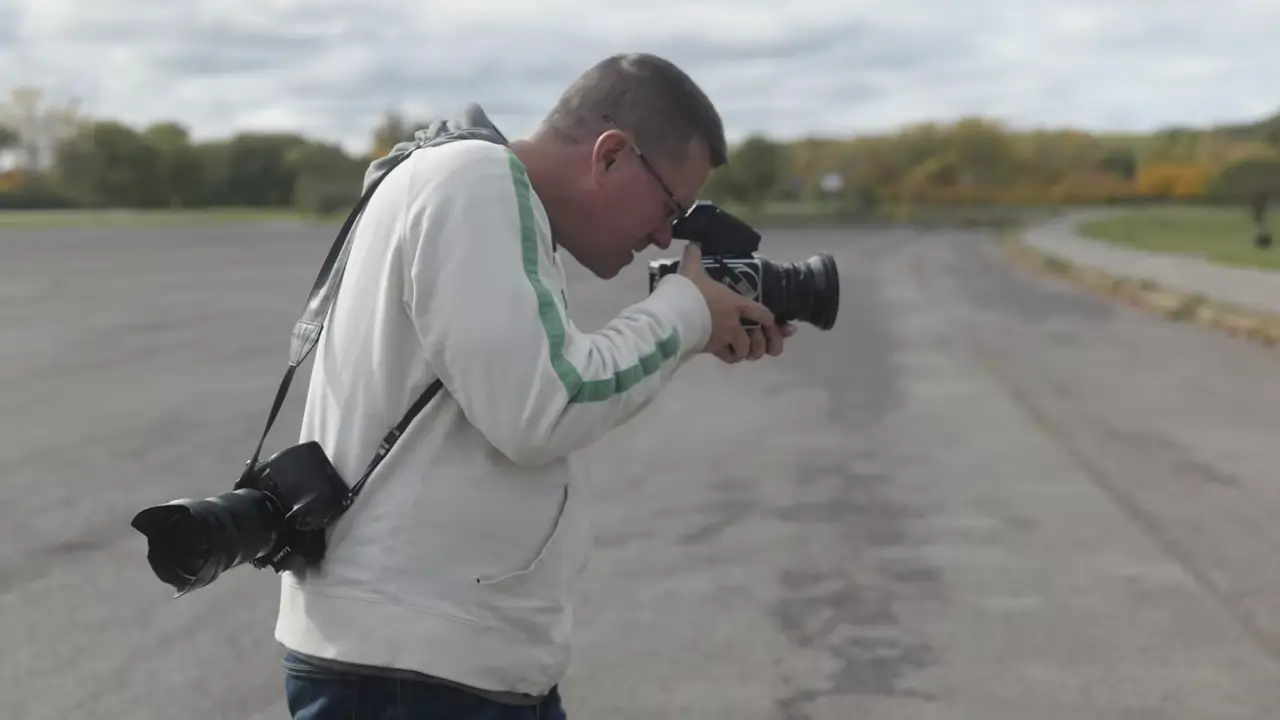
Kunsman collaborated with an RIT alumni-operated production company, Hill + Valley Creative, to make a documentary about his work.