RIT student applied design skills to fingerboarding during Teak Tuning internship
Liam Myerow/RIT
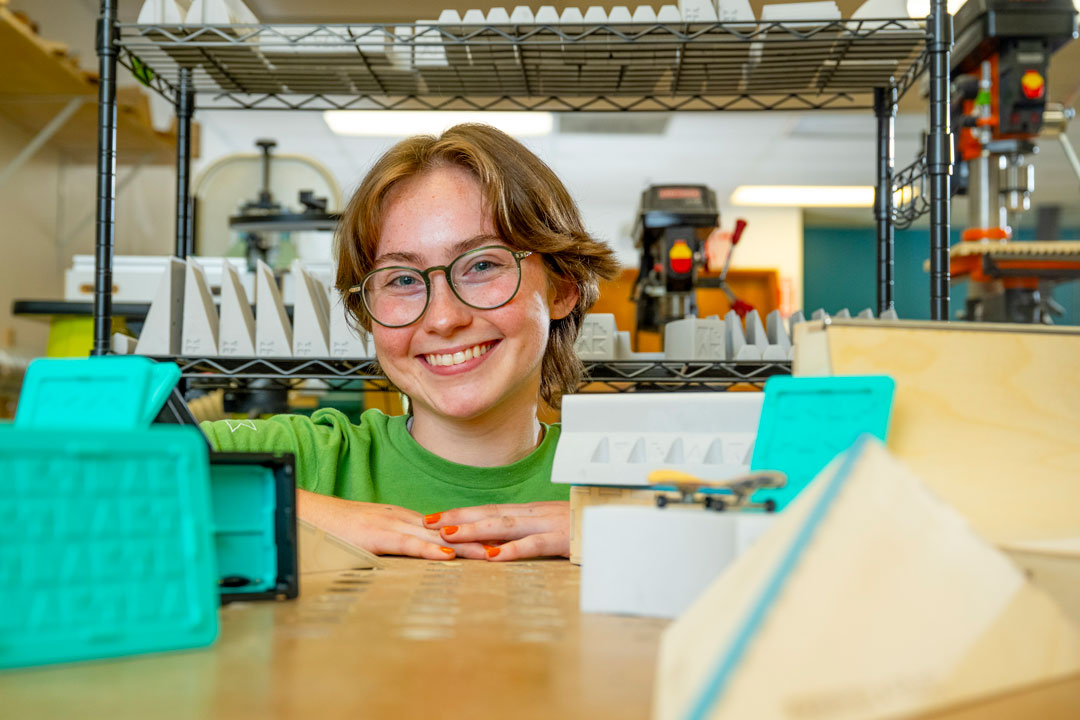
Rochester Institute of Technology student Maggie Wagner gained industrial-design work experience at Teak Tuning during an internship.
Rochester Institute of Technology industrial design BFA student Maggie Wagner applied her problem-solving skills to the miniaturized world of fingerboarding during an internship at Teak Tuning, a leading professional fingerboard designer and manufacturer.
Wagner, a newbie to the fingerboarding world, started working part time for Teak Tuning in between classes in the spring. Instead of fingerboarding tricks, Wagner, a fourth-year student from Nashua, N.H., brought design skills and an understanding of materials and processes to the small design shop. The few hours a week during the spring semester led to a full-time summer internship.
Liam Myerow/RIT
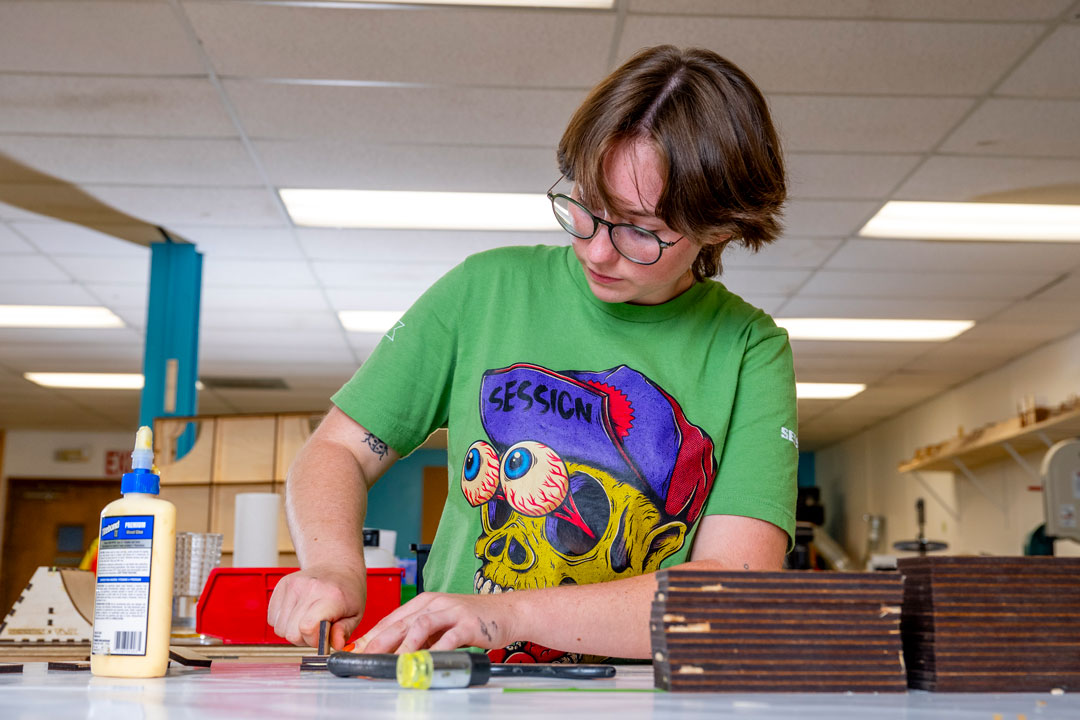
Assisting production and product assembly at Teak Tuning introduced RIT student and intern Maggie Wagner to a niche industry beloved by hobbyists and professional fingerboarders.
Unique internships like Wagner’s give RIT students learning opportunities that prepare them for career success and are a staple at RIT, which is ranked fifth among cooperative education/internship programs by U.S. News & World Report.
Wagner assisted with the production and assembly of products sold on the Teak Tuning website, including obstacles/monuments, wooden decks (the board) crafted in-house, and the casting of urethane rods, which an offsite partner slices into candy-colored wheels.
When the monument inventory needed updating with the company’s new logo, Ashley Landon, Teak Tuning product development and production manager, gave the project to Wagner as a major part of her internship.
“The purpose of remaking the monument molds was to improve the surface quality, reduce the post processing time, and replace the old logo with the new one,” Wagner said.
She applied her experience from RIT to make 3D molds for silicone casting and sped up the curing process. Her changes improved the workflow.
“It used to take 3-to-4 minutes a piece to do the post-processing, and now it takes 15-to-25 seconds after Maggie did this redesign,” Landon said. “It’s been a phenomenal change and massively increased our output.”
During the mold redesign, Wagner made tweaks to a couple of monuments based on feedback from professional fingerboarders.
She also made her own design interpretations of the popular “Loaf” monument by adding a wave to the side.
“I met with the president of Teak Tuning and my manager a lot to talk about obstacles and what’s most popular in the market,” Wagner said. “I thought of ways that we could alter the side profile to make it more interesting and fun.”
Depending on customer response, Teak Tuning will release Wagner’s models as a family of three obstacles with a wave, arc, and a U-shaped profile.
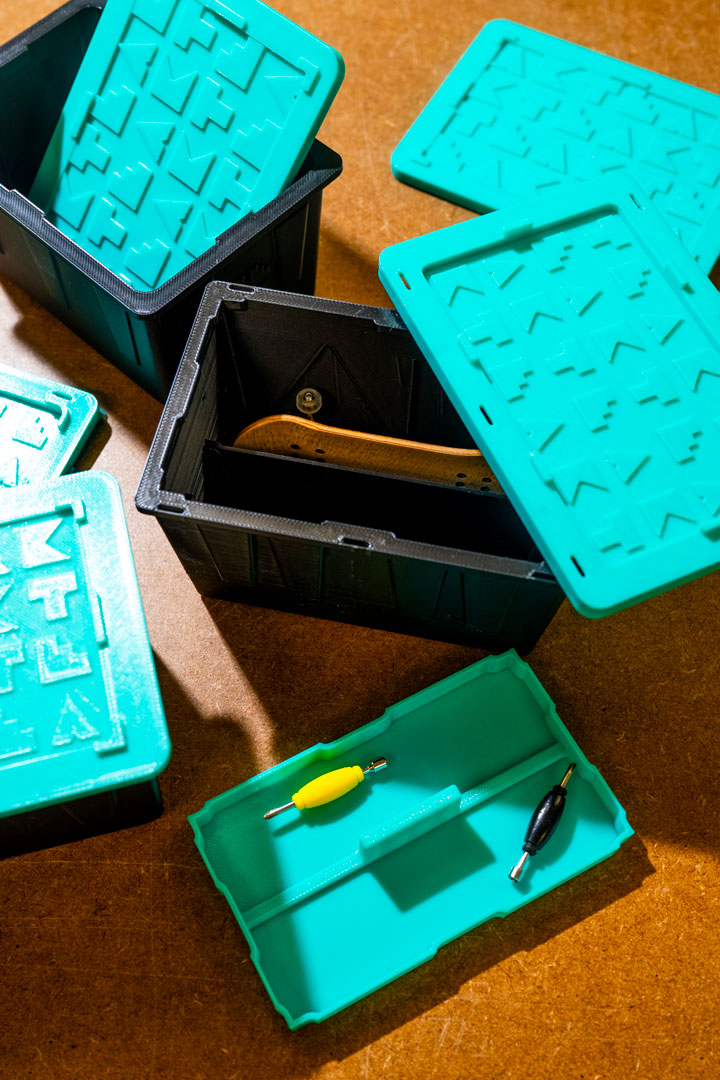
Matt Bertrand, president of Teak Tuning, asked Wagner to design a storage tote for fingerboarders. She miniaturized the container favored by skateboarders, and the tiny tote went into production.
Liam Myerow/RIT
RIT student Maggie Wagner designed obstacles, a skate park, and these tiny totes for Teak Tuning.
Another project from Landon focused on a skate park made from modular squares, 2-foot by 2-foot, with plain spaces and obstacles. Wagner designed the fingerboarding platform with a long-banked side, stairs, a railing, and edges. Her skate park will launch on the Teak Tuning website in the fall.
Fingerboarding grew out of the skateboarding culture and has found its own niche. Professional fingerboarding has a global presence and a new international league. Teak Tuning sponsors professionals, and Landon noted, the company’s founder and co-owner, Geraldine Stack, is regarded as one of the best fingerboarders in the world.
“It’s a lot harder than it looks,” Wagner said.
Proving that you don’t need to be a fingerboarder to think like a fingerboarder, Wagner collects ideas wherever she goes that might appeal to them.
“I’ll find inspiration through photos or just from driving around,” Wagner said. “I’ll look at the profiles of the roofs of buildings and the shopping malls, and think, ‘Oh that’s a cool shape. I could probably fingerboard on that.’”
While Teak Tuning’s parent company, Eisco Labs, which makes educational lab equipment, has hired other RIT students for cooperative learning experiences, Wagner is the first industrial designer hired for the fingerboarding affiliate.
Landon, also an industrial designer, was impressed by Wagner’s experience with different materials and processes.
“Maggie is so well-rounded in her skill set and is a perfectionist that I know I can trust her with a task,” Landon said. “She just picks up and runs with an idea.”