Materials Science and Engineering Master of Science Degree

The materials science and engineering MS combines science, engineering, and sustainability to solve challenges of diverse industries ranging from medicine to energy.
Overview for Materials Science and Engineering MS
Why Pursue a Master's Degree in Materials Science and Engineering at RIT?
STEM-OPT Visa Eligible: The STEM Optional Practical Training (OPT) program allows full-time, on-campus international students on an F-1 student visa to stay and work in the U.S. for up to three years after graduation.
Top Employer Recruitment: Recent graduates are employed at Dow Chemical, Toyota, 3M, Samsung Austin Semiconductor, NASA Glenn Research Center, Xerox, and The Gleason Works.
Multidisciplinary Program: Combines collaborative experiences from the Kate Gleason College of Engineering, Golisano Institute of Sustainability, and housed within the College of Science.
Diverse Faculty: From the physical, chemical, and biological sciences, as well as leaders in engineering.
In-demand Skills: Develop engineering skills that are essential in many industries, including transportation, electronics, machinery, medical, consulting, utilities, education, government, and retail.
Why Study Materials Science and Materials Engineering?
With the advent of new classes of materials and instruments, the traditional practice of empiricism in the search for and selection of materials is rapidly becoming obsolete. Due to this evolution, this is the ideal time to learn the skills to develop new materials with enhanced properties, enabling the creation of cutting-edge technologies.
RIT’s MS in Materials Science and Engineering
The objectives of RIT's master's in materials science and engineering are threefold:
- Offers a profound interdisciplinary learning experience in materials studies, crossing over the traditional boundaries of such classical disciplines like chemistry, physics, and electrical, mechanical, and microelectronic engineering.
- Provides extensive experimental courses in diverse areas of materials-related studies.
- Explores avenues for introducing greater harmony between industrial expansion and academic training.
Our materials science and engineering MS spans three colleges: Science, Engineering, and Sustainability. This gives you broad access to courses, faculty, and facilities not found in other programs. In addition, the applied nature of the research and our co-op connections are unrivaled.
- Take part in extensive experimental courses in diverse areas of materials-related studies.
- Explore avenues for introducing greater harmony between industrial expansion and academic training.
- Gain the independent thinking and project management skills to grow professionally and prepare yourself for a wide range of careers.
Materials Science and Engineering MS Courses
The materials science and engineering MS includes three required core courses, graduate electives, and either a thesis or project.
Courses: The core courses are specially designed to establish a common base of materials-oriented knowledge for students with baccalaureate degrees in chemistry, chemical engineering, electrical engineering, mechanical engineering, physics, and related disciplines.
There also is an emphasis on experimental techniques, with one required experimental course as part of the curriculum. This aspect of the materials science and engineering MS will enhance your confidence when dealing with materials-related problems.
Electives: Elective courses may be selected from advanced courses offered by the School of Chemistry and Materials Science or, upon approval, from courses offered by other RIT graduate programs. Elective courses are scheduled on a periodic basis. Transfer credit may be awarded based on academic background beyond the bachelor’s degree or by examination, based on experience.
Thesis/Project: Choose to complete a thesis or a project as the conclusion to your program. If you pursue the thesis option, you will take four graduate electives, complete nine credit hours of research, and produce a thesis paper. Alternatively, the project option includes six graduate electives and a 3-credit hour project.
Part-Time Study: The materials science and engineering MS offers courses in the late afternoon and evenings to encourage practicing scientists and engineers to pursue the program without interrupting their employment. (This may not apply to courses offered off campus at selected industrial sites.) Students employed full-time are typically limited to a maximum of two courses, or 6 credit hours, each semester. If you wish to register for more than 6 credit hours, then you must obtain the permission of your advisor.
-
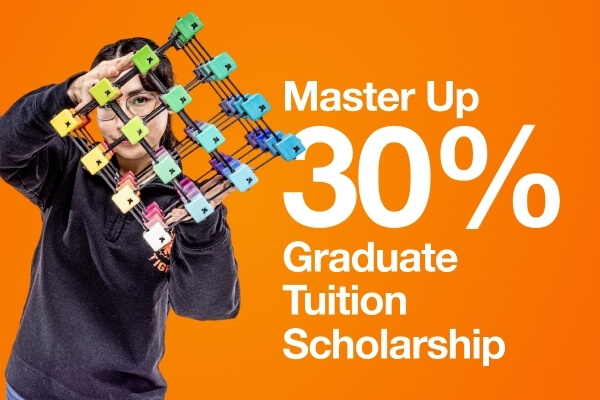
Affordable Now. Valuable for Life.
Earn your master’s degree without the full price tag. With Master Up you can receive a 30% tuition scholarship for an RIT master’s degree.
-

Join us for Fall 2026
Many programs accept applications on a rolling, space-available basis.
Careers and Experiential Learning
Typical Job Titles
| Application Engineer | Process Engineer | Chemical Engineer |
| Automation Engineer | Product Development Specialist | Material Scientist |
| Optimized Operations Engineer | Process Engineer | Research Associate |
| Validation Engineer |
Cooperative Education and Internships
What makes an RIT science and math education exceptional? It’s the ability to complete science and math co-ops and gain real-world experience that sets you apart. Co-ops in the College of Science include cooperative education and internship experiences in industry and health care settings, as well as research in an academic, industry, or national lab. These are not only possible at RIT, but are passionately encouraged.
What makes an RIT education exceptional? It’s the ability to complete relevant, hands-on career experience. At the graduate level, and paired with an advanced degree, cooperative education and internships give you the unparalleled credentials that truly set you apart. Learn more about graduate co-op and how it provides you with the career experience employers look for in their next top hires.
Co-ops and internships are encouraged for graduate students in the materials science degree.
Featured Work and Profiles
-
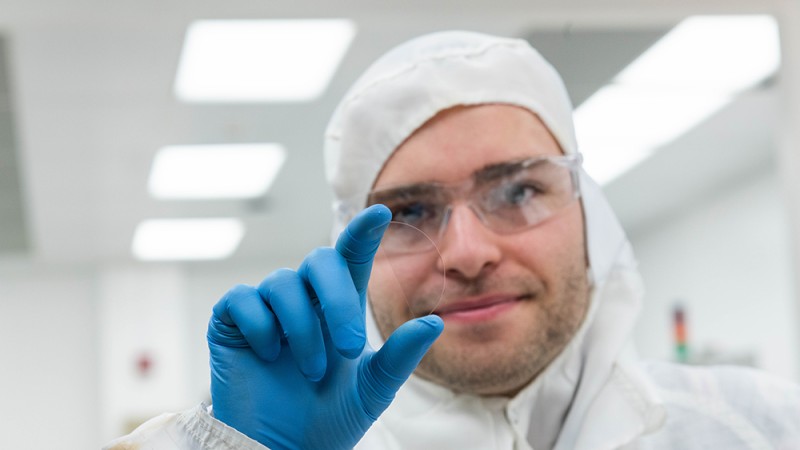
RIT Alumnus Drives Innovation with Breakthrough Micro-LED Display Startup
Matthew Hartensveld, RIT alumnus and co-founder of Innovation Semiconductor, is pushing the boundaries of display technology with his pioneering work on micro-LED platforms.
Read More about RIT Alumnus Drives Innovation with Breakthrough Micro-LED Display Startup -

Alum Sparks Change in Semiconductors
Alex Knowles leverages his RIT education to spearhead cutting-edge advancements in semiconductor manufacturing, driving innovation and efficiency at Skyworks Solutions.
Read More about Alum Sparks Change in Semiconductors -
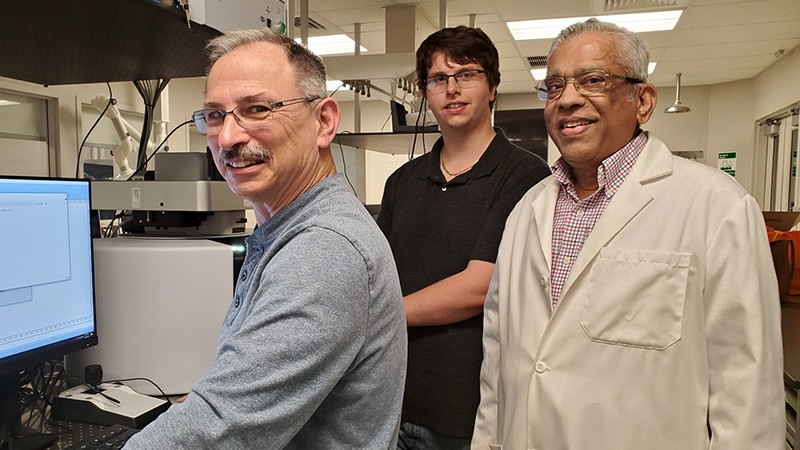
RIT Alum's New Study Unlocks Better Corrosion Protection for Metals
Charles Bopp '18 and Professor KSV Santhanam’s new study reveals how graphene quantum dots can enhance corrosion protection for Monel alloy, with their findings featured in Chemical Engineering ...
Read More about RIT Alum's New Study Unlocks Better Corrosion Protection for Metals
Curriculum for 2025-2026 for Materials Science and Engineering MS
Current Students: See Curriculum Requirements
Students are also interested in
Admissions and Financial Aid
This program is available on-campus only.
| Offered | Admit Term(s) | Application Deadline | STEM Designated |
|---|---|---|---|
| Full‑time | Fall or Spring | Rolling | Yes |
| Part‑time | Fall or Spring | Rolling | No |
Full-time study is 9+ semester credit hours. Part-time study is 1‑8 semester credit hours. International students requiring a visa to study at the RIT Rochester campus must study full‑time.
Application Details
To be considered for admission to the Materials Science and Engineering MS program, candidates must fulfill the following requirements:
- Complete an online graduate application.
- Submit copies of official transcript(s) (in English) of all previously completed undergraduate and graduate course work, including any transfer credit earned.
- Hold a baccalaureate degree (or US equivalent) from an accredited university or college in chemistry, physics, chemical engineering, electrical engineering, mechanical engineering, or a related field. A minimum cumulative GPA of 3.2 (or equivalent) is recommended.
- Submit a current resume or curriculum vitae.
- Submit a personal statement of educational objectives.
- Submit two letters of recommendation.
- Entrance exam requirements: None
- Submit English language test scores (TOEFL, IELTS, PTE Academic, etc.), if required. Details are below.
English Language Test Scores
International applicants whose native language is not English must submit one of the following official English language test scores. Some international applicants may be considered for an English test requirement waiver.
Duolingo (DET): 120
IELTS: 6.5
LanguageCert Academic: 70
PTE Academic: 56
TOEFL: 79/4.5
International students below the minimum requirement may be considered for conditional admission. Deaf and hard-of-hearing test takers with significant hearing loss do not need to take the listening and speaking sections for the TOEFL and IELTS. Each program requires balanced sub-scores when determining an applicant’s need for additional English language courses.
How to Apply Start or Manage Your Application
Cost and Financial Aid
An RIT graduate degree is an investment with lifelong returns. Graduate tuition varies by degree, the number of credits taken per semester, and delivery method. View the general cost of attendance or estimate the cost of your graduate degree.
A combination of sources can help fund your graduate degree. Learn how to fund your degree


Research
The College of Science consistently receives research grant awards from organizations that include the National Science Foundation, National Institutes of Health, and NASA, which provide you with unique opportunities to conduct cutting-edge research with faculty.
Faculty in the School of Chemistry and Materials Science conducts research on a broad variety of topics including:
- additive manufacturing
- biomedical applications of biochemistry
- chemistry education
- materials science and engineering
- organic photovoltaics.
Learn more by exploring the school’s chemistry and materials science research areas.
Related News
-
May 22, 2025

RIT researchers develop self-healing photopolymers for 3D printing to enhance part longevity and sustainability
3D Printing Industry discusses the research of Christopher Lewis, associate professor in the Department of Manufacturing and Mechanical Engineering Technology; graduate student Vincent Mei; and biomedical and chemical engineering Ph.D. student Kory Schimmelpfenning, which focuses on self-healing photopolymers for 3D printing that should enhance part longevity and sustainability.
-
September 16, 2024

Hilton Apple Fest selects 2024 logo designed by Daniela Lincoln
Westside News speaks to Daniela Lincoln '21 (materials science and engineering) about her winning design.
-
July 31, 2023

Matt Hartensveld named as a SEMICON West 20 Under 30 future microelectronics industry leader
From building a cleanroom in his family home while he was in high school to becoming an entrepreneur and Ph.D., it is no wonder that RIT alumnus Matt Hartensveld is viewed as a future leader in the microelectronics industry. He was recently named SEMICON West 20 under 30 awardee, given by the organization to recognize the microelectronic industry’s brightest young leaders.

