Science and Math News
-
March 8, 2022
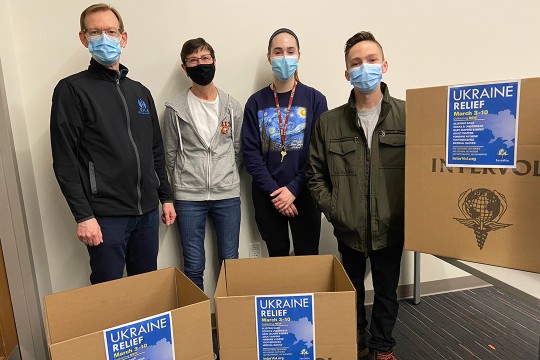
Global Health Association holds donation drive for Ukraine with InterVol
RIT and the Global Health Association @ RIT are partnering with humanitarian organization InterVol in an urgent donation drive to aid the people of Ukraine affected by the Russian invasion. InterVol’s Ukraine Relief campaign is accepting donations through Thursday, March 10.
-
March 4, 2022

RIT fuels employment pipeline for innovative employers
More than 2,200 RIT students donned business attire to meet with recruiters from 160 prospective local, regional, and national employers during Wednesday’s university-wide career fair inside the Gordon Field House.
-
March 4, 2022

Pollution Prevention Institute at RIT accepting Community Grants Program applications
The New York State Pollution Prevention Institute (NYSP2I) is accepting applications for the organization’s 2022-2023 Community Grants Program. Founded in 2008, the program is part of the NYSP2I’s ongoing efforts to continue improving the health and environmental quality of New York state.
-
March 2, 2022

RIT’s School of Film and Animation ranked No. 12 nationally
RIT’s School of Film and Animation is once again ranked among the top animation schools in the country by Animation Career Review, a leading online resource of information for aspiring animation and game design professionals.
-
March 2, 2022
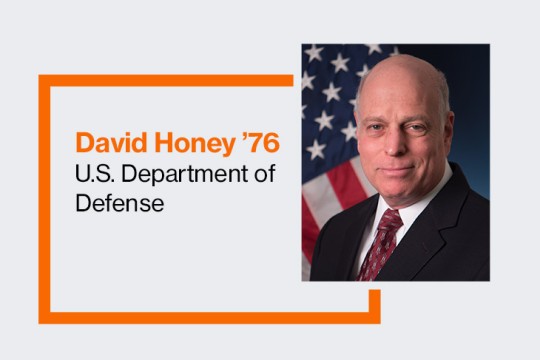
RIT alumnus confirmed by Congress for Department of Defense position
RIT alumnus David Honey ’76 (photographic sciences) was recently appointed deputy undersecretary for research and engineering with the U.S. Department of Defense (DOD). Honey was nominated for the DOD position in August 2021 by President Joe Biden.
-
February 23, 2022

RIT’s remote sensing experts help scientists keep an eye on the Earth
Scientists from RIT’s Chester F. Carlson Center for Imaging Science recently helped successfully bring the new Landsat 9 satellite online and are partnering with a startup on a bold new initiative to help scientists in government and the private sector monitor changes in the Earth’s surface temperature.
-
February 21, 2022

Heart Health Month: Healthy-eating and exercise
Fox Rochester features Bill Brewer, senior lecturer and director of the exercise science program, about improving heart health with a healthy diet and exercise.
-
February 21, 2022

RIT nutrition professor aims to reach 10,000 New Yorkers with ‘About Eating’ program
Barbara Lohse, head of RIT’s Wegmans School of Health and Nutrition, hopes to reach 10,000 New Yorkers with free resources promoting healthy nutrition and lifestyle tools that have been tested and shown to be effective.
-
February 20, 2022

Sustainability seminar discusses new research in wetland restoration
Campus Times interviews Professor Christy Tyler about how to rethink wetland ecosystem restoration.
-
February 14, 2022
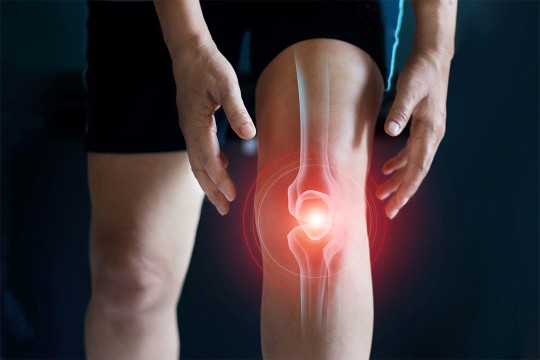
RIT scientists develop biophysical model to help better diagnose and treat osteoarthritis
Scientists from RIT and Cornell University have teamed up to explore cartilage tissue’s unique properties with the hopes of improving osteoarthritis diagnosis and treatment. The team published a new paper in Science Advances outlining their findings.
-
February 4, 2022

RIT ultrasound program meets high educational standards with renewed accredited status
The diagnostic medical sonography program at RIT was awarded continuing accreditation in compliance with national standards and guidelines established by the profession.
-
January 31, 2022

RIT expands Ph.D. portfolio
RIT’s strategic plan calls for adding six to 12 new Ph.D. programs and conferring 50 doctoral degrees every year by 2025. The university already reached the latter goal with 51 Ph.D. degrees conferred in the 2020-2021 academic year.