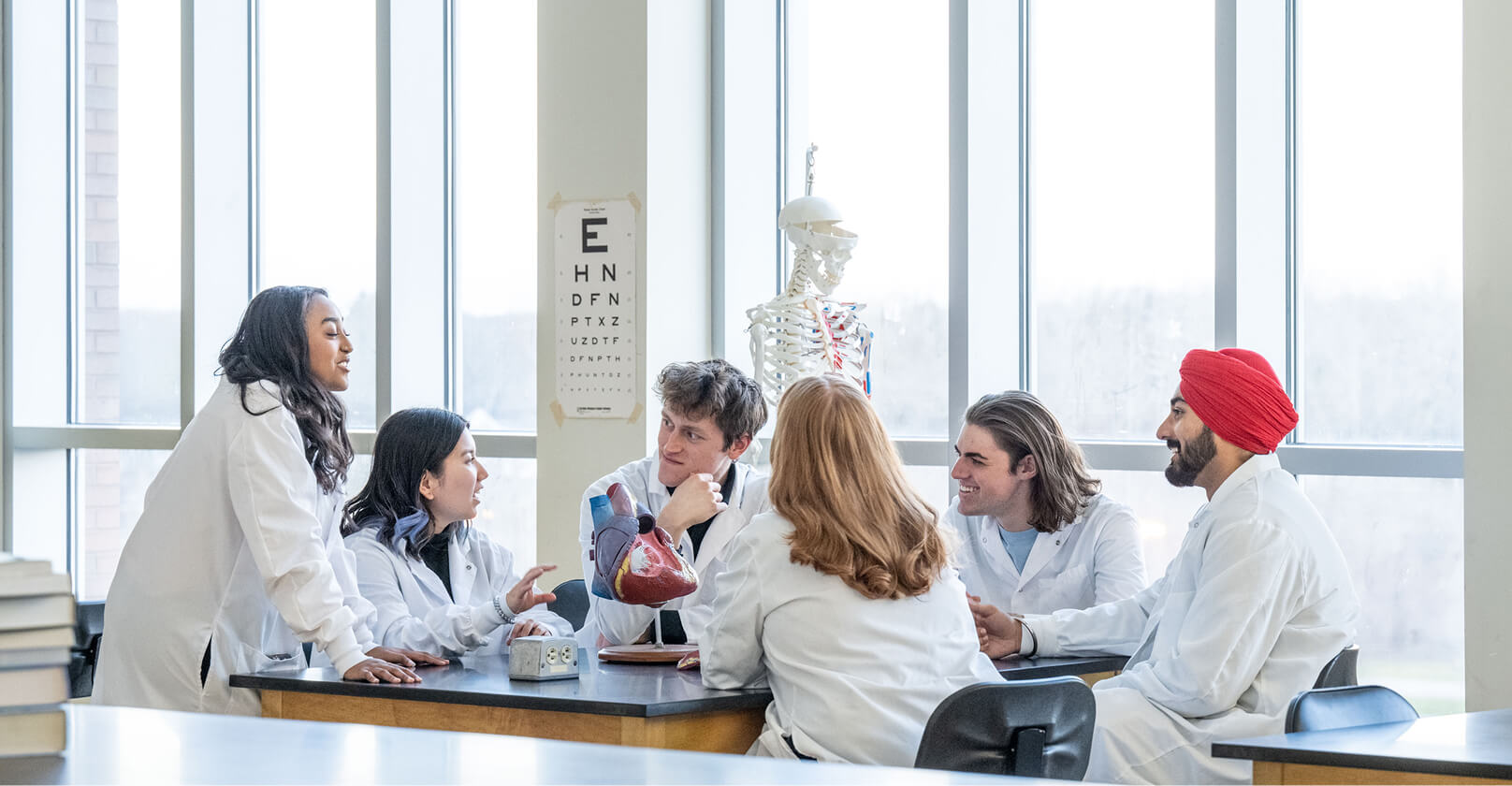
Are you ready to launch a career in health care? Rochester Institute of Technology’s biomedical sciences degree is built for students like you who want more than traditional pre-med courses. We know you want early hands-on experiences, meaningful mentorship, valuable research opportunities, and real-world prep for medical school and graduate programs in the health professions.
From cutting-edge labs to a truly supportive community, here are the questions you should ask when exploring biomedical sciences programs.
Is there a supportive environment for pre-med students?
Preparing for medical school doesn’t have to mean constant competition. Many students choose RIT because its community of students is rooted in shared success and peer support.
“At other universities, pre-med students race against each other,” said Marissa Abramson, a biomedical sciences major. “At RIT, it’s a relay—and we’re all running together.”
RIT’s Pre-Med/Pre-Health Advising Program was created to maximize your candidacy for medical schools and graduate programs in the health professions. Advisors connect with you early and often to help with:
- Pre-med courses and requirements
- Clinical and research experiences
- Entrance exams
- The application process—from strategy to next steps
What hands-on biomedical science labs are available for undergraduate students?
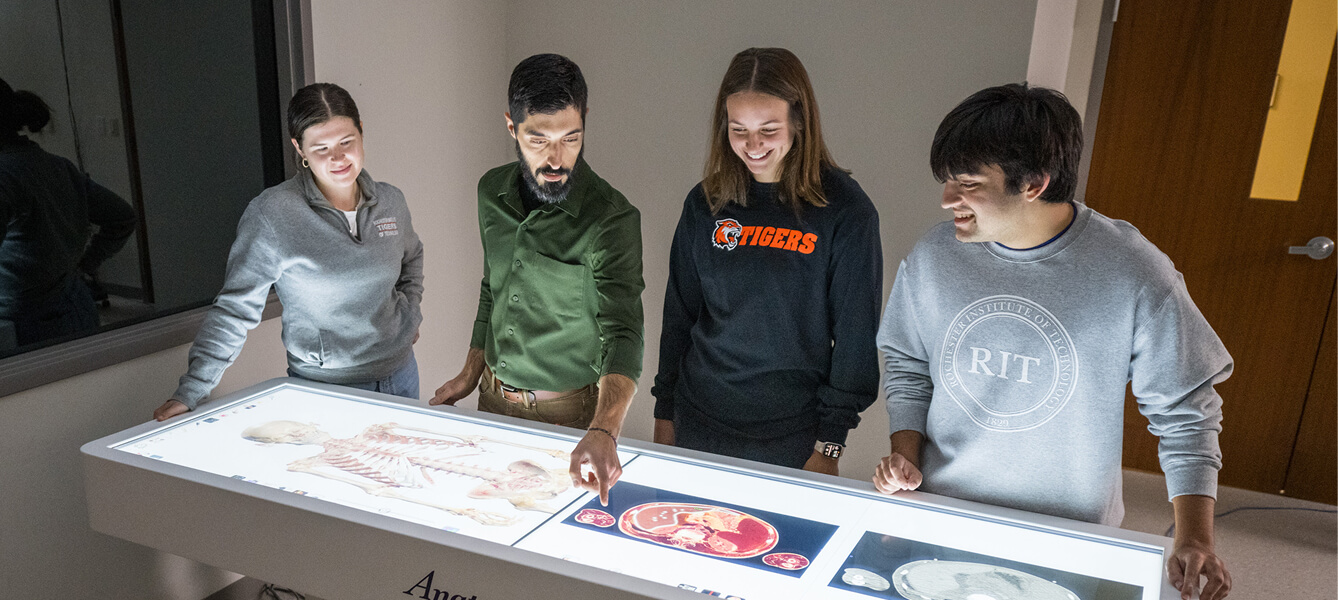
RIT biomedical sciences students often access experiences that students at other universities don’t encounter until later in their education. Students have access to the Anatomy and Physiology Lab and the Anatomical Studies Lab (formerly the Cadaver Lab), including opportunities for human dissection. You’ll also use innovative tools such as the Anatomage Table, which allows you to digitally explore anatomy and visualize how body systems work together.
“The variety and abundance of undergraduate research opportunities here really stood out to me,” said Peggy Chen, a current biomedical sciences major. Paige Mattoon added, “Working in the lab alongside Ph.D. and graduate students helped me grow in ways I didn’t expect.”
One of the biggest reasons students choose RIT is simple: you don’t have to wait to do meaningful, hands-on work. From your first semester, the major emphasizes real-world application, collaboration, and problem-solving—so you build confidence in labs and learning environments early and often.
As you progress through the major, you will also be encouraged to engage in:
- Undergraduate research
- Co-op and internship experiences
- Global experiences (including study abroad opportunities in global public health and international biomedical learning)
What kind of outcomes can I expect?
Students choose biomedical sciences at RIT because the program is designed to help them reach the next step with confidence—whether that’s medical school, graduate study in the health professions, or a wide range of health-related careers. With a curriculum grounded in core life sciences and flexible enough to reflect individual goals, you build a foundation that’s both rigorous and relevant.
More than 98% of RIT biomedical sciences graduates are employed or enrolled in graduate programs within six months of graduation—evidence of strong preparation and momentum after commencement.
What do I learn in biomedical sciences?
You’ll study the scientific foundations of human health, disease, and medicine—then shape your degree around your interests. Coursework includes human biology, anatomy and physiology, genetics, and laboratory sciences, plus advanced electives in areas such as:
- Genetics, genetic engineering, and genomics
- Nutrition and pharmacology
- Epidemiology
- Exercise science and sports physiology

What can you do with a biomedical sciences degree?
Many students pursue medical school, but the degree is intentionally built to support multiple outcomes. Graduates go on to medical school and health professions programs—or pursue research and industry roles where a biomedical background is highly valued.
Examples of positions graduates may pursue include:
- Research and lab roles: research assistant/associate, lab technician, clinical research coordinator
- Clinical and diagnostic roles: clinical laboratory scientist/technologist, pathology lab roles
- Industry and biotech: pharma/biotech research, QA/QC, regulatory affairs, medical science liaison
- Science-adjacent careers: science writing, medical marketing/communications, policy/public health, healthcare sales
Where do RIT biomedical sciences graduates go after graduation?
RIT’s biomedical sciences major includes the prerequisites needed to be a competitive applicant to medical, dental, and veterinary school. Recent graduates have enrolled at programs such as Boston University School of Medicine, NYU School of Medicine, Weill Cornell Medical College, Philadelphia College of Osteopathic Medicine, NYU College of Dentistry, and University of Colorado Skaggs School of Pharmacy, among others.
Some students take global, interdisciplinary paths that broaden their future in medicine. For example, Sammy Deol ’25 earned a Fulbright Scholarship to study public health in England as part of his preparation for medical school—pursuing perspective before practice.
What is student life like for biomedical sciences majors?
Students often expect pre-health environments to feel competitive—but many find the opposite at RIT biomedical sciences. Community is a defining part of the experience, and students build strong connections through classes, labs, advising, and student clubs and organizations.
Biomedical sciences students find community through groups like the Biomedical Sciences Student Association (BSSA), which offers:
- Peer mentoring
- Hands-on training (such as CPR and Narcan administration)
- Guest speakers
- Professional development opportunities
For Sharmayne Gambrel, that sense of belonging mattered deeply. “As a Black woman in STEM, it’s powerful to see other Black women going through the same experiences,” she said.
What kind of advising do biomedical sciences students receive at RIT?
From your first year, you’re supported by a coordinated advising structure through the College of Health Sciences and Technology’s Academic Advising services. Advisors work one-on-one with you on:
- Degree planning and course sequencing
- Career guidance
- Double majors, minors, and immersions
- Co-op experiences and clinical opportunities
- On-campus jobs and next steps

How does biomedical sciences prepare you for medical school?
Students choose RIT biomedical sciences because the program makes it easier to plan a clear route to professional school—without having to piece everything together on their own.
The BS in biomedical sciences includes the required prerequisites and recommended coursework for students pursuing:
- Allopathic medicine (MD)
- Osteopathic medicine (DO)
- Pharmacy (Pharm.D.)
- Dentistry (DDS)
- Accelerated nursing, physical therapy (DPT), occupational therapy (OTD)
- Doctorate-level biomedical research programs
Are there early acceptance or partnership pathways available?
RIT offers structured partnerships that help students prepare early and intentionally, including:
- Early Opportunity Program in Medicine (RIT + Jacobs School of Medicine and Biomedical Sciences at the University at Buffalo) for eligible students pursuing a pre-admission offer, mentorship, and early professional development.
- LECOM Early Acceptance Program (RIT + Lake Erie College of Osteopathic Medicine), which may offer conditional or guaranteed acceptance to graduate-level medical programs in medicine, dentistry, podiatry, or pharmacy.
Is RIT’s biomedical sciences major flexible?
Yes. With more than 185+ minors and immersions, many students pair biomedical sciences with a secondary interest such as:
Students also stay deeply involved in athletics, arts, and campus organizations—building a full college experience alongside a demanding major.
Dylan Lowe Keffer balances biomedical sciences with creative outlets like ceramics and printmaking. “I really enjoy mixing the sciences that I’m learning with the art that I’m creating,” Keffer said. “Working with different art media allows me to visualize things in new ways.”
It’s All About Launching Your Career
Whether your goal is medical school, graduate research, or a career in the growing health sciences field, RIT’s biomedical sciences degree equips you with the knowledge, experience, and confidence to take the next step. It’s not just a degree—it’s a launchpad for a meaningful future in medicine and the health sciences.