Office of the President

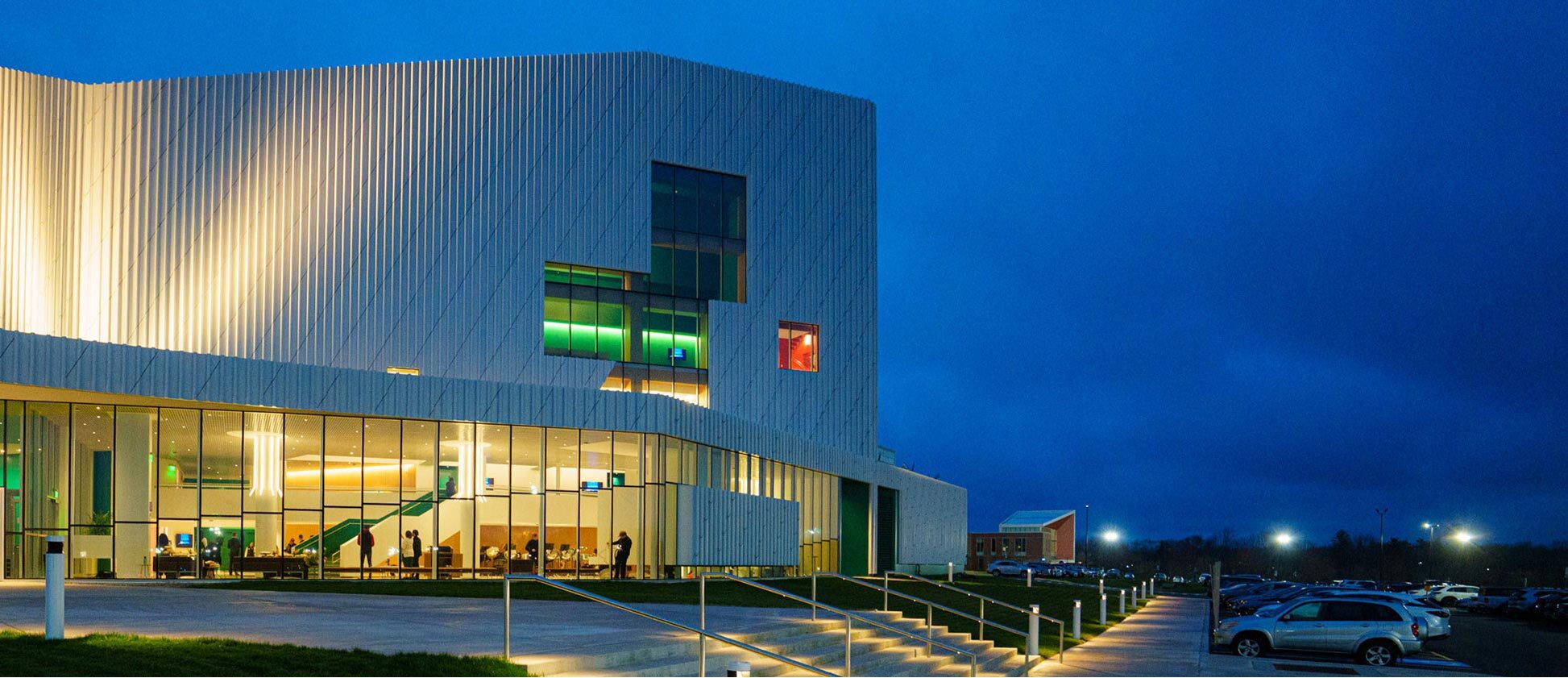
Friday, April 10, at 11 a.m
A conversation with four RIT presidents on the evolution of RIT. Together, they will explore the leadership and ideas that have shaped the university and the momentum guiding its upward trajectory. Moderated by legendary Rochester newscaster Don Alhart, the panel will reflect on the milestones that have shaped RIT.
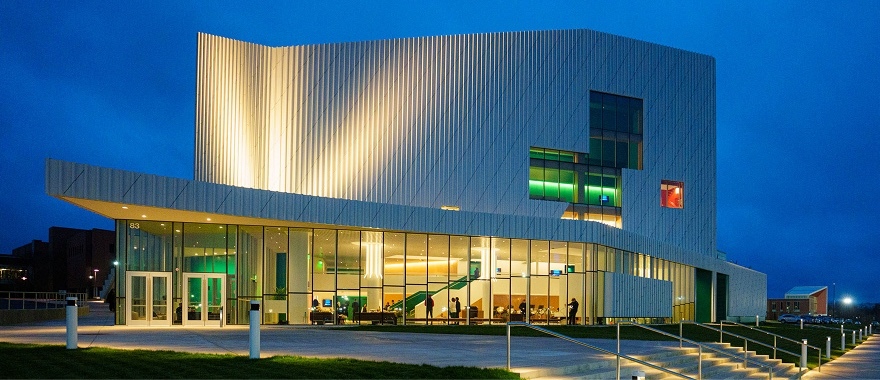
This event will be livestreamed as well as hosted in person at the Performing Arts Center on campus. Registration is encouraged.
Biography

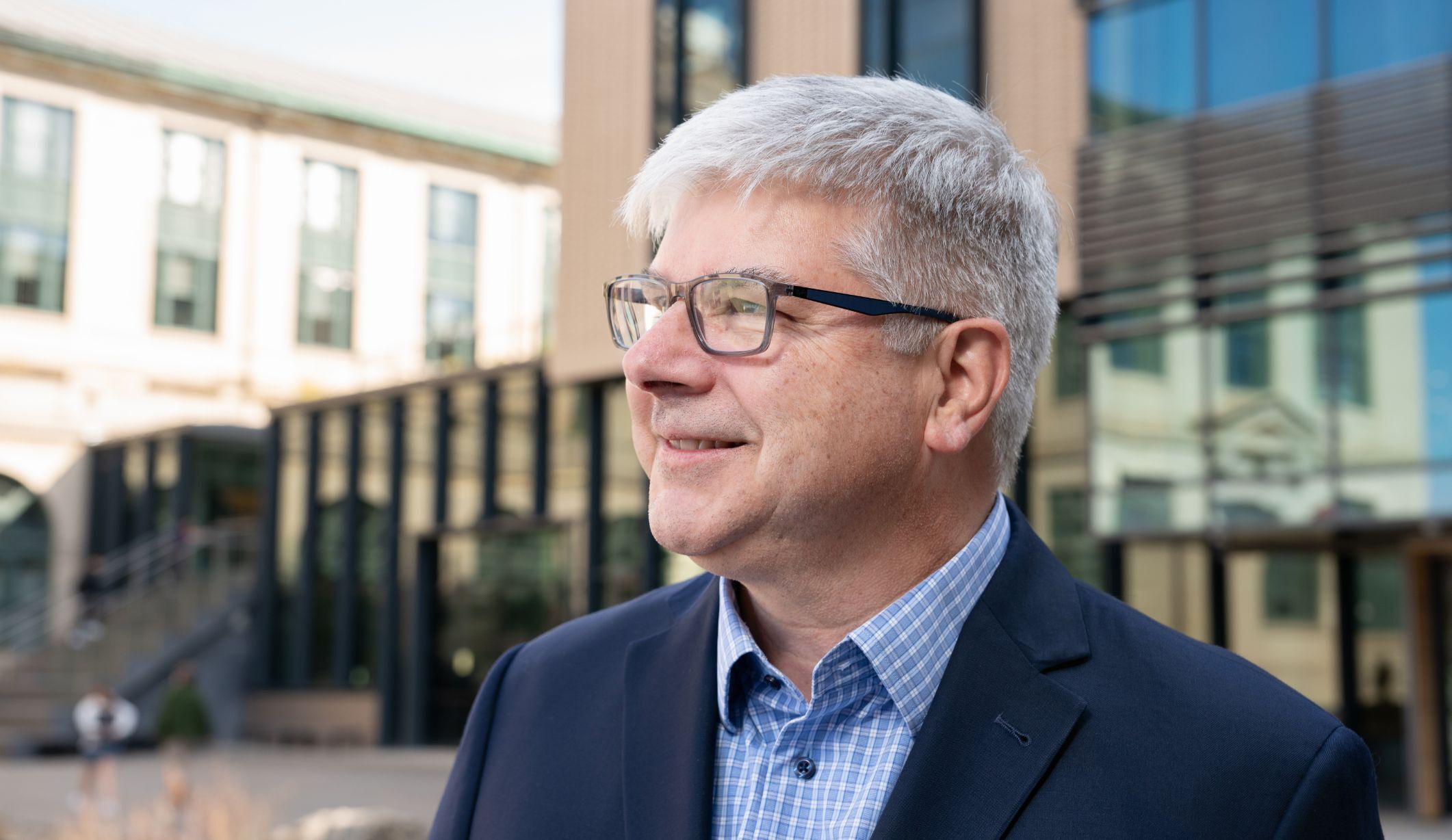
President William H. Sanders
sanders@rit.edu
@RITPresident
Distinguished researcher. Cybersecurity pioneer. Global innovator. Accomplished entrepreneur. Servant leader.
Meet RIT president, William H. Sanders —
university’s 11th president.

President William H. Sanders
sanders@rit.edu
@RITPresident
Sanders has nearly 40 years of experience in higher education. He most recently served as the Dr. William D. and Nancy W. Strecker Dean of the College of Engineering at Carnegie Mellon University in Pittsburgh from 2020 to 2025. Prior to Carnegie Mellon, Sanders spent 25 years as a tenured professor and held the Herman M. Dieckamp Endowed Chair in Engineering at the University of Illinois.
Founded in 1829, RIT enrolls more than 21,300 students in more than 200 career-oriented and professional programs, making it among the largest private universities in the United States. With 150,000 alumni worldwide, RIT is internationally recognized and ranked for its leadership in technology, the arts, and design. RIT also is home to the National Technical Institute for the Deaf and has one of the oldest and largest cooperative education programs in the country. Global partnerships include campuses in Dubai, Croatia, and Kosovo.
Sanders began his career as an assistant professor in the Department of Electrical and Computer Engineering at the University of Arizona in 1988. He earned his bachelor’s degree in computer engineering; master’s degree in computer, information, and control engineering; and doctoral degree in computer science and engineering, all from the University of Michigan.
Sanders’ research interests include secure, dependable, and resilient computing systems with a focus on critical infrastructures. He has directed work at the forefront of national efforts to make the U.S. power grid smart and resilient. His significant scholarly record includes publishing more than 300 technical papers in this field. He is also a co-developer of a tool for assessing the security of networked systems that is available commercially under the name NP-View from the startup company Network Perception, which he co-founded.
A recognized leader in his field, Sanders was elected to the National Academy of Engineering (NAE) in 2023, one of the highest professional distinctions accorded to an engineer, for his contributions to cybersecurity and resiliency technologies for critical infrastructures. Sanders is also an elected fellow of the Institute of Electrical and Electronics Engineers, the Association for Computing Machinery (ACM), and the American Association for the Advancement of Science (AAAS). Among many honors, he was the 2016 recipient of the IEEE Technical Field Award, Innovation in Societal Infrastructure, for “assessment-driven design of trustworthy cyber infrastructures for societal-scale systems.”
Sanders is a native of Grand Rapids, Mich. He and his wife, Emily, have two grown children who are both engineers. When he is not working, Sanders enjoys the outdoors, hiking, kayaking, canoeing, and amateur astronomy.
Message from the President
Welcome to RIT!
We are home to leading creators, makers, innovators, researchers, and entrepreneurs. This is an extraordinary time for RIT. Our amazing university community is on to something that is truly exceptional.
RIT takes a unique approach on its path to excellence, working at the intersection of technology, the arts, and design. It’s clear that RIT’s acceleration in excellence has been due to charting its own way – being strategic in picking the intellectual areas that it focuses on and creating an identity that does not seek to replicate what others are doing.
Our students hail from all 50 states and more than 100 nations. Our alumni base is 150,000 RIT Tigers strong, graduates who are working at the top of their fields, shaping the future and improving the world, and giving back to their communities and to their alma mater.
RIT has momentum that we can capitalize on to make it ‘the’ destination for students that value its unique brand of innovation, creativity, passion, curiosity, and joy. This is RIT’s time!
Yours in Tiger pride,
Bill Sanders, RIT President
A Strategic Vision for RIT’s Next Chapter
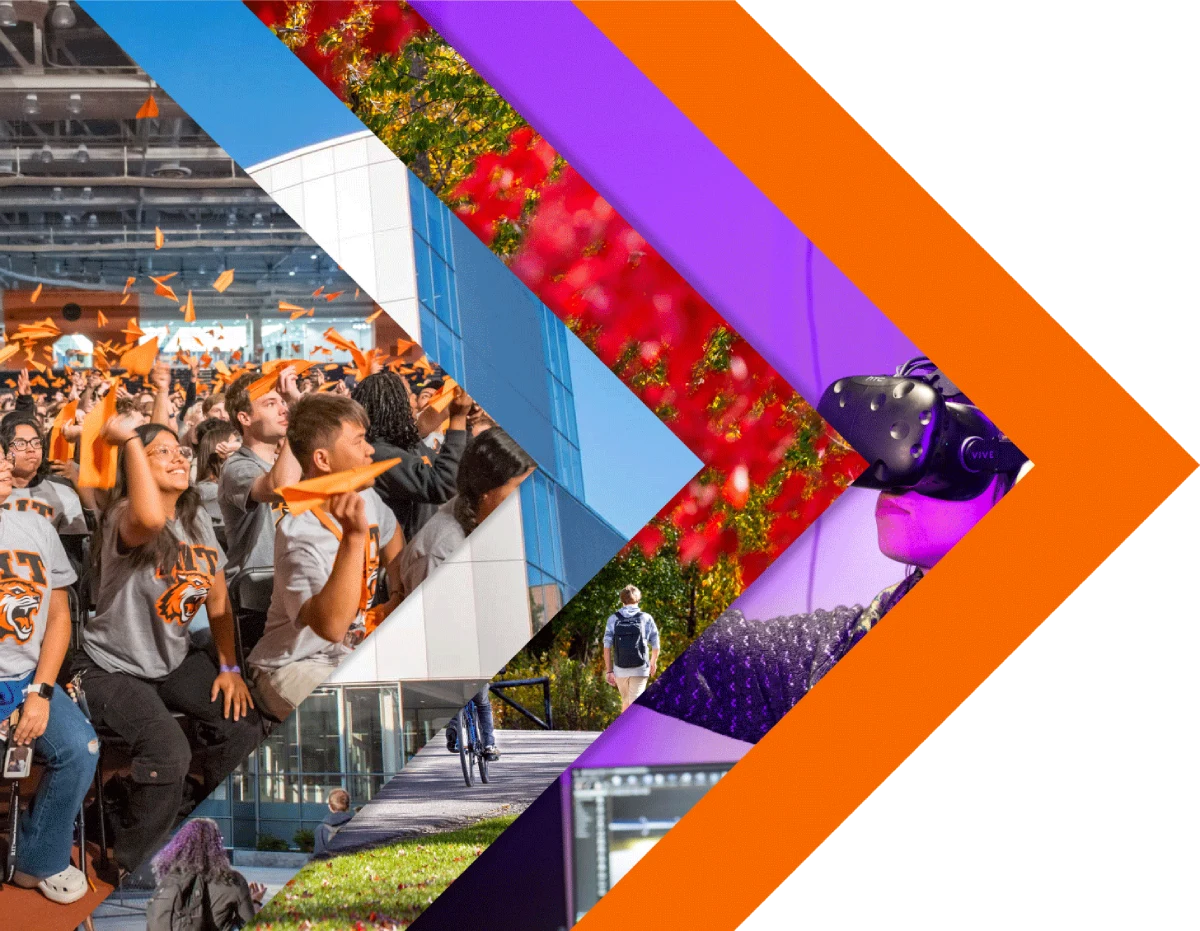
RIT is at a pivotal moment in its evolution. Marked by momentum, possibility, and an unwavering sense of purpose, RIT’s Strategic Framework affirms our commitment to preparing the next generation of innovators, expanding research to drive meaningful impact, and integrating technology, the arts, and design to advance discovery and make the world a better place.

President’s Roundtable
President’s Roundtable was formed in 2001 to provide a means by which RIT’s executive leadership and the President can benefit from the advice and counsel of a select group of RIT’s most successful alumni and friends. Participation in the Roundtable is by invitation. The Roundtable meets twice annually, once in the spring and once in the fall.
President in the News
-
September 22, 2026
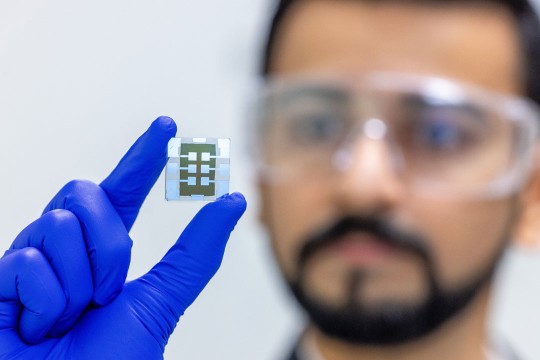
RIT named a top 100 national university for fourth year in a row in ‘U.S. News’ best colleges ranking
RIT continues its run as a top 100 national university for the fourth year in a row, according to the 2027 U.S. News & World Report rankings.
-
September 11, 2026

RIT president says next build is strengthening people and programs
In his State of the University address, RIT President Bill Sanders outlined a vision for RIT centered on investing in people, programs, and strategic priorities to sustain the university's momentum and impact.
-
September 2, 2026
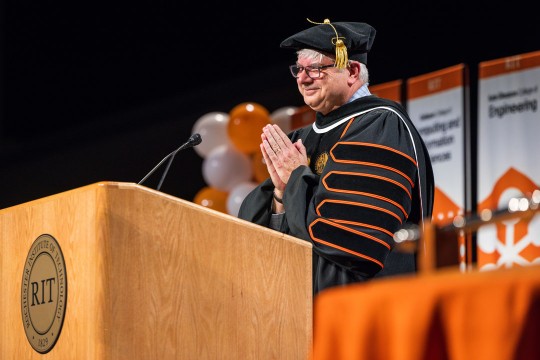
RIT community invited to State of the University address on Sept. 10
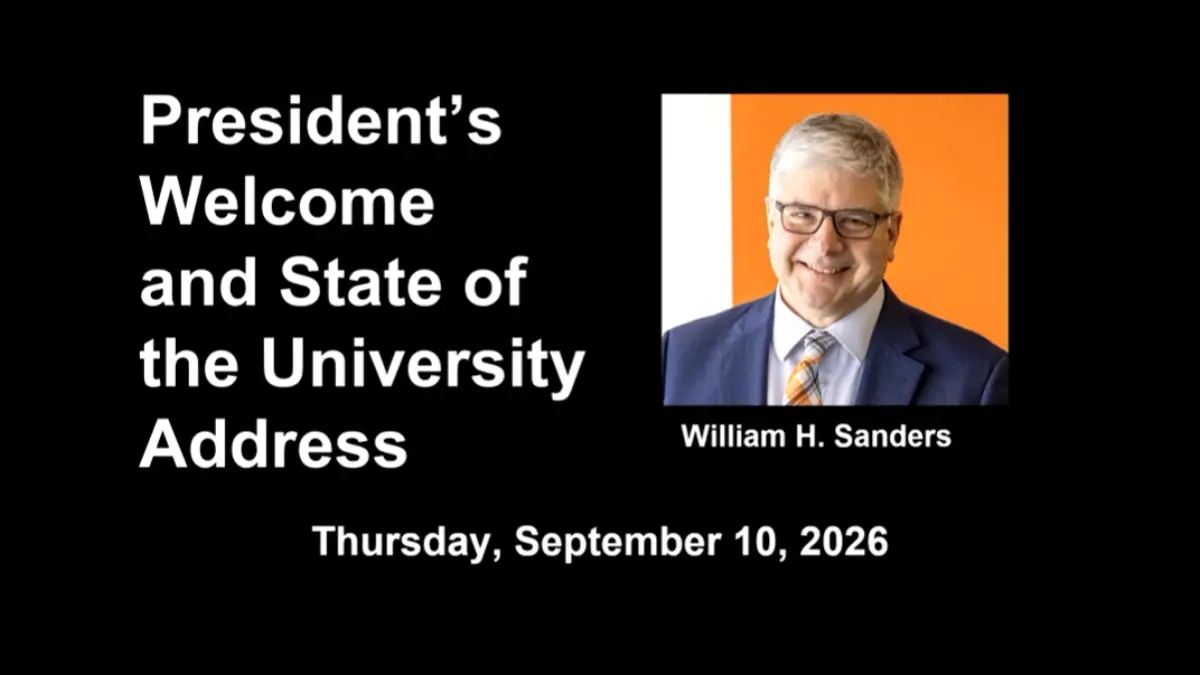
RIT President Bill Sanders will give his State of the University address at 3 p.m. on Thursday, Sept. 10, in the RIT Performing Arts Center.
Photos
-
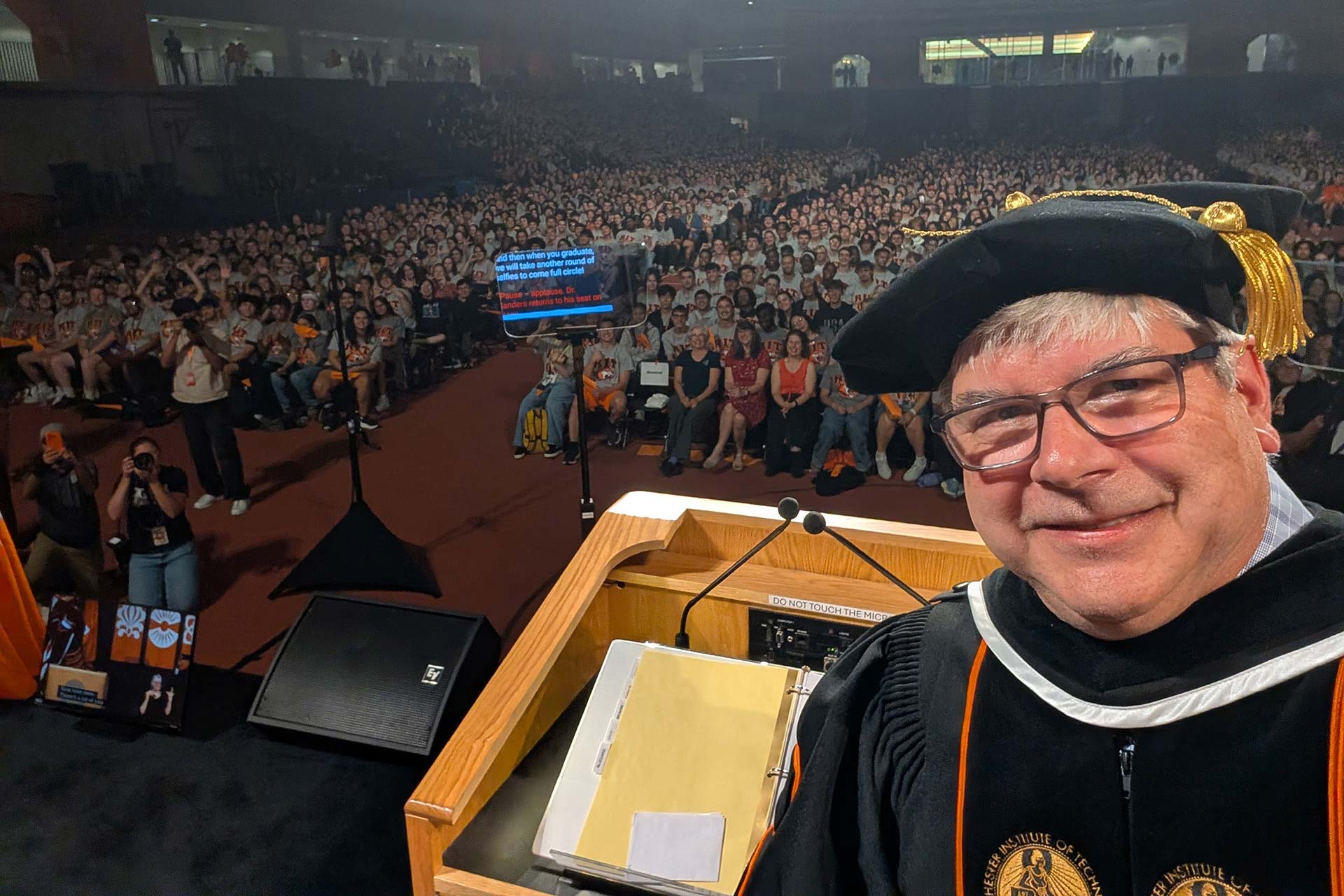
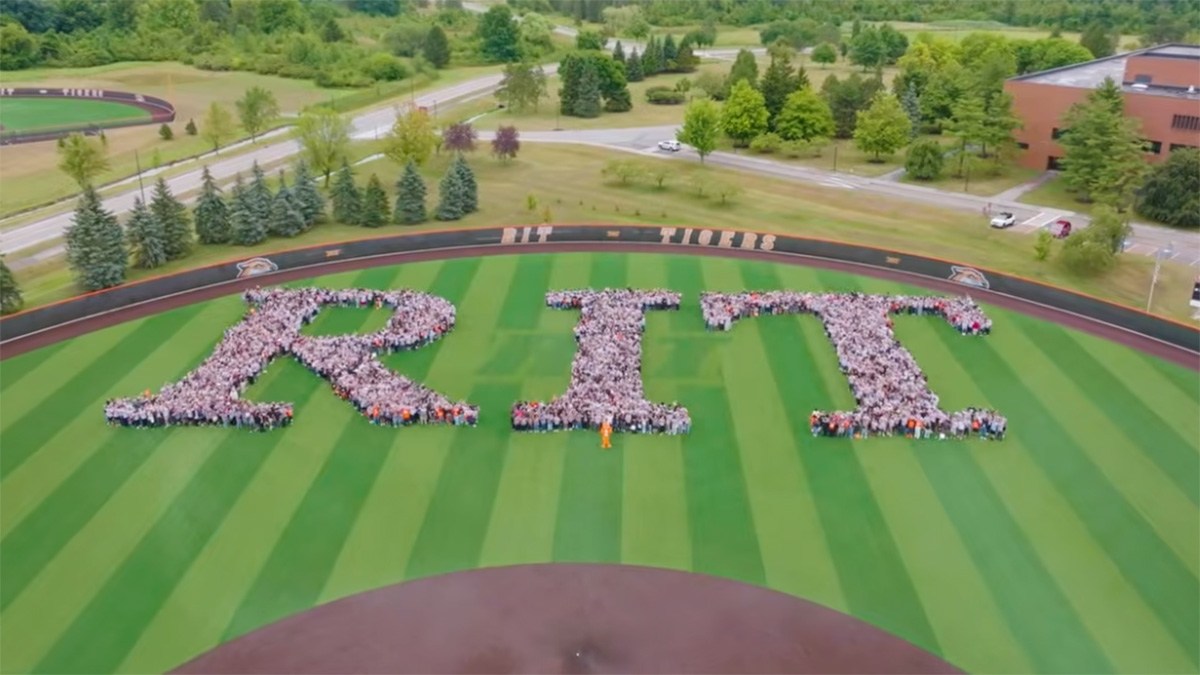
RIT President Bill Sanders takes a selfie with 4,000 new Tigers on Aug. 20, 2026. The event was part of New Student Convocation.
-
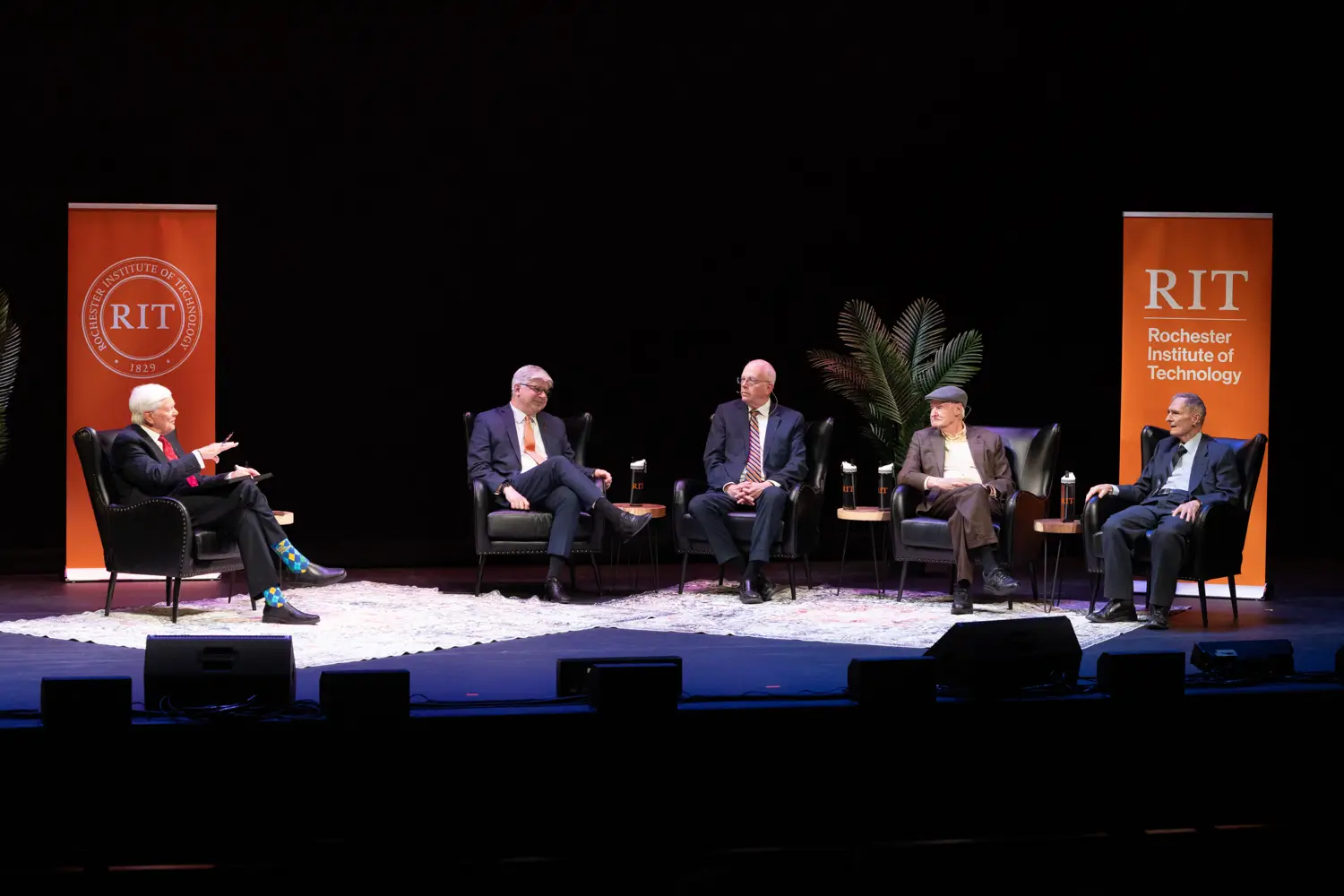
From left, moderator and longtime broadcast journalist Don Alhart leads a discussion with RIT President Bill Sanders and Presidents Emeriti David Munson, Bill Destler, and Albert Simone at the new RIT Performing Arts Center.
-
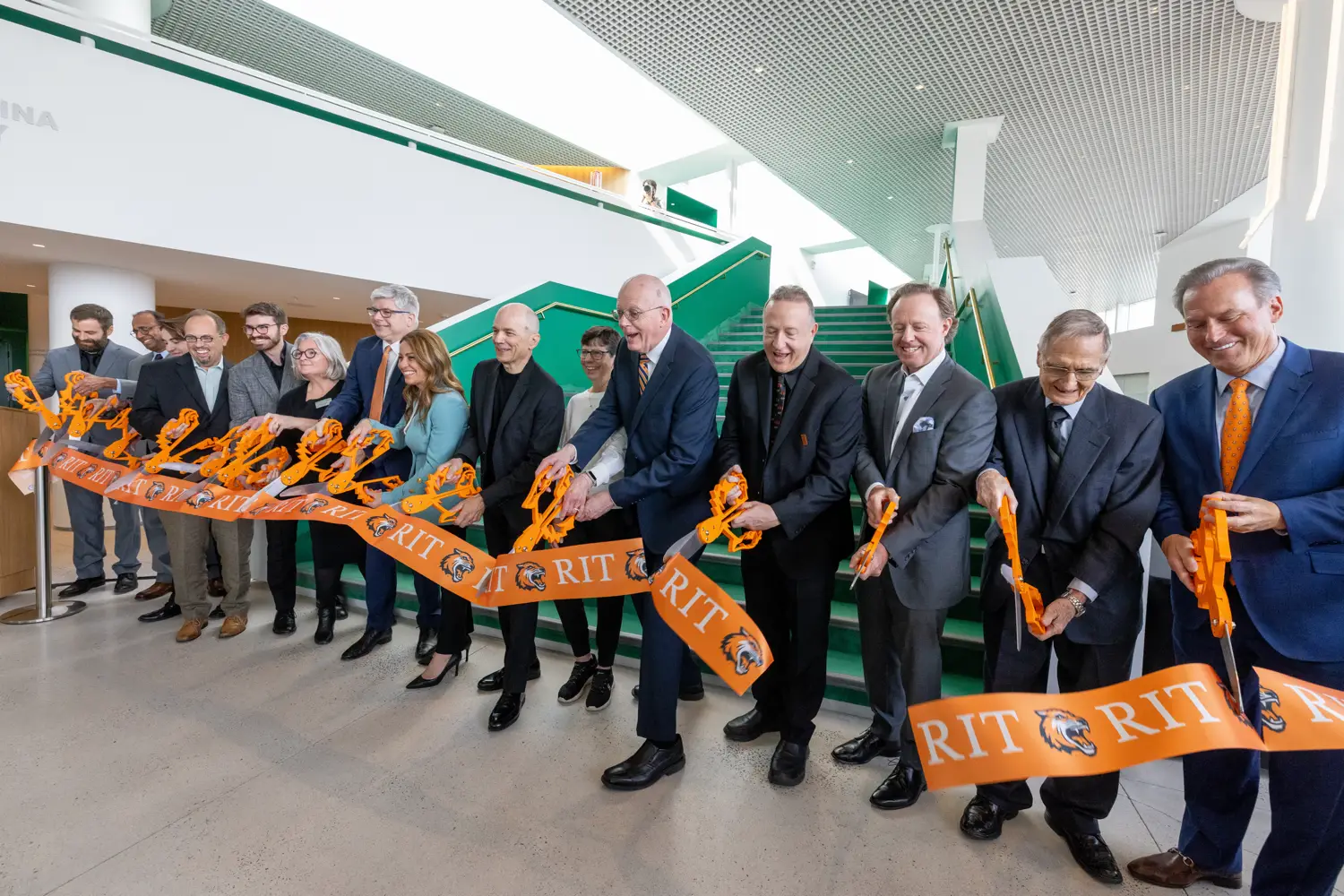
School administrators, donors, faculty, staff, students, and architect Michael Maltzan cut the ribbon to officially open the RIT Performing Arts Center on April 10.
Meet Bill Sanders
Presidential Timeline
RIT’s roots date back to 1829. But it wasn’t until 1910 that the university’s predecessor—Mechanics Institute—named its first president, Carleton Gibson.
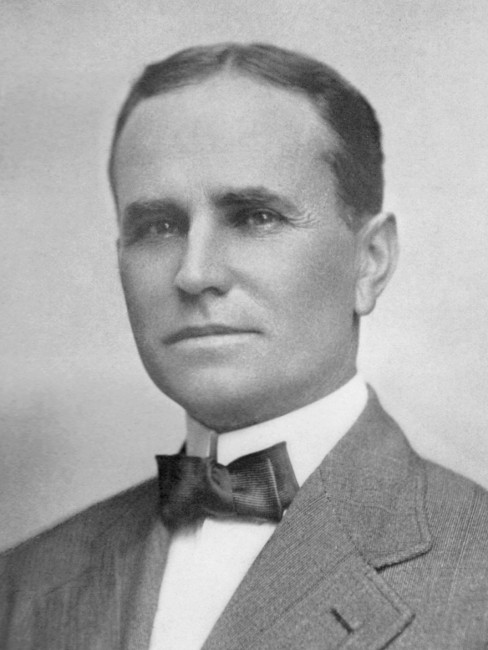
Carleton B. Gibson
1910 – 1916Carleton Gibson was chosen as the first president of the Mechanics Institute in 1910. He placed emphasis on industrial education and did not propose any immediate or drastic changes to the institute upon his arrival. By 1912, however, he had managed to have the institute adopt a policy of allowing students to work half their time of study in industry and spend half their time attending classes. This method of study would later be referred to as a “co‑op.”
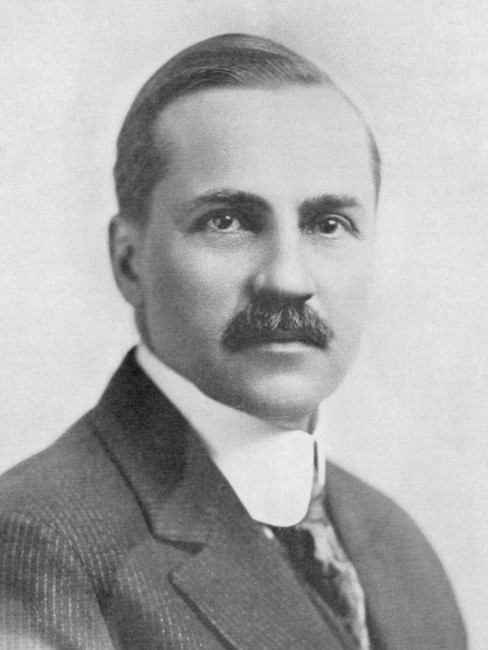
James F. Barker
1916 – 1919James Barker was asked to be the Mechanics Institute’s second president in 1916. He was an engineering graduate from Cornell University and believed in emphasizing technical training. Barker’s main interest was the promotion of secondary education. He remained in the position until 1919, when he resigned in order to take a position with the Rochester City School System.
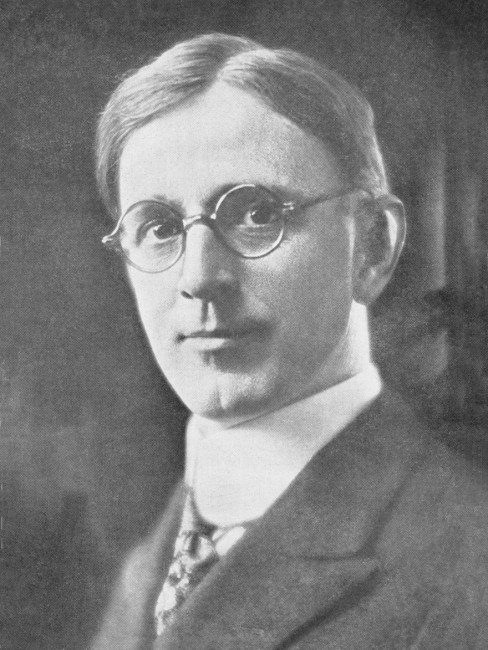
Royal B. Farnum
1919 – 1921Royal B. Farnum assumed the presidency of the institute in 1919. Between 1919 and 1921, more students enrolled at the institute than ever before. This was primarily due to the school’s appeal as an intermediary place of instruction between high school and college-level education. Fundraising efforts carried out during his term allowed the school to remain financially stable.
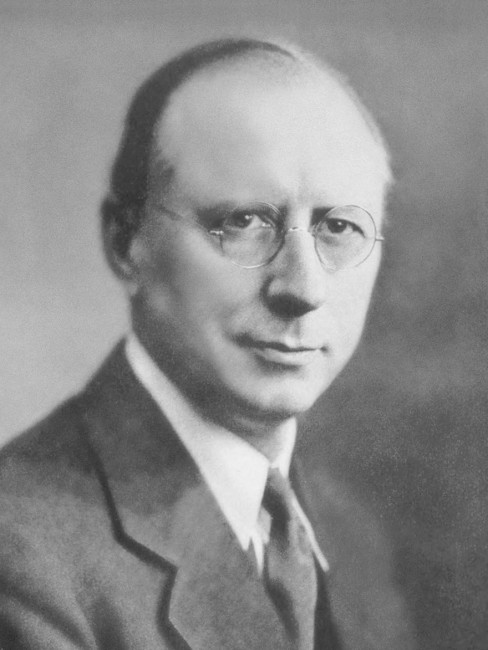
John A. Randall
1922 – 1936The institute waited for a period of nine months before appointing John Randall as Farnum’s successor. Randall was invited to be president in 1922. He had served as the undersecretary to the secretary of war for the United States. He had taught at Pratt Institute, where he was head of the physics department, and at Cheltenham Military School in Pennsylvania. Randall and Carl Lomb engaged in a series of conferences that would benefit the institute’s future. It was eventually decided that the role of the institute was to provide short, intensive courses and not to award degrees.
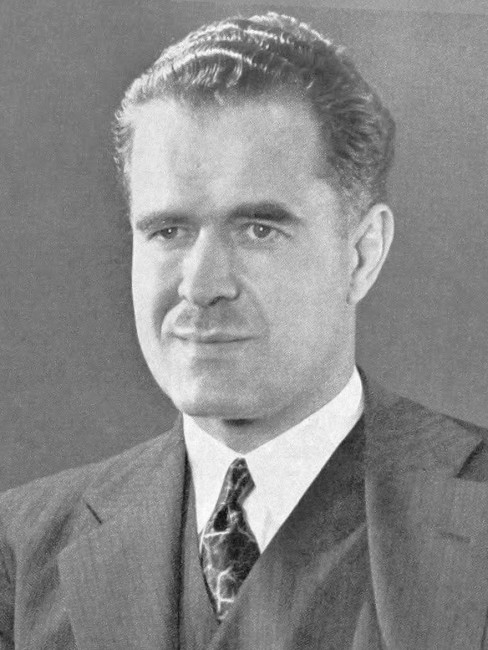
Mark W. Ellingson
1936 – 1969Mark Ellingson’s career at the institute began as a teacher. During his term as president, the institute was able to increase the endowment from $1.5 million in 1937 to $20.8 million three years later. An important merger between the Empire School of Printing and the Mechanics Institute took place in 1937. In 1944, the Rochester Athenaeum and Mechanics Institute was renamed Rochester Institute of Technology. During Ellingson’s presidency, RIT revised its decision regarding awarding degrees. Under Ellingson’s direction, the university began planning for the Henrietta campus in 1961.
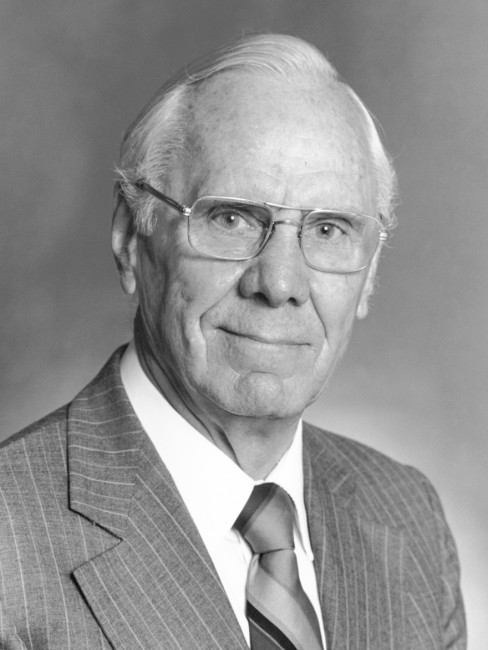
Paul A. Miller
1969 – 1978When Paul Miller began his term in 1969, the campus had just moved to Henrietta. Miller introduced a budgeting procedure to RIT that focused on simply not spending more money than the university had available and allocating funds as they were deemed necessary. Enrollment increased at a steady pace from 1969 to 1981 due to the increasing likelihood of college-level studies leading to a professional job.
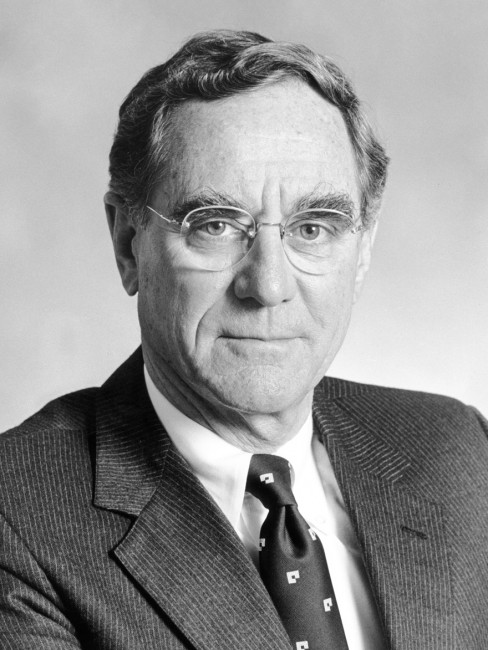
M. Richard Rose
1979 – 1992M. Richard Rose assumed the presidency on January 1, 1979. Miller and Rose shared the belief that students in a technical school should be exposed to more art, literature, philosophy, and culture. Partially out of this interest, and partially due to financial difficulties, Eisenhower College became a part of RIT. The university had made attempts to increase the liberal arts and humanities curriculum. Rose helped launch RIT’s first Ph.D. program, in imaging science, in 1988.
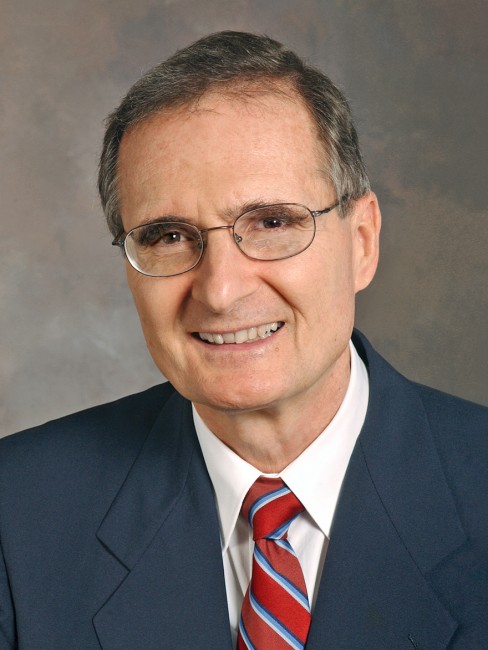
Albert J. Simone
1992 – 2007Albert Simone was inaugurated president in 1992. Under his direction, partnerships with business, industry, and other professions have led to RIT’s continued success. Simone helped launch Ph.D. programs in microsystems engineering (2002), computing and information sciences (2005), and color science (2007). He also spearheaded the addition of the Gordon Field House and Activities Center and approved RIT’s move to Division I men’s hockey.
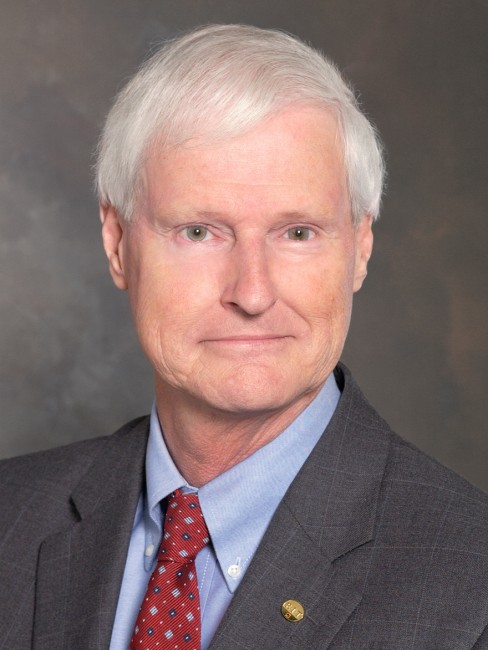
William W. Destler
2007 – 2017William W. Destler became RIT’s 9th president on July 1. He was formerly senior vice president for academic affairs and provost of the University of Maryland at College Park. He had a vision to take RIT to the next level by transforming it into the nation’s first “Innovation University.” RIT’s annual Imagine RIT: Creativity and Innovation Festival was also Destler's idea.
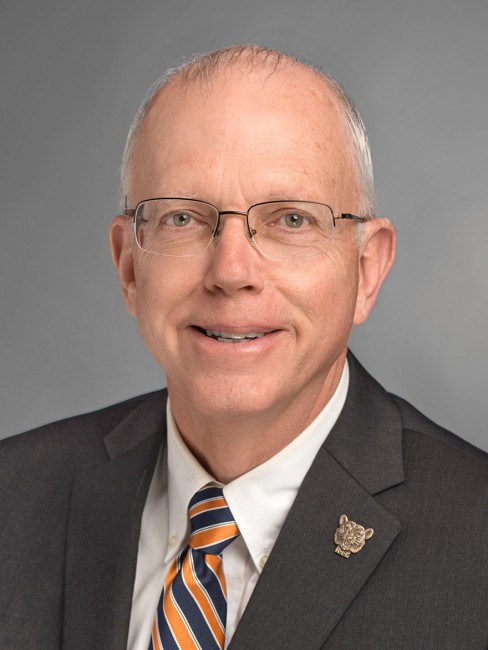
David C. Munson Jr.
2017 – 2025David C. Munson Jr. became RIT’s 10th president in 2017. He was formerly dean of the University of Michigan College of Engineering. Under Munson’s leadership, RIT reached new heights with enrollment of more than 21,000, including growth at international campuses in Dubai, Croatia and Kosovo. This also includes launching a performing arts program that now includes more than 2,000 performing arts scholars. Munson is also credited with successfully leading a $1 billion fundraising campaign, which included many major facility projects such as The SHED (Student Hall for Exploration and Development).
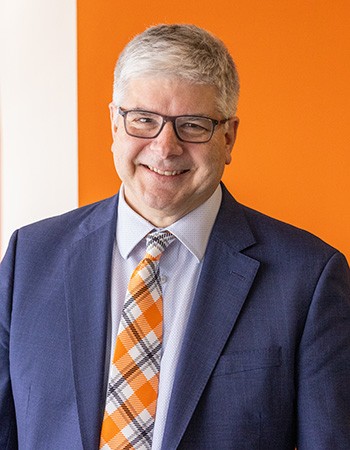
William H. Sanders
2025 – PresentWilliam H. Sanders took the helm of RIT on July 1, 2025. Sanders’ research interests include secure, dependable, and resilient computing systems with a focus on critical infrastructures. He has directed work at the forefront of national efforts to make the U.S. power grid smart and resilient He previously served as the Dean of Engineering at Carnegie Mellon University.

