RIT researchers study teamwork skills in engineering education
NSF-funded research explores how engineering faculty help prepare students for today’s workforce
E. Lamark/RIT
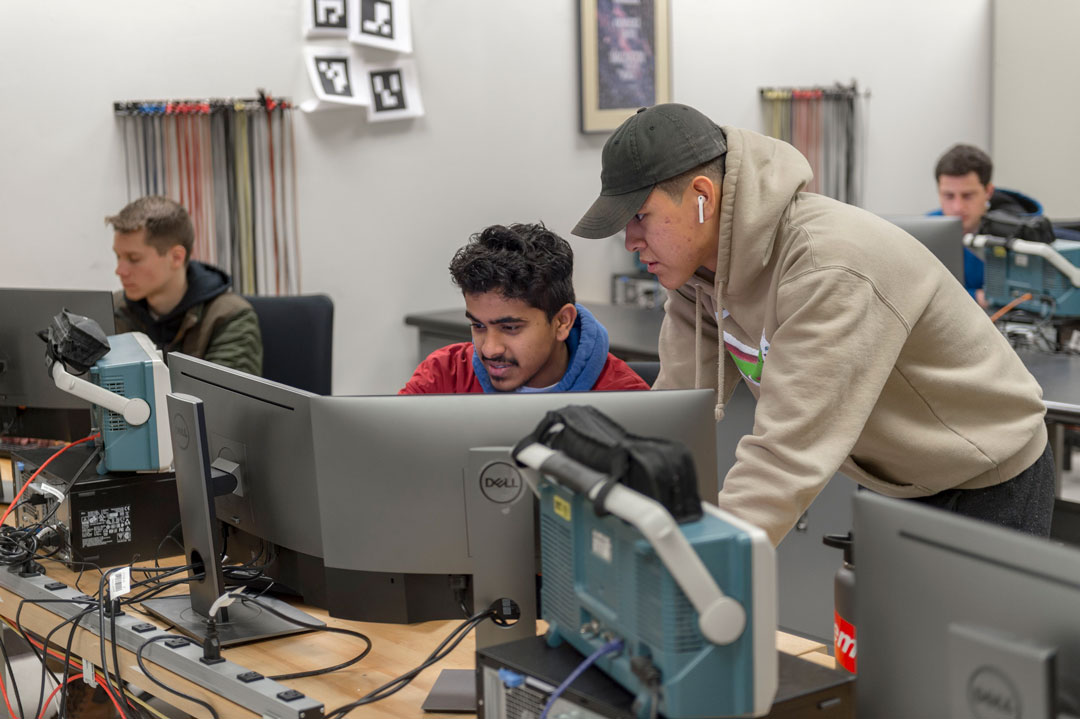
Students in RIT engineering technology courses work closely on projects and learn from faculty both technical and interpersonal skills needed for the workplace.
When Kriz George began his academic career in mechanical engineering, he was among a generation of engineering students being prepared to take on the identity of an engineer as a technical problem-solver.
Today, the doctoral student in physics is part of a research team at Rochester Institute of Technology exploring ways to bridge what engineering students learn as far as technical requirements and needed interpersonal skills, often referred to as soft skills.
“Typically, we are teaching students to have the mindset of an engineer, to build that identity of an engineer as a problem-solver. But there is a demand on engineers that is so much higher than technical skills,” said George ’22 (mechanical engineering at RIT Dubai) ’25 MS (manufacturing and mechanical systems integration). “It is going toward a more social, economic and sustainable responsibility for the work. Engineering education is moving toward these things, and they are more important than ever.”
RIT Photography
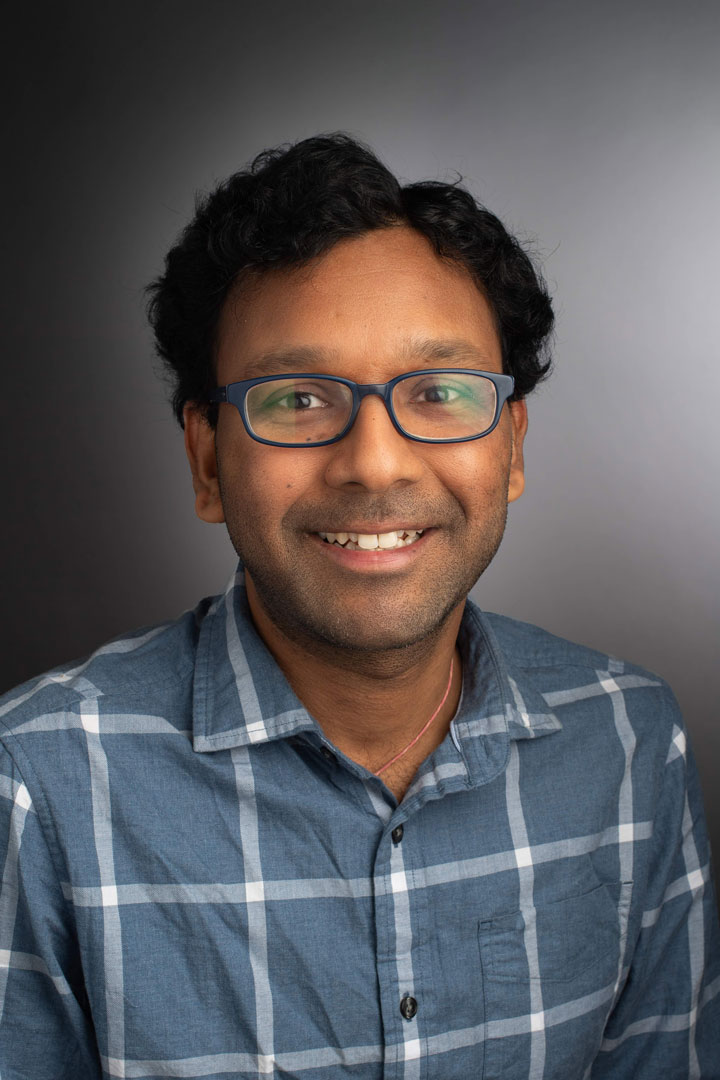
Assistant Professor Ashish Agrawal
George is working closely with Ashish Agrawal, an assistant professor in the First-Year Program Division in RIT’s College of Engineering Technology (CET), on a collaborative project to explore how faculty teaching engineering technology disciplines integrate soft skills —specifically teamwork—to balance the technical with the interpersonal.
The engineering profession is evolving, and improvement in engineering education is needed to close skills gaps, to address how artificial intelligence is impacting the workplace, and how product development should integrate ethical and sustainable practices, said Agrawal.
“The goal is that faculty are better equipped to help students learn teamwork and other interpersonal skills toward addressing these needs. Students can get a project done but our study also focuses on the process of making a more functional team,” he said. “We are helping students practice is a skill that is very important for the workplace.”
Agrawal, who received a National Science Foundation award, is working with Mark Huerta, an assistant professor of engineering education at Virginia Tech. Results will contribute to student learning and faculty teaching methods through modules the research team will develop for courses.
Engineering education research such as this has become a growing area within CET. The college has built academic, professional, and social support programs across its degree programs aimed at retaining first- and second-year students, improving graduation rates, and producing stronger engineering professionals.
Traditional approaches to teamwork entailed faculty providing assignments that require students to work in groups and be evaluated on performance of teamwork based on the team’s project report.
“But a project report does not tell you how well you worked on a team,” Agrawal said. “We are trying to train students for the larger workplace. In industry, the process is as important as the product. More often than not, projects are not individual successes, but a collaborative team effort.”
The current research specific to teamwork is an example of that work where the team assessed foundational first-year project-based learning courses across universities, and early findings indicate gaps in how skills are taught and assessed. Understanding that students in the first-year courses may have varied experiences on teams, faculty must take a more structured approach to provide guidance about technical aspects of a project as well problem-solving and conflict resolution.