Rochester Institute of Technology News
Imaging Science Ph.D.
-
March 13, 2022

Watch, Read: Bringing Space Superiority Into the Light
Air Force Magazine talks to Erich Hernandez-Baquero ’00 Ph.D. (imaging science), executive director of Raytheon Intelligence and Space, about “space superiority.”
-
February 23, 2022

RIT’s remote sensing experts help scientists keep an eye on the Earth
Scientists from RIT’s Chester F. Carlson Center for Imaging Science recently helped successfully bring the new Landsat 9 satellite online and are partnering with a startup on a bold new initiative to help scientists in government and the private sector monitor changes in the Earth’s surface temperature.
-
January 31, 2022

RIT expands Ph.D. portfolio
RIT’s strategic plan calls for adding six to 12 new Ph.D. programs and conferring 50 doctoral degrees every year by 2025. The university already reached the latter goal with 51 Ph.D. degrees conferred in the 2020-2021 academic year.
-
January 31, 2022
Scholars earn coveted early career awards
Three faculty members who chose to start their research careers at RIT received prestigious National Science Foundation CAREER Awards in 2021. Their research aims to advance the foundations of machine intelligence, artificial intelligence, and clean energy.
-
January 31, 2022

Tait Preserve becoming hotbed for interdisciplinary research
RIT has an emerging new hotspot for interdisciplinary research about 25 minutes from the main campus. The Tait Preserve includes a 60-acre lake and a private mile of Irondequoit Creek adjacent to Ellison Park, offering endless opportunities for research, education, and conservation activities.
-
December 6, 2021
RIT scientists develop machine learning techniques to shed new light on pulsars
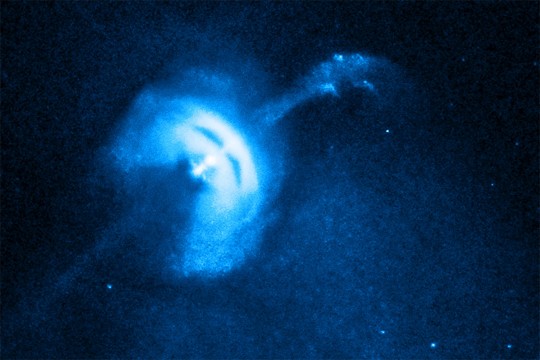
New machine learning techniques developed by scientists at Rochester Institute of Technology are revealing important information about how pulsars—rapidly rotating neutron stars—behave. In a new study published by Monthly Notices of the Royal Astronomical Society, the researchers outlined their new techniques and how they applied to study Vela, the brightest radio pulsar in the sky.
-
October 25, 2021
Roger L. Easton Jr. ’72 Presents Multispectral Imaging Technology at Haverford
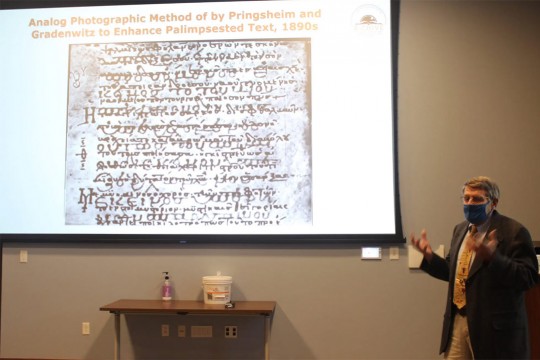
Haverford College features Roger Easton, professor, and Tania Kleynhans, researcher/engineer II, both in the Chester F. Carlson Center for Imaging Science.
-
July 13, 2021

NGA funds RIT researchers to explore the limits of spectral remote sensing imaging systems
The National Geospatial-Intelligence Agency is funding a team of RIT imaging scientists to study the limits of spectral remote sensing imaging systems. The team received a grant of up to $1 million to conduct fundamental research on imaging systems over the next two to five years.
-
April 28, 2021

Ph.D. students complement academic research with internships and co-ops
Undergraduates aren’t the only students taking advantage of RIT’s co-op and internship program. Across the university, Ph.D. students are securing prestigious work experiences to provide important gateways to careers in industry, foundations, and government.
-
April 28, 2021

Rochester Rising: RIT is helping make Rochester a next-generation technology hub
Move over, Silicon Valley. Rochester, N.Y., can be the next great American technology hub.
-
March 12, 2021

RIT researchers helping to develop artificial intelligence systems capable of playing 'Starcraft II'
A team of researchers that develops artificial intelligence systems is putting its work to a unique new test: creating machines capable of playing the popular video game Starcraft II. Researchers think it could be an important stepping stone to advancing practical solutions such as self-driving cars, service robots, and other real-world applications.
-
February 24, 2021

RIT faculty using smartphones and artificial intelligence to help assess crop roots
An RIT faculty member is creating new artificial intelligence systems that could empower agricultural researchers, breeders, nurseries, and other users to analyze the roots of their crops with the power of their smartphones. Assistant Professor Guoyu Lu is receiving a $450,000 New Investigator grant from the U.S. Department of Agriculture to conduct the research.