Citizen Science

RIT turns public participation into global impact
In a lab thousands of miles away from RIT at Ben-Gurion University in Israel, Professor Stanley Rotman is using hyperspectral data to find very small objects in images.
In Denver, citizen Baba Karthik Kalapatapu studies spectra from distant galaxies to satisfy his personal interest in astrophysics and cosmology.
Both Rotman and Karthik Kalapatapu are building on research collected at RIT. When universities make data available to everyone, it not only accelerates research but also fosters education, trust in science, and worldwide collaboration.
“Many of the questions we face today are so wide-ranging in scope that they demand diverse perspectives and meaningful public involvement,” said André Hudson, dean of RIT’s College of Science. “Because science directly affects people’s lives, citizens should be part of the process. When they are, discovery becomes more innovative, more equitable, and more responsive to the needs of society.”
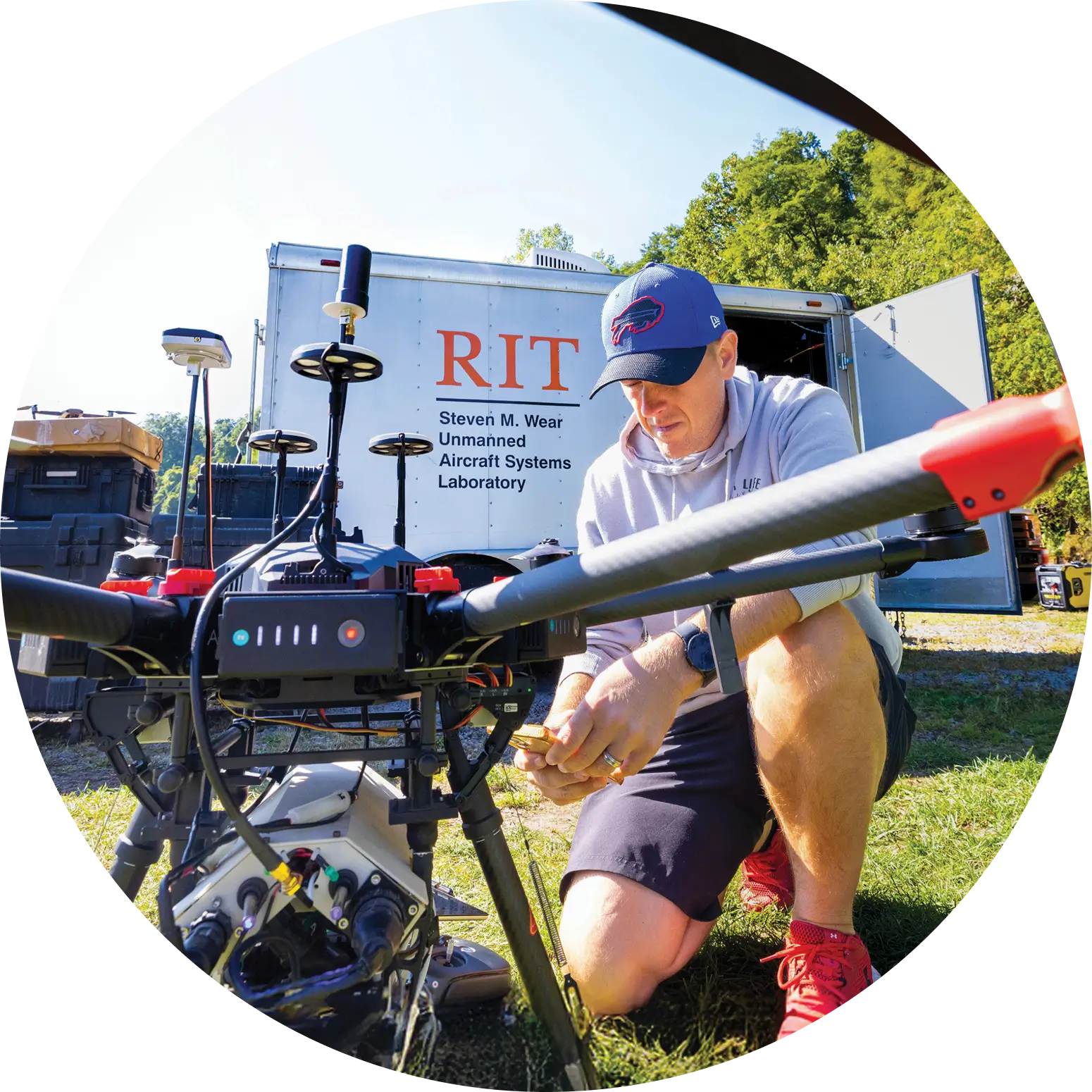
Last fall, the Digital Imaging and Remote Sensing (DIRS) Lab at RIT hosted one of its largest data collections open to the public at RIT’s Tait Preserve in Penfield, N.Y. The goal of the two-week experiment, called ROCX 2025, was to provide data to the global community for educational and research purposes.
The event took years to plan and attracted the attention of people from all over the world, including Rotman.
More than 60 researchers used commercial satellites, aircraft, drones, and ground instruments to acquire remote sensing data coordinated over a defined area for a defined period, making sure the images gathered were properly calibrated and accurate. The full data set will be sorted and disseminated by this summer to help researchers in a range of fields, including surveillance, mine detection, agriculture, and environmental biology.
Using a combination of collection techniques makes the DIRS Lab data unique, said organizer John Kerekes, a research professor in RIT’s Chester F. Carlson Center for Imaging Science.
“There is much earth-observing data out there, but it’s not always coordinated with knowing what’s on the ground,” he said.
Crowdsourcing the universe
Amanda Ziemann ’11 BS/MS (applied and computational mathematics), ’15 Ph.D. (imaging science) is a scientist in the Space Remote Sensing and Data Science Group at Los Alamos (N.M.) National Laboratory. She helped with a previous DIRS Lab collection event as a student in 2012 and was excited to return to RIT for ROCX 2025.
Her student experience made her well prepared for her career, and she will now use the new data in her job. She observed patterns of life perspectives that she can then compare against temporal hyperspectral imaging data to develop algorithms to advance the field.
“Having a data set that’s open, that’s well vetted, calibrated, and labeled makes it so that it’s easier for us to communicate our technical advancements to the community,” Ziemann said. “There aren’t very many ground truth public remote sensing hyperspectral data sets. We can make good use of the data for our research needs, and that’s what we’re excited about.”
Other RIT researchers are engaging the public in their work to study the evolution of galaxies.
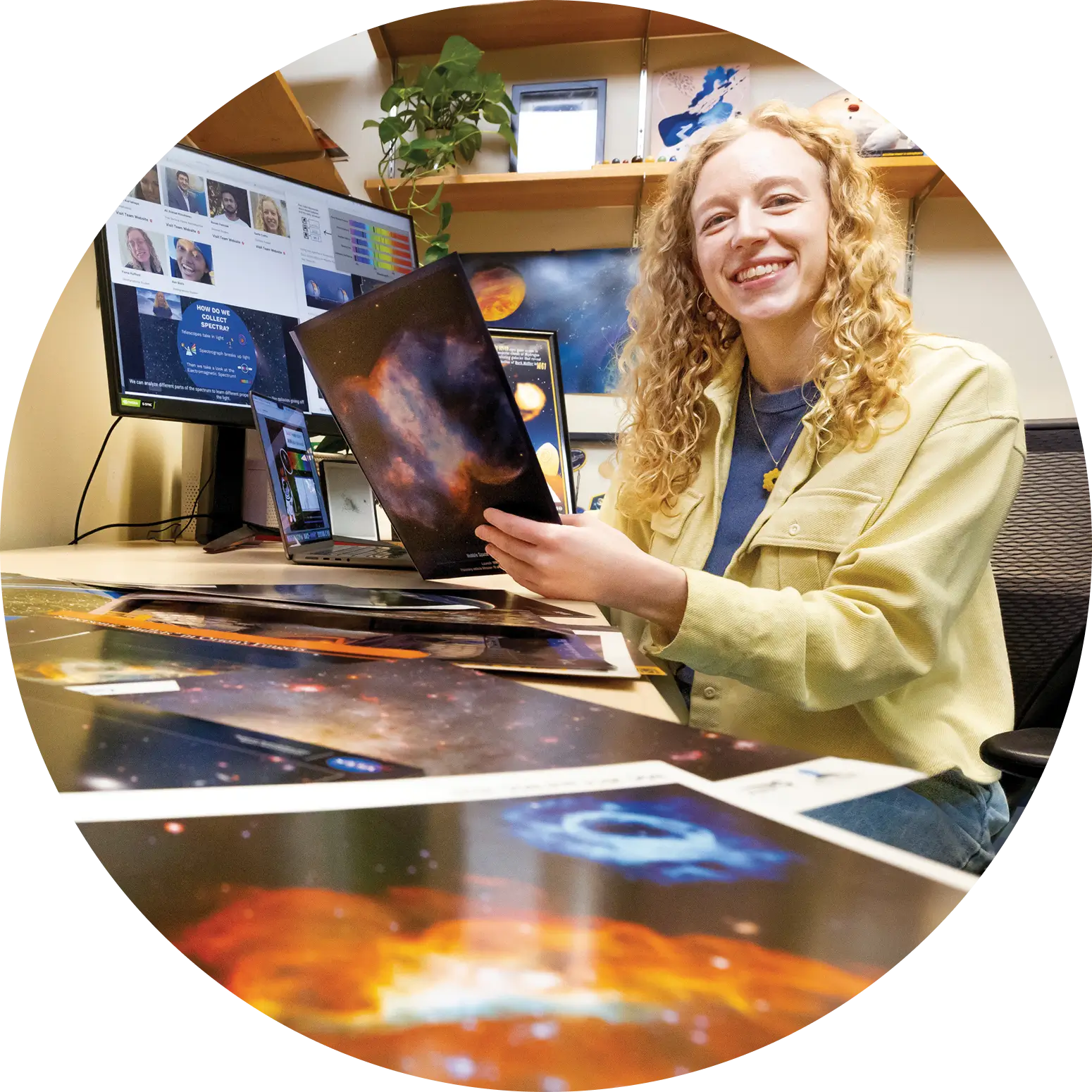
Astrophysical sciences and technology Ph.D. student Sadie Coffin received funding through the Future Investigators in NASA Earth and Science Space Technology program to continue work on Redshift Wrangler, which was started by her adviser, Professor Jeyhan Kartaltepe.
Redshift Wrangler is a participatory science project where people from around the world are trained to look at data to study galaxies and their spectra. By looking at the light galaxies give off at different wavelengths, volunteers are helping researchers put together a full timeline of how a galaxy forms, grows, interacts with other neighboring galaxies, and changes over billions of years.
“There’s certainly not just one route to science,” said Coffin. “There are a lot of advantages to having human eyes on our data. Volunteers can take our data, ask their own questions, and do their own science that we can’t do as one person or a small team of people.”
“Having data available to the public is extremely important,” said Karthik Kalapatapu, who is an associate project manager for a renewable energy company.
“You either learn how to read research papers or trust researchers who are giving talks about it, but for me, I need to understand the data. The fact that I can sit in my apartment, open a laptop, and study wavelengths of light from billions of years ago to understand the evolution of the cosmos is pretty neat.”
Coffin also noted that the Redshift Wrangler community, made up of diverse ages and backgrounds of people from all over the world, shows that community science benefits not just individual projects but scientific research as a whole.
“I think it makes people a lot more likely to have trust and understanding of why science is so important,” she said.
One foot at a time
Back down on earth, Elle Barnes, an assistant professor in the Thomas H. Gosnell School of Life Sciences, is using citizen science as part of a bigger group looking at and teaching about biodiversity.
One Cubic Foot first came to Rochester in 2015. It is a Smithsonian-backed project started by photographer and environmentalist David Littschwager. Littschwager travels the globe and uses biocubes (one-cubic-foot frames) to document the vast ecosystem inside a small area.
He partnered with the Seneca Park Zoo in Rochester in 2015 to look at the Genesee River and returned last summer to check on its revitalization 10 years later.
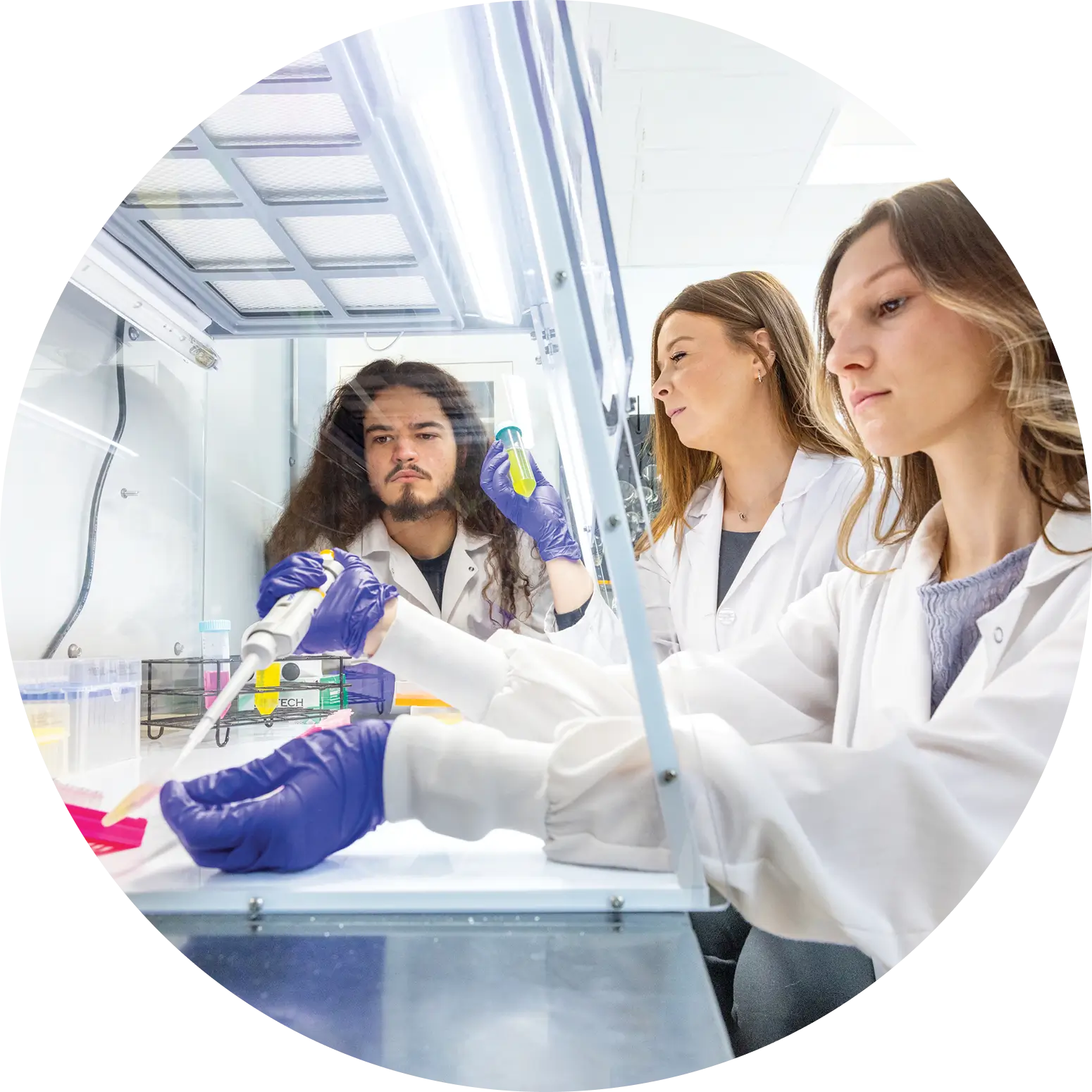
Barnes, with her background in genomics and environmental DNA (eDNA), joined the project to help collect samples and then to retrieve eDNA from the water to determine all the organisms living in the ecosystem, including those that cannot immediately be seen.
The goal of the ongoing project is to get people to collect samples that are then sent to Barnes’s lab. The more eDNA samples there are, the better understanding of biodiversity in the Rochester ecosystem.
“If you continue to sample over time, and you employ citizens who are excited to go out and study the health of the river, you’ll have a much better understanding about the fruits of your conservation labor,” said Barnes. “I also think that it’s critical to the scientific field that you take the time to talk to the people that directly benefit from your work.”
Rotman, a professor of electrical and computer engineering, has been using RIT’s data sets for nearly two decades. At a small university with small funds, he said, getting hyperspectral data is difficult. He is impressed with how well the data is presented and how easy it is to access.
The data from ROCX 2025 will help him not only with his own research, but also with educating the next generation to follow in the field of remote sensing and hyperspectral imaging.
“I can’t have undergraduate classes and undergraduate projects unless I know I have the data available,” said Rotman. “This is reliable data, and RIT does it beautifully.”
Get involved
-
ROCX
The full data set will be available this summer on the ROCX2025 website.
-
Redshift Wrangler
Study spectroscopy on the Redshift Wrangler website.
-
One Cubic Foot
Learn about outreach opportunities on the MEGA LAB at RIT website.