Personalized Healthcare Technology

Personalized Healthcare Technology integrates interdisciplinary research to tackle problems in unconventional ways, creating a new future in healthcare delivery and individually empowered health.
$1T
Estimated medical costs for cardiovascular disease by 2030
9
Colleges at RIT involved in personalized health care technology research
101
Combined years of experience in academia among six faculty mentors
Key Faculty


View full list of affiliated faculty
Related Degree Programs
- Applied and Computational Mathematics MS
- Applied Mathematics BS
- Applied Statistics MS
- Applied Statistics and Actuarial Science BS
- Bioinformatics and Computational Biology BS
- Bioinformatics MS
- Biomedical Engineering BS
- Biomedical Sciences BS
- Biotechnology and Molecular Bioscience BS
- Computational Mathematics BS
- Electrical Engineering BS
- Electrical Engineering MS
- Human-Computer Interaction MS
- Human-Centered Computing BS
- Microelectronic Engineering BS
- Microsystems Engineering Ph.D.
- New Media Interactive Development BS
- Health Systems Management MS
- Web and Mobile Computing BS
Related News
-
November 8, 2019

RIT conducts clinical trial on metabolic syndrome
RIT is seeking individuals diagnosed with metabolic syndrome to participate in a national clinical trial. The study will evaluate a wellness program designed to reverse conditions leading to heart disease, Type 2 diabetes and stroke.
-
October 21, 2019
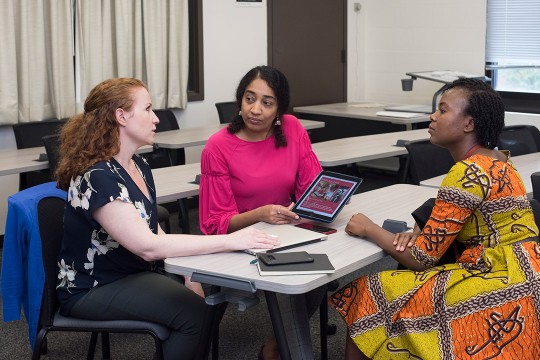
Parenting app for mothers being developed at RIT
Research is underway at RIT to create an app that will serve as a resource to help young mothers answer questions about raising a child, connect them with programs and resources, as well as foster a virtual parenting community.
-
October 21, 2019

RIT researcher receives NSF grant to help build a synthetic neuron and neural network
Researchers from RIT and six other universities are teaming up to build synthetic neurons and a programmable network of such neurons in an effort to better understand the rules of life. The project is part of the National Science Foundation’s “Big Ideas” initiative— 10 bold, long-term research and process ideas that identify areas for future investment at the frontiers of science and engineering.
-
October 15, 2019

RIT wins $1.4M to help homeless with opioid addiction, mental illness
Making addiction treatment and mental health services accessible to homeless people via TeleHealth is the focus of a federally funded program at RIT.