Multi-messenger Astronomy

Researching a new way of understanding the universe, resolving longstanding astronomical mysteries, and even questions about the human existence.
Research Centers
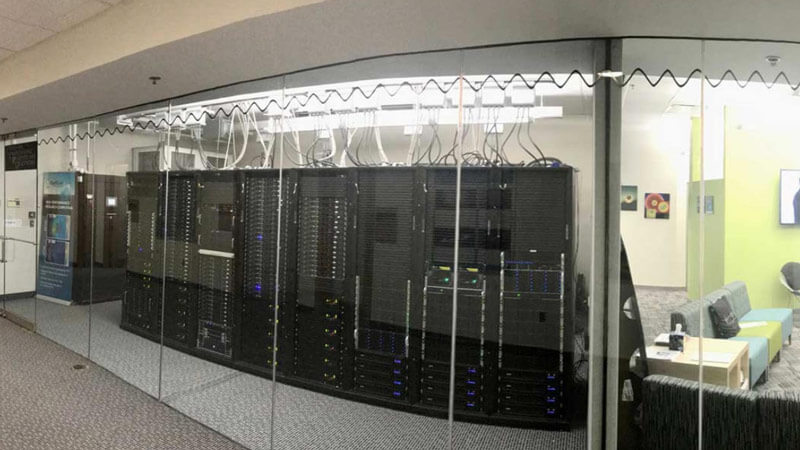
Center for Computational Relativity and Gravitation
Advances knowledge and discovery at the frontiers of relativistic astrophysics, gravitational physics, and cosmology, while pursuing new exciting research directions, in connection with new experiments and observations.
Learn more about the Center for Computational Relativity and Gravitation
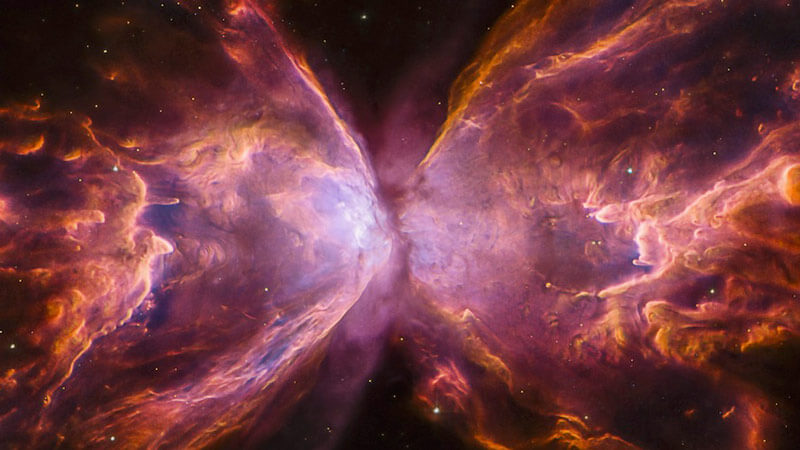
Laboratory for Multiwavelength Astrophysics
Fosters the utilization and advancement of cutting-edge techniques in multiwavelength astrophysics by RIT faculty, research staff, and students, so as to improve human understanding of the origin and fate of the universe and its constituents.
Learn more about the Laboratory for Multiwavelength Astrophysics
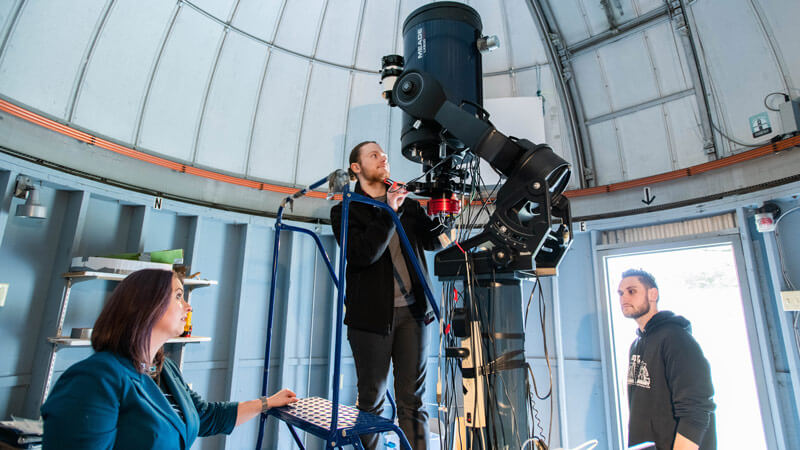
RIT Observatory
Established to promote the undergraduate teaching and research programs in astronomy. The Observatory, on the south-eastern corner of the RIT campus, features two computer-controlled telescopes and a host of portable ones.
Key Collaborations
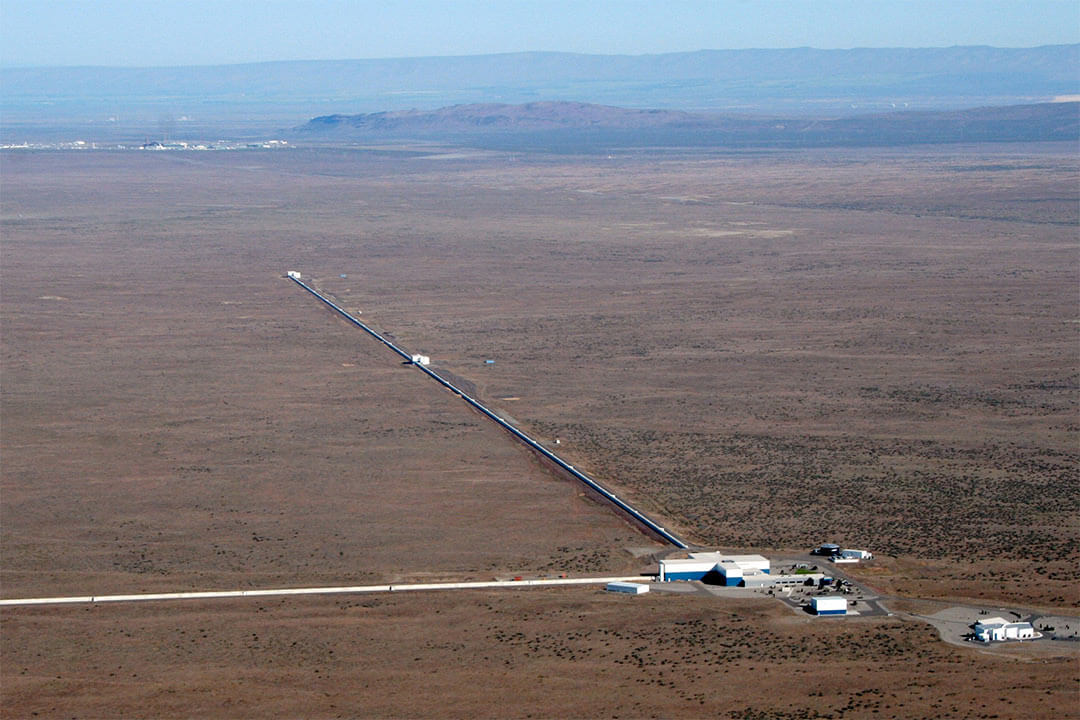
Laser Interferometer Gravitational-Wave Observatory (LIGO)
The National Science Foundation’s Laser Interferometer Gravitational-Wave Observatory (LIGO) is a Nobel Prize-winning project that hunts for gravitational waves. LIGO made history with the first direct detection of gravitational waves in 2015. RIT’s CCRG has a large and active group of about 18 faculty, students and postdoctoral researchers involved in the LIGO Scientific Collaboration.
North American Nanohertz Observatory for Gravitation Waves (NANOGrav)
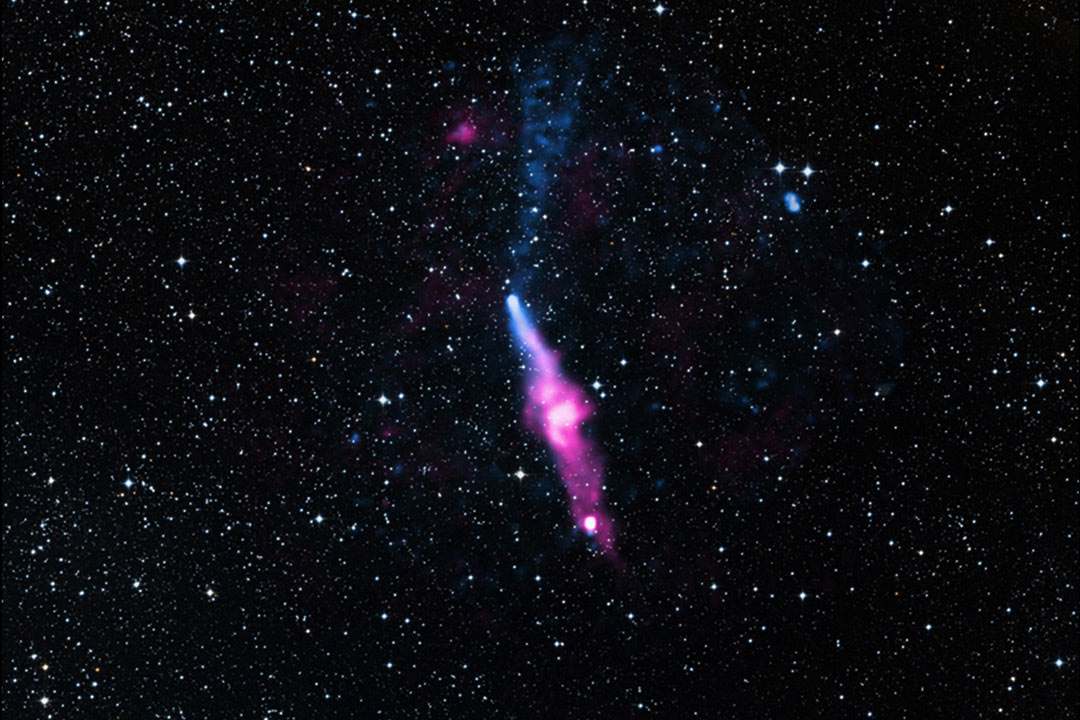
RIT’s CCRG and Insituto Argentino de Radioastronomía (IAR) began systematic pulsar timing studies in 2019. RIT and IAR’s observations will contribute to the larger efforts of the North American Nanohertz Observatory for Gravitation Waves (NANOGrav), a collaboration of scientists working to detect and study the impact of low frequency gravitational waves passing between the pulsars and the Earth. Using pulsar timing observations, the NANOGrav collaboration is striving to discover a supermassive black hole by 2022.
Large Synoptic Survey Telescope (LSST)
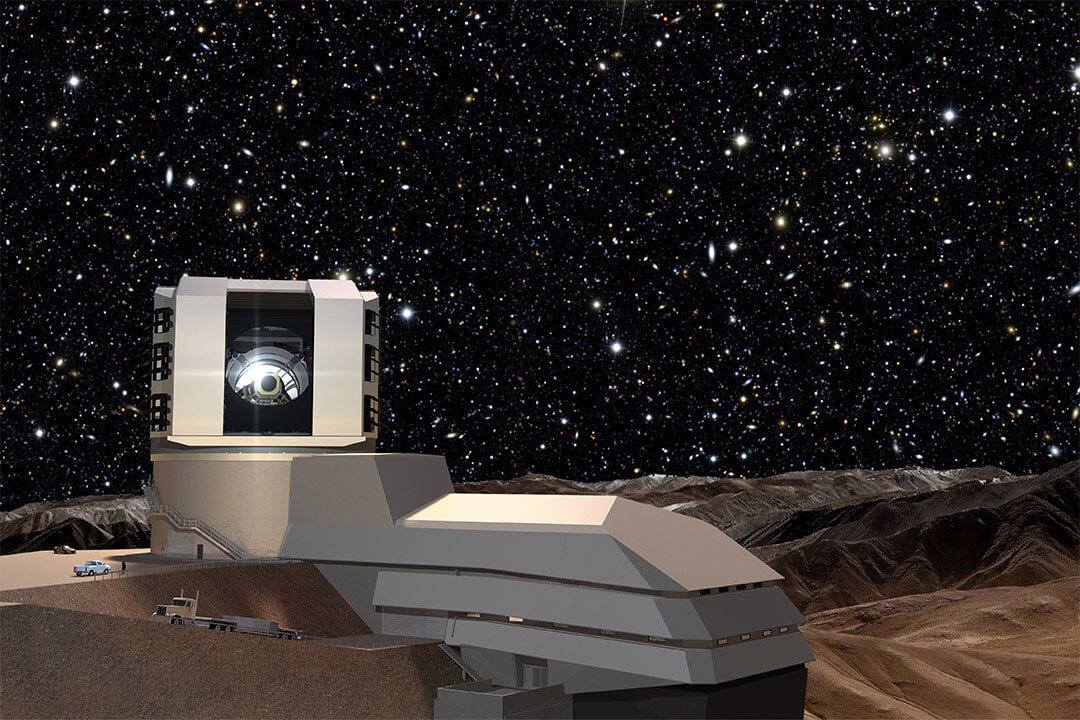
RIT is part of the LSST Corporation, a group of nearly 40 U.S. and Chilean institutional members focused on preparing the scientific community to use the Large Synoptic Survey Telescope (LSST), which will conduct the most ambitious all-sky survey of the universe to date. As a part of the LSST Corporation, RIT is among a science community that includes many of the world’s leading astrophysicists, cosmologists and particle physicists.


Related Degree Programs
- Applied and Computational Mathematics MS
- Applied Mathematics BS
- Applied Statistics MS
- Applied Statistics and Actuarial Science BS
- Astrophysical Sciences and Technology MS
- Astrophysical Sciences and Technology Ph.D.
- Computational Mathematics BS
- Electrical Engineering BS
- Electrical Engineering MS
- Microelectronic Engineering BS
- Microsystems Engineering Ph.D.
- Physics BS
- Physics MS
- Telecommunications Engineering Technology MS
Related News
-
October 29, 2020

LIGO and Virgo announce 39 new gravitational wave discoveries during first half of third observing run
The LIGO Scientific Collaboration and Virgo Collaboration released a catalog of results from the first half of its third observing run (O3a), and scientists have detected more than three times as many gravitational waves than the first two runs combined. Several researchers from RIT’s Center for Computational Relativity and Gravitation were heavily involved in analyzing the gravitational waves and understanding their significance.
-
September 9, 2020

RIT scientists contribute to the first discovery of an intermediate-mass black hole
The LIGO Scientific Collaboration and the Virgo Collaboration recently announced the discovery of GW190521, the most massive gravitational wave binary observed to date, and Rochester Institute of Technology scientists played an important role in identifying and analyzing the event.
-
April 22, 2020
NSF funds RIT researchers to develop code for astrophysics and gravitational wave calculations
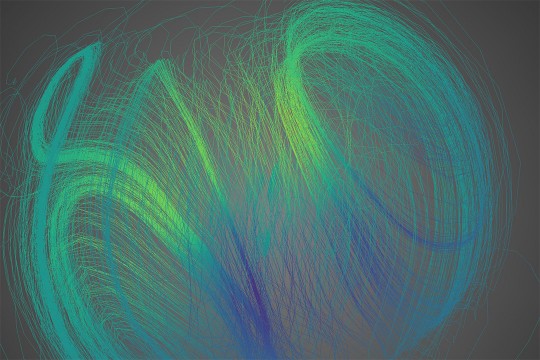
The National Science Foundation recently awarded researchers at RIT, the University of Illinois at Urbana-Champaign, Louisiana State University, Georgia Tech and West Virginia University grants totaling more than $2.3 million to support further development of the Einstein Toolkit, a community-developed code for simulating the collisions of black holes and neutron stars, as well as supernovas and cosmology.
-
December 12, 2019

RIT and IAR observe pulsars for the first time from South America
A team from RIT and the Instituto Argentino de Radioastronomía (IAR) upgraded two radio telescopes in Argentina that lay dormant for 15 years in order to study pulsars, rapidly rotating neutron stars with intense magnetic fields that emit notably in radio wavelengths. The project is outlined in a new paper published in Astronomy and Astrophysics.