Nutritional Sciences Bachelor of Science Degree

RIT’s nutritional sciences degree combines nutrition, biology, and behavioral health to prepare you to design and administer health, nutrition, and wellness programs.
100%
Of all incoming RIT first-year and transfer students receive aid
#16
Best Health Care Jobs: Dietitian/Nutritionist
Overview for Nutritional Sciences BS
Why Pursue a Degree in Nutritional Science at RIT
A Variety of Career Paths: Become well-prepared for careers in dietetics, food science, and nutrition-related health care, or for graduate programs in medicine and the health sciences.
An Excellent Pre-Med Major: Complete the required pre-med course work in biological and physical sciences while gaining nutrition knowledge pertinent to your future medical career.
Pre-Med/Pre-Health Advising Program: Receive personalized guidance to become a competitive candidate for admission to medical schools and graduate programs in the health professions.
Two Combined Accelerated Bachelor’s/Master’s Degree Pathways: Combine your BS in nutritional sciences with an MS in dietetics and nutrition or an MS in health and well-being management.
Become a Registered Dietitian Nutritionist (RDN): By earning the dual degree (BS in nutritional sciences/MS in dietetics and nutrition) you are eligible to sit for the Registered Dietitian Nutritionist (RDN) credentialing exam.
STEM-OPT Visa Eligible: The STEM Optional Practical Training (OPT) program allows full-time, on-campus international students on an F-1 student visa to stay and work in the U.S. for up to three years after graduation.
Understanding nutrition and its power to treat and prevent illness and disease can have a remarkable impact on our health. Educating the public about the benefits of nutrition and the various ways healthy living can improve our well-being is the focus of the BS degree in nutritional sciences.
What is Nutritional Science?
Nutritional science encompasses the study of food, nutrients, and dietary substances and their effects on the human body. The field investigates the complex interactions between diet and health with a goal of developing strategies that improve health and reduce the risk of disease. It’s a dynamic health care field where nutritional scientists identify ways to help people and communities live healthier, better manage their health, and prevent disease and/or disease progression.
Studying Nutrition at RIT
The nutritional sciences degree blends biological, chemical, and behavioral sciences to create a potent mix of course work that prepares you for dynamic careers that translate the science of food into treatment, policy, and practice. RIT’s bachelor’s degree in nutrition covers the study of specific nutrients and their functions, the development of dietary standards, and the application of these standards to a person’s life. You will learn to analyze food and to develop strategies to help people make dietary changes that can positively impact good health in both the short- and long-term.
Learn more about the program goals of the bachelor’s degree in nutritional sciences.
Comprehensive Nutrition Courses
RIT’s nutrition major offers a challenging selection of nutrition courses that prepare you with an in-depth understanding of nutrition as an important factor of good health. An effective nutrition professional is skilled in working with people to address behavioral issues, teach clients about nutrition and health properties in food, and offer nutrition guidance, advice, and supervision. The nutrition major offers a comprehensive curriculum that provides a solid foundation in nutritional sciences as well as skills in leadership, communication, problem solving, and team dynamics.
Elective Nutrition Courses
The curriculum is flexible in allowing you to choose elective courses that explore areas of nutrition you find interesting or provide a level of knowledge that aligns with your career goals. We offer more than 180 elective courses covering a range of topic areas related to nutritional sciences and its related fields. A sampling includes:
| Field | Sample Elective Courses* |
|---|---|
| Anthropology | Cultural Anthropology; Cuisine, Culture, and Power; Bodies and Culture |
| Biology | Food Microbiology; Genetic Engineering; Plants, Medicine, and Technology |
| Exercise Science | Sports Physiology and Life Fitness; Coaching Healthy Behaviors; Training High Performance Athletes |
| Medicine | Community Healthcare; Endocrinology; Human Development |
| Psychology and Clinical Psychology | Addiction Pharmacology; Learning and Behavior; Social Psychology |
* For a full list of nutrition elective courses please contact the program chair.
Enhance Your Nutrition Degree
Adding a minor in a complementary area of study deepens your expertise in the core areas of nutrition, exercise, health care, public health, and more. With dozens of minors to choose from, you’ll have your choice of topics to study. While you may choose any minor or immersion as part of your studies, select minors serve to boost the bachelor's degree in nutritional sciences. These include:
- Exercise Science
- Global Public Health
- Health Communication
- Health, Culture, and Society
- Psychology
- Spanish
Prospective Students: Effective January 1, 2024, a minimum of a master's degree is required to be eligible to sit for the Registered Dietitian Nutritionist (RDN) credentialing exam. RIT’s accelerated dual degree in nutritional sciences (BS) and dietetics and nutrition (MS) meets these requirements. Learn more about Becoming a Registered Dietitian Nutritionist.
Furthering Your Education in Nutritional Sciences
Today’s careers in nutrition benefit from advanced degrees that are grounded in real-world experience. RIT’s Combined Accelerated Bachelor’s/Master’s Degrees enable you to earn both a bachelor’s and a master’s degree in as little as five years of study, all while gaining the valuable hands-on experience that comes from co-ops, research, study abroad, and more.
For nutritional science majors, two accelerated pathways enable you to pair the BS degree with a master’s degree to broaden your career opportunities and prepare you for exciting careers in the nutritional sciences field.
- BS Nutritional Sciences/MS Dietetics and Nutrition: The nutritional sciences BS degree provides a solid foundation in science, nutrition, dietetics education, and the business of nutrition. The dietetics and nutrition MS enhances your knowledge of medical nutrition therapy, research methods, nutrition research, and the delivery of nutrition intervention through advanced-level nutrition courses and supervised experiential learning. Upon successful completion of the BS/MS degree, you will be prepared to sit for the Registered Dietitian Nutritionist (RDN) credentialing exam and become a graduate-trained Registered Dietician Nutritionist.
- Nutritional Sciences BS/Sustainable Systems MS: In this comprehensive accelerated dual degree, you will build a strong foundation in the biological aspects of human nutrition while developing the systems thinking skills needed to lead change across global food systems. You will explore how environmental, social, and economic factors shape nutrition and health outcomes and analyze the full food value chain, from soil health and water use to food access and dietary patterns. The course work in the sustainable systems MS deepens this integration with advanced study in sustainability concepts, systems modeling, and applied projects focused on developing evidence-based strategies for more sustainable and equitable food systems. This accelerated program prepares you for impactful careers in sustainable food policy, environmental health, corporate social responsibility, nonprofit advocacy, and related fields.
Nutritional Sciences as a Pathway to Medical School
Nutrition is a powerful tool in managing health. By making positive nutritional changes to one’s lifestyle, people suffering from a host of medical issues–from obesity, diabetes, kidney ailments, heart disease, and more–can treat and manage them effectively. Diet also plays a powerful role in preventing disease.
In medical school, less than 20 hours of instruction over four years are dedicated to the role of nutrition in medical care. The known impact of lifestyle on chronic diseases highlights the importance of nutrition education for medical professionals. An undergraduate degree in nutritional sciences is an excellent pre-med major. Not only does a nutrition major fulfill the pre-med requirements for course work in biological and physical sciences, but it also provides you with the comprehensive nutrition knowledge needed to treat and manage health issues. A background in nutrition, paired with a medical degree or an advanced degree in other health professions, such as nursing, dentistry, and physical or occupational therapy, positions you well for providing comprehensive patient care as a medical professional.
Pre-Med/Pre-Health Advising
RIT’s Office of Pre-Health Advising offers an advising program that’s open to all majors and provides personal, individualized academic counseling to help you create a comprehensive long-term strategy to assist you in building successful applications to medical, dental, and veterinary schools or graduate degrees in the health professions (e.g., occupational therapy, physical therapy, etc.). Our pre-health advisors will have in-depth conversations with you around critical topics that include academic planning and course selection, MCAT and other admission exams, undergraduate research opportunities, clinical experiences and field work, timelines, and much more. Learn more about pre-med/pre-health advising.
What Can You Do with A Nutritional Sciences Degree?
With its grounding in science, nutrition, dietetics education, the business of nutrition, and a foundation of nutrition research methodology, RIT’s nutritional sciences major prepares you for a wide range of career opportunities across all areas of health care, including preparation for graduate programs in medicine and the health sciences.
Careers in Nutrition
RIT’s nutrition major prepares you for careers as a health professional or an administrator of nutrition and health promotion programs. These positions provide guidance to the public on how to use nutrition as a tool to achieve better health, as a preventive measure to stave off disease and health issues, or as a tool in an overall treatment plan that helps maintain health.
Nutritionists and nutrition scientists apply their knowledge to:
- Guide patients in better utilizing food and nutrition to manage and treat a variety of health issues
- Help businesses offer employee wellness programs
- Assist food systems administrators and engineers involved in food innovation and technology
- Oversee government programs addressing food insecurity and population health issues
Nutrition Certifications and Advanced Degrees
Careers in nutrition are diverse, ranging from health guidance and nutritional counseling, policy development, and communications to social and community services. You can choose to select electives to become eligible to sit for the Certified Health Education Specialist (CHES) credential, a respected qualification in health care education. By earning the dual degree in nutritional sciences and dietetics and nutrition, you are eligible to sit for the Registered Dietitian Nutritionist (RDN) credentialing exam.
Professional positions where expertise in nutrition is paramount are also available in a range of diverse settings, including sports fitness programs, the hospitality industry, nutrition writing, federal and school nutrition programs, and more.
A Supportive, Welcoming Nutritional Sciences Community
Two key differences in RIT’s nutritional sciences major is our small program size and our dedicated faculty members. Our major is small by design, but robust in offering elective courses and individualized attention. Faculty members are experts in nutrition education and provide personalized, hands-on guidance to students. You’ll build one-on-one relationships with your professors, who will guide you on course selection, encourage your exploration of different professional endeavors, and advise you on career paths that align with your interests and goals.
You will also benefit from the resources and advantages of being at RIT, a top 100 national university, including:
- Nationally Ranked Co-op Program: There’s a reason RIT's co-op and internship program is nationally ranked by U.S. News & World Report. Our co-op program is designed to provide you with career experience–early and often–in a variety of nutrition and dietetic environments. You’ll gain career experience that sets you apart and that employers look for in their next top hires.
- Hundreds of Clubs and Student Organizations: Develop your leadership skills, boost your resume, make new friends, and expand your community. With more than 300 clubs to choose from, you’ll find the perfect place to grow and learn. For nutritional science majors a few clubs of interest include the Student Dietetics and Nutrition Association, RIT Vegan Club, and Global Public Health Association, to name a few.
- Study Abroad Opportunities: Immerse yourself in a different culture and gain a global perspective on health and nutrition with study abroad for health sciences. Study the Mediterranean Diet in Croatia or childhood anemia in Ghana. Study abroad opportunities are also available at RIT’s global campuses in China, Croatia, Dubai, and Kosovo, or through affiliate programs at other universities.
Student Dietetics and Nutrition Association
The Student Dietetics and Nutrition Association is a student club comprised of nutrition students and supports experiential learning outside of the classroom. The club promotes health and nutrition on campus as well as volunteer opportunities with local organizations. Club activities include volunteering at local food banks and schools, presenting health related information at RIT events, and educational activities for members.
-
Meet Us on Campus
Learn about academics, co-op and internships, financial aid, and more at one of our on-campus open houses.
October 12 | October 24 | November 14
-

Apply for Fall 2027
Early Decision I and Early Action deadlines are November 1.
Careers and Cooperative Education
Typical Job Titles
| Health/Nutrition Educator | Wellness Coordinator | Nutritionist |
| Health Promotion Coordinator | Nutrition Research Associate | Public Health Nutritionist |
| Nutrition Project Coordinator | School Wellness Coordinator |
Industries
Cooperative Education
The nutritional sciences major requires two 400-hour cooperative education experiences in a setting related to food and nutrition, or a health discipline related to your future career goals. Co-op is full-time, paid employment in nutrition and health care. The majority of nutritional sciences majors complete their co-ops in the summer. Learn more about cooperative education and its benefits.
Beyond the Classroom: The Rochester Health Care Community
As a nutritional sciences major, the Rochester metropolitan area is a hands-on lab for experience-based learning. Two major health systems–Rochester Regional Health and UR Medicine–call Rochester home. Both provide comprehensive health care services and serve as co-op, internship, and clinical rotation sites for students in RIT’s health sciences majors. In addition, RIT has partnerships with a range of community organizations that expose students to a wide variety of nutrition-related career paths. A selection of the 50+ community partners with whom we collaborate include:
- Abbott Nutrition
- American Dairy Association and Dairy Council
- American Heart Association
- Food and Drug Administration
- Foodlink
- Gates-Chili School District
- Heritage Christian Services
- Hillside Family of Agencies
- Jewish Senior Life
- Ortho-Clinical Diagnostics
- Rochester Psychiatric Center
- Rochester Regional Health
- UR Medic
- Wegmans
- WIC
Featured Work and Profiles
-

No, You Can’t Live Off Protein Shakes; RIT Student Teaches Healthy Eating
RIT dietetics and nutrition student Madison Degenfelder (BS/MS) simplifies nutrition through Tiger Nutrition, a free wellness program for RIT students.
Read More about No, You Can’t Live Off Protein Shakes; RIT Student Teaches Healthy Eating -

Dispelling Myths Through Research: Student Debunks Misinformation on Athletes' Eating Habits for Peak Performance
Abigail Morrissey's research entails analyzing the eating habits of RIT student-athletes to establish trends and patterns.
Read More about Dispelling Myths Through Research: Student Debunks Misinformation on Athletes' Eating Habits for Peak Performance -

Student Research Experiences
Undergraduate and graduate students in the Wegmans School of Health and Nutrition gain valuable, hands-on research experience through classroom and community-based opportunities.
Read More about Student Research Experiences -
Nutrition Guide Fuels RIT Athletes
The Performance Nutrition guide, a collaborative effort between the Wegmans School of Health and Nutrition and RIT Athletics, is a resource for student-athletes to support their performance through...
Read More about Nutrition Guide Fuels RIT Athletes -
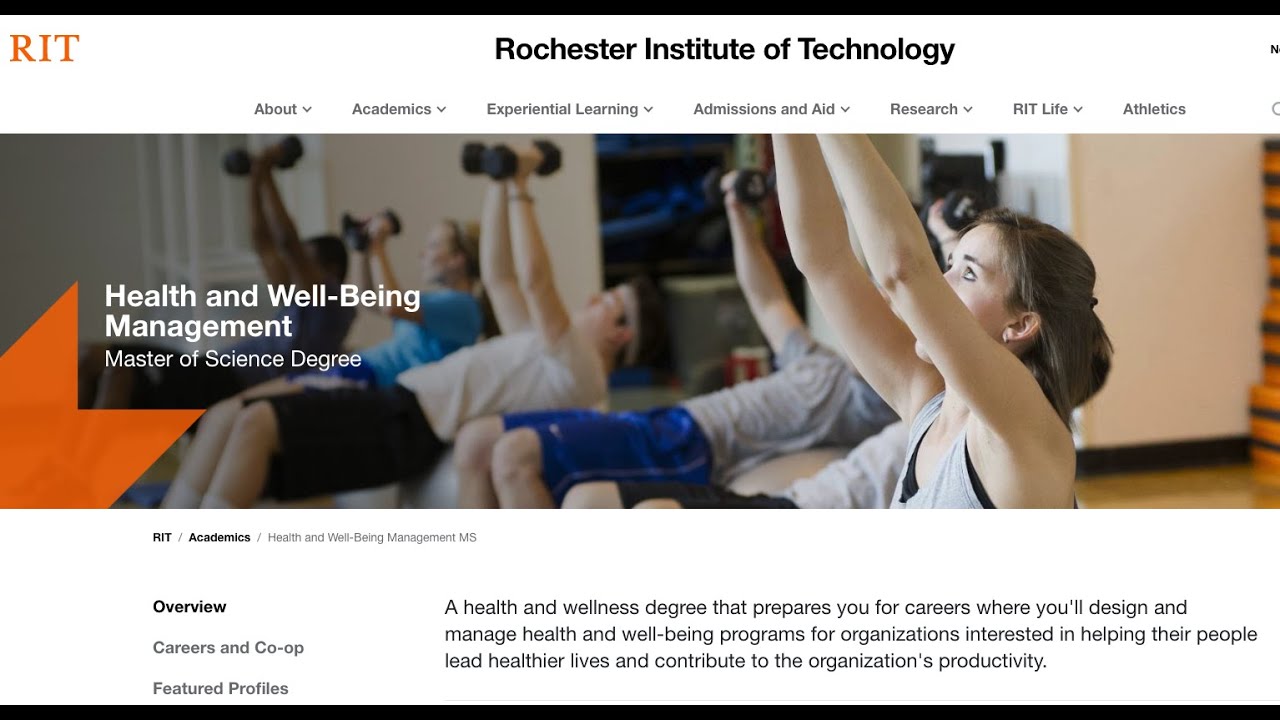
Part-time graduate education is achievable.
Part-time graduate education is achievable.
Read More about Part-time graduate education is achievable. -

Food and Culture of Scotland
Students enrolled in Techniques of Dietetics Education (NUTR-333) combined their writing, video production, and theory-based nutrition education skills to create videos on a culture of their choice,...
Read More about Food and Culture of Scotland
Curriculum for 2026-2027 for Nutritional Sciences BS
Current Students: See Curriculum Requirements
Admissions and Financial Aid
This program is STEM-OPT Visa Eligible when studying on campus and full time.
First-Year Admission
First-year applicants are expected to demonstrate a strong academic background that includes:
- 4 years of English
- 3 years of social studies and/or history
- 3 years of math is required and must include algebra, geometry, and algebra 2/trigonometry. Pre-calculus is preferred.
- 2-3 years of science. Biology and chemistry are required.
Transfer Admission
Transfer applicants should meet these minimum degree-specific requirements:
- A minimum of college algebra is required. Pre-calculus or calculus is preferred.
- Biology and chemistry are required.
Please note: The nutritional sciences program has articulation agreements with the following institutions:
Learn more about transferring credits and additional information about transferring to RIT by visiting Transfer Admissions website.
Financial Aid and Scholarships
100% of all incoming first-year and transfer students receive aid.
RIT’s personalized and comprehensive financial aid program includes scholarships, grants, loans, and campus employment programs. When all these are put to work, your actual cost may be much lower than the published estimated cost of attendance.
Learn more about financial aid and scholarships


Research
The Wegmans School of Health and Nutrition is dedicated to researching and identifying solutions to some of today’s most critical health issues–from obesity and sedentary lifestyles to smoking and other risk behaviors. The school is always seeking new ways to influence and advance the fields of health and nutrition through practical solutions that positively impact individuals and community health. Learn more about nutritional sciences research and the ways you can become a part of investigating and solving critical health and nutrition issues through undergraduate research opportunities in the Wegmans School of Health and Nutrition.

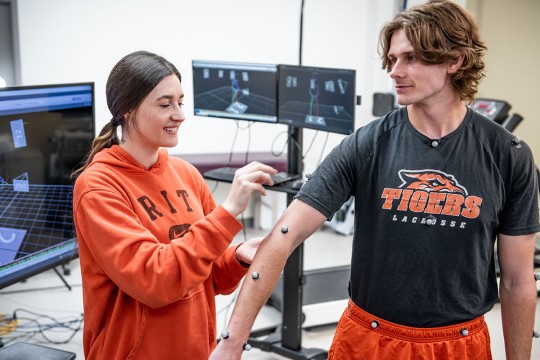
Related News
-
September 11, 2023

Growing accelerated degrees program gives students a leg up
A growing cohort of RIT students is enrolling in the university’s Combined Accelerated Bachelor’s/Master’s Degrees program, which provides pathways for highly focused, goal-oriented students to earn both a bachelor’s and a master’s degree in a shortened, consolidated experience.
-
May 10, 2023

RIT and URMC researchers study maternal nutrition and oral health for clues to childhood tooth decay
Researchers from RIT and the University of Rochester Medical Center are taking a closer look at nutritional factors during pregnancy and in infancy associated with severe tooth decay in young children.
-
April 14, 2023

Monroe High School student athletes learn about sports and nutrition from RIT Athletics and the Wegmans School of Health and Nutrition
RIT Athletics and the Wegmans School of Health and Nutrition partnered with Monroe High School in the Rochester City School District to bring student athletes to campus earlier this semester for hands-on learning about sports and nutrition.
Contact

Wegmans School of Health and Nutrition